
Shivraj Singh Chouhan Criticizes Punjab Assembly's Proposal Against VB-GRAM Law
Chouhan's Strong Opposition to Legislative Proposal
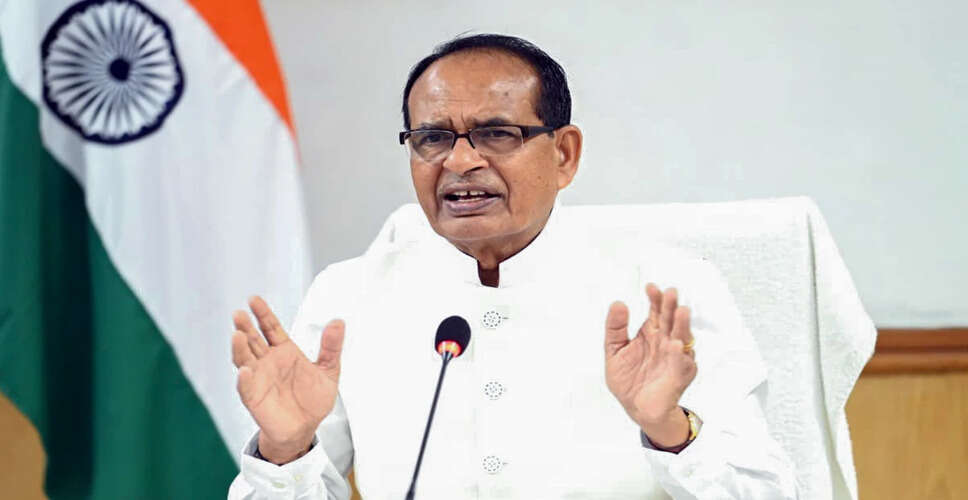
On Tuesday, Union Minister for Agriculture and Rural Development, Shivraj Singh Chouhan, condemned the proposal presented in the Punjab Assembly against the Developed India Employment and Livelihood Guarantee Mission (Rural), known as 'VB-GRAM Ji'. He argued that this move contradicts the essence of the Constitution and the federal structure, emphasizing that it is the constitutional duty of states to respect laws passed by Parliament.
During a press conference held at his residence in Bhopal, Chouhan also targeted Rahul Gandhi, the Leader of the Opposition in the Lok Sabha, suggesting that Gandhi lives in a fantasy world disconnected from the realities of the nation.
Critique of Political Statements
Chouhan remarked that suggesting operations could continue without the council of ministers and the cabinet is merely spreading confusion. He criticized the irresponsible nature of such statements, referencing Gandhi's recent claim that Prime Minister Narendra Modi unilaterally abolished the Mahatma Gandhi National Rural Employment Guarantee Act (MGNREGA) without consulting his cabinet or conducting a thorough review.
He described the proposal against the bill in the Punjab Assembly as an example of 'blind opposition', asserting that some individuals are opposing for the sake of opposition, which has no relevance to democracy or constitutional norms.
Constitutional Responsibilities and Allegations of Corruption
Chouhan stated that passing a proposal against a law enacted by Parliament in the Assembly is against the spirit of the constitutional framework. He raised concerns about whether it would be appropriate for local bodies like district or village councils to pass resolutions against state laws.
He clarified that adhering to laws passed by Parliament is a constitutional obligation for both the central and state governments. Chouhan criticized the actions of the Punjab government and certain parties in the Assembly as undemocratic and contrary to the fundamental spirit of the Constitution.
Citing a report, he highlighted widespread corruption in various schemes, including MGNREGA, in Punjab, noting that no action has been taken against the culprits nor has any misappropriated funds been recovered. He pointed out that out of 13,304 gram panchayats in Punjab, only 5,915 have undergone social audits, revealing approximately 10,653 cases of financial misappropriation without any accountability.
Concerns Over Labor Issues
Chouhan mentioned that irregular expenditures were made on activities not permitted under MGNREGA, and workers have been complaining about not receiving their wages. He criticized the lack of action against corruption, stating that even when caught, no measures are taken, while simultaneously, proposals against parliamentary laws are being discussed in the Assembly. He condemned this undemocratic mindset.
It is noteworthy that the Aam Aadmi Party (AAP) government introduced a proposal against the 'Ji Ram Ji' law in the Punjab Assembly on Tuesday, accusing the BJP-led central government of attempting to abolish MGNREGA. During a one-day session, Tarunpreet Singh Sond, the state's Minister for Rural Development and Panchayati Raj, presented the proposal, emphasizing that this act would severely impact families below the poverty line, Scheduled Castes, and rural laborers who rely on MGNREGA for their survival.