
Severe Flooding in Jorhat Leaves Thousands Stranded and in Need of Aid

Flood Crisis in Jorhat
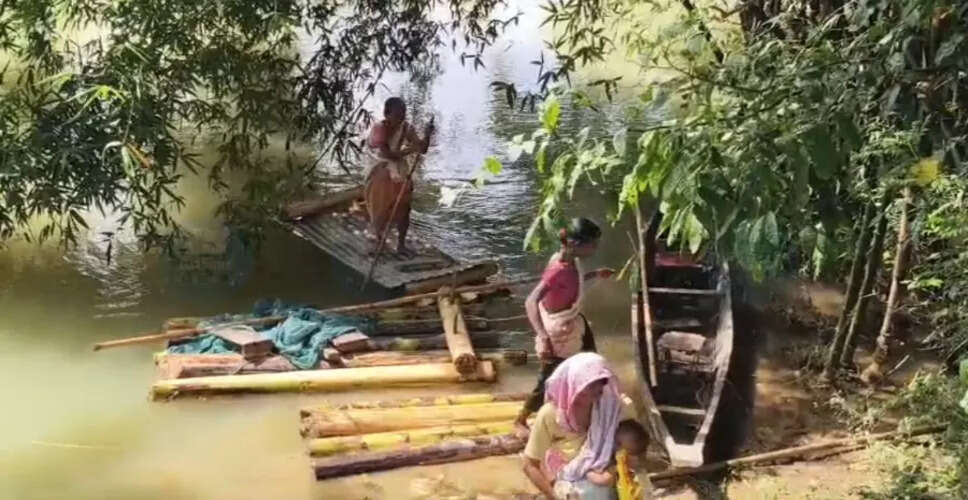
Bamboo rafts, dugout canoes and makeshift boats have become the last lifeline for those stranded in remote villages of Jorhat (Photo: AT)
Jorhat, July 24: The ongoing floods in Jorhat have left vast areas submerged, forcing thousands in remote villages to rely on bamboo rafts, dugout canoes, and makeshift boats for survival. The local administration, along with the Army and various agencies, is struggling to provide relief as roads remain underwater, embankments have failed, and water levels continue to rise.
The situation worsened on Friday following heavy rainfall in Nagaland's Naga Hills, which caused the Bhogdoi River to overflow, leading to extensive flooding throughout the district.
On Sunday night, floodwaters breached embankments at five different locations, resulting in the destruction of homes, livestock, and crops.
Many areas remain inundated, with residents in North-West Jorhat reporting that this is the most severe flooding they have experienced since 1988.
In isolated villages, survivors are expressing concerns over the insufficient relief efforts, despite ongoing rescue operations.
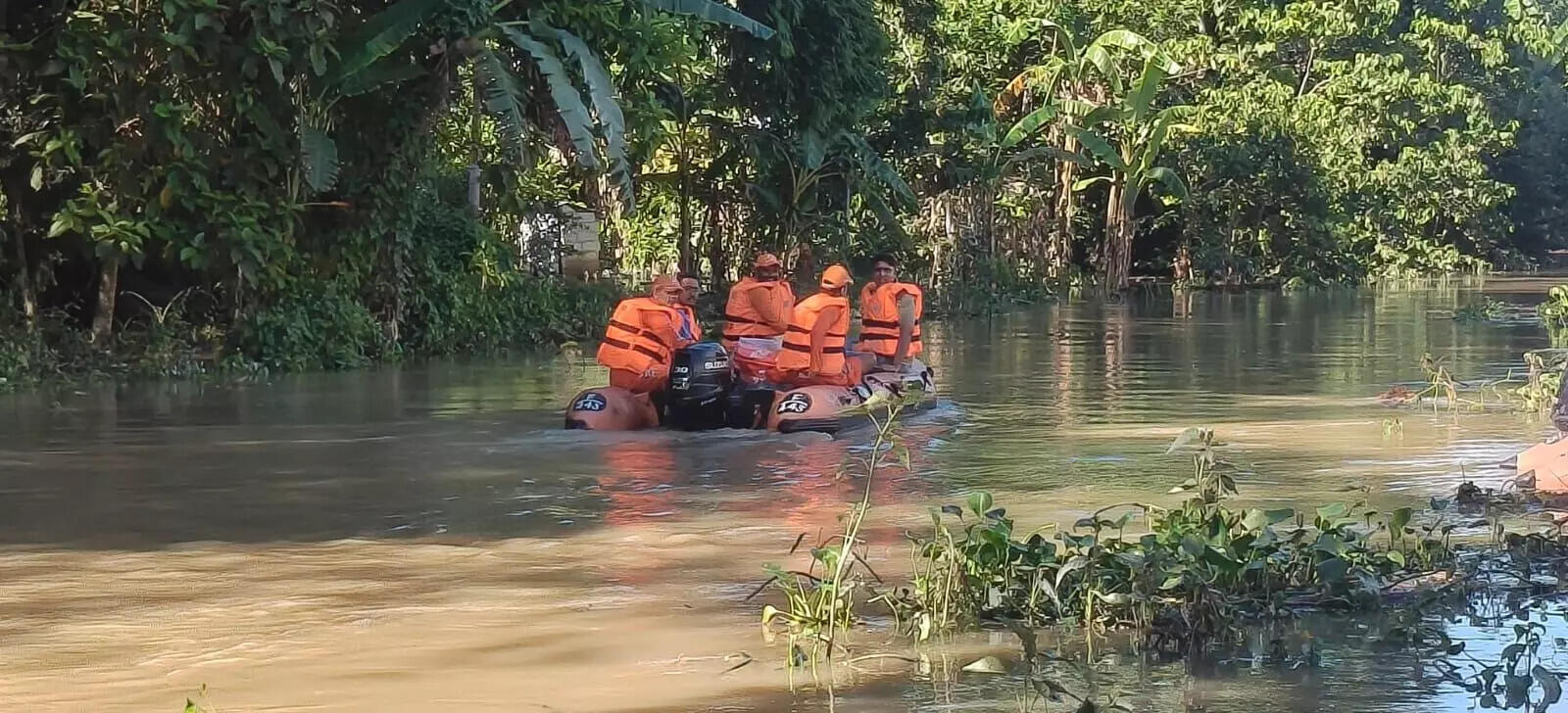
Rescue operations continue in remote areas of Jorhat submerged under water (Photo: AT)
Bhaskar Bora, a resident of Elengmora village, shared, "The floodwaters have completely paralyzed us. We have heard that the government is providing relief, but we have not received tarpaulins and are sleeping on bare ground."
He added, "There is not even a lamp or candle for light at night. People are filtering floodwater for drinking due to the severe water shortage. We have elderly patients here who have received no relief to date."
Mousumi Bora, another victim, mentioned that families are creating makeshift shelters with salvaged materials.
"We have nothing to sleep on. We arranged tin sheets from our roof and spread clothes over them. We are using earthen lamps with leftover oil for light. We are scared of snakes and cannot sleep at night," she explained.
"A family of three cannot survive on just two bottles of drinking water. We are using dirty river water for everything, from washing clothes to drinking," she added.
In response to the crisis, several civil society organizations have stepped in to assist with relief efforts. Members of the Asom Jatiyatabadi Yuva Chatra Parishad (AJYCP) have been traveling by boat to reach inaccessible villages, delivering essential supplies such as drinking water, rice, pulses, biscuits, mustard oil, soap, and mosquito-repellent incense sticks.
Shiva Kalita, vice-president of AJYCP, criticized the inadequate relief distribution, stating, "People are sleeping on embankments without mosquito repellents, candles, or sufficient food. Many are sharing their surroundings with snakes and other creatures displaced by the floods." He also questioned the government's response to the disaster.
District officials reported that the extent of the devastation is unprecedented.
Jorhat Deputy Commissioner Jay Shivani stated, "We have been battling the flood situation in Jorhat for the past three days. This is an unprecedented scenario."
He noted that 177 out of the district's 600 villages have been impacted, and rescue operations are ongoing in several areas.
Currently, 19 relief camps have been established, providing shelter for approximately 5,800 individuals. An additional 62,000 flood-affected residents are taking refuge on higher ground, and relief materials are being distributed to them as well.
The Deputy Commissioner mentioned that assessments for compensation related to losses in crops, fisheries, poultry, livestock, homes, and personal property are already in progress under SDRF guidelines.
He confirmed that the breaches in embankments at Bonai-Dhantola and along the Bhogdoi River are being monitored, with temporary restoration efforts set to commence once water levels decrease.
Over 87,000 livestock have been affected throughout the district, and fodder distribution is already underway.
Areas severely impacted include Sonari Gaon, Baliati, Garmora, Gualgaon, Bhagonia Chuk, Nalia Chuk, Solmora, Chengeli Ati, Khongiya Chuk, Sutar Chuk, Katiram Chuk, Majia Bheti, Elengmora, Nam Deuri, and Kanai Chuk, where floodwaters continue to disrupt daily life and create uncertainty.