
Severe Flooding Disrupts Life in Bihar's West Champaran District
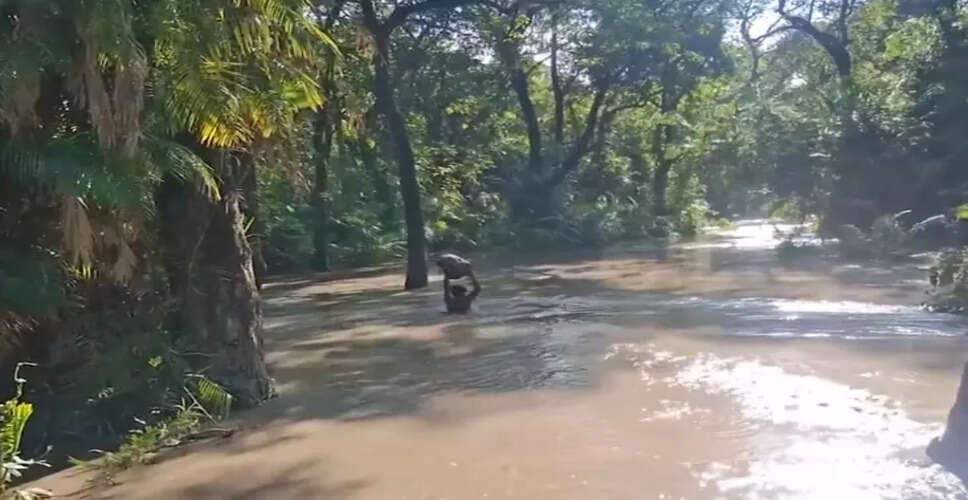

Flooding Crisis in West Champaran
Photo: @ians_india/X
West Champaran, Aug 31: Floodwaters have inundated various low-lying regions in Bihar's West Champaran district following the release of approximately 180,000 cusecs of water from the Valmiki Nagar Gandak Barrage, a consequence of severe flooding in neighboring Nepal.
Residents from Chakdahwa and adjacent villages are facing significant challenges in navigating the flooded areas, with some needing to wade through water for nearly three kilometers.
Local inhabitants have pointed out the deteriorating road conditions, persistent power outages, and ongoing infrastructure issues that continue to plague the region.
After the release of around 164,000 cusecs from the Gandak Barrage, the primary road linking Chakdaha, Jhautala, and Bintoli in Bagaha-2 has been submerged under nearly five feet of water.
This route is vital for about 3,000 residents who rely on it for daily necessities, including medical access. Locals have expressed that the flooding has severely hampered even essential travel during the monsoon season.
Anju Kumari, a local resident, shared her experience of traveling to Bhedihari for her one-year-old child's medical appointment and returning to Chakdahwa.
She described the annual struggles faced by residents during the rainy season, stating, "We have to walk through water throughout the entire rainy season. It is a huge problem, but what can we do?"
Kumari urged the government to take action to enhance connectivity in the area, saying, "The government should build a road."
Suraj Kumar, another resident of Chak Dawa, echoed the sentiment, highlighting the extreme difficulties villagers face while traversing the flooded path.
"The situation is very bad. It is a three-kilometer journey to the city. The road is good, but there are many problems. We walk through water up to our necks," he remarked.
Haslim Gaddi, a local, noted that this issue has persisted for years, with villagers struggling due to poor road conditions and lack of adequate lighting.
"The situation is very bad. We travel three kilometers through water. Neither is the road good, nor is there any lighting. No one pays heed to our problems. We have been facing this problem for years," Gaddi lamented.
Sohail Ansari mentioned that residents are compelled to navigate deep waters during the rainy season, facing additional threats from wildlife as the area is part of the Valmiki Tiger Reserve.
"The situation is very bad. We have to cross the water. We have to travel through six feet of water for three months. Being part of the Valmiki Tiger Reserve, there is also a constant fear of animals," Ansari explained.
In response to the flooding, the district administration has relocated over 5,000 individuals from vulnerable and low-lying areas to safer locations.
Authorities are closely monitoring the flood situation in other susceptible districts of Bihar, ensuring necessary arrangements are in place to address any emergencies arising from rising water levels.
The Bihar government has urged residents to stay vigilant and adhere to official guidance. Officials have also advised the public to remain calm and refrain from spreading or believing rumors amid the ongoing flood crisis.