
Severe Air Quality Crisis Hits Delhi: AQI Soars Above 400
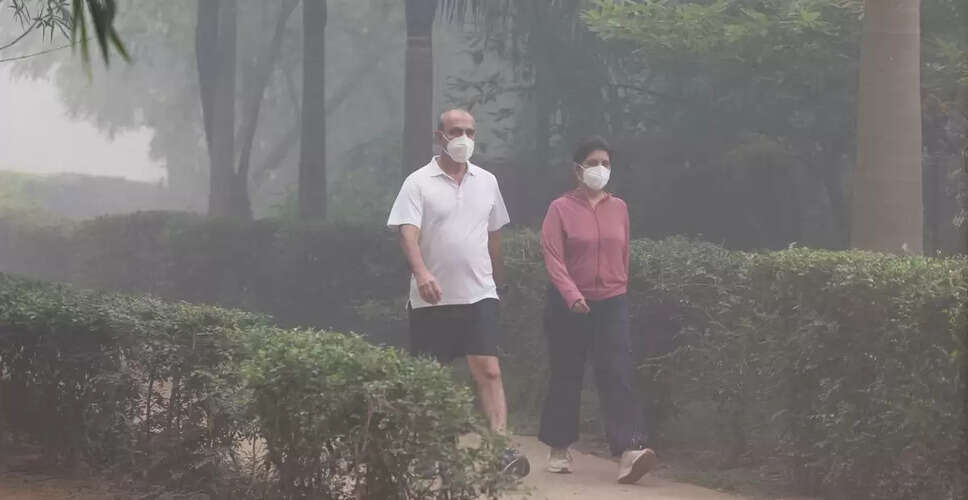
Delhi's Air Quality Deteriorates Significantly
On Sunday evening, twelve out of the 40 air quality monitoring stations in Delhi reported Air Quality Index (AQI) levels exceeding 400, categorizing them as 'severe', according to data from the Sameer application at 7:05 PM.
The overall average AQI for the city was recorded at 374, which falls under the 'very poor' category, as indicated by the application that provides hourly updates from the Central Pollution Control Board.
The severe air pollution and thick smog led to reduced visibility throughout the capital, causing significant disruptions in air and rail travel. Reports indicate that at least 97 flights were canceled at Delhi airport, with over 200 experiencing delays.
Additionally, more than 50 Northern Railway trains were delayed due to the poor visibility caused by the smog and fog.
An AQI value ranging from 301 to 400 signifies 'very poor' air quality, while values between 401 and 450 indicate 'severe' pollution. Levels above 450 are classified as 'severe plus'.
Air quality in the 'severe' and 'severe plus' categories poses serious health risks, even to individuals without pre-existing health conditions.
Surrounding areas also reported poor air quality, with Noida at 329, Ghaziabad at 364, Greater Noida at 329, and Gurugram at 328.
The Ministry of Earth Sciences' Air Quality Early Warning System for Delhi has predicted that air quality will likely remain in the 'severe' category until Monday, with a slight improvement expected to 'very poor' levels by Tuesday.
Delhi and the nearby National Capital Region are currently under Stage 4 restrictions as part of the Graded Response Action Plan aimed at reducing pollution. These restrictions were implemented on December 13 after the AQI reached the 'severe plus' category.
Stage 4 restrictions, which are activated when the AQI exceeds 450, include a ban on truck entry into the region, a suspension of construction activities for both public and private projects, and a transition to hybrid learning for schools, excluding Classes 10 and 12.
Air quality in Delhi typically worsens during the winter months, often ranking it as the world's most polluted capital. Contributing factors include stubble burning in Punjab and Haryana, vehicular emissions, firecracker use during Diwali, lower temperatures, reduced wind speeds, and emissions from industries and coal-fired power plants.