
Sergei Lavrov Issues Stark Warning Amid Ukraine Peace Talks
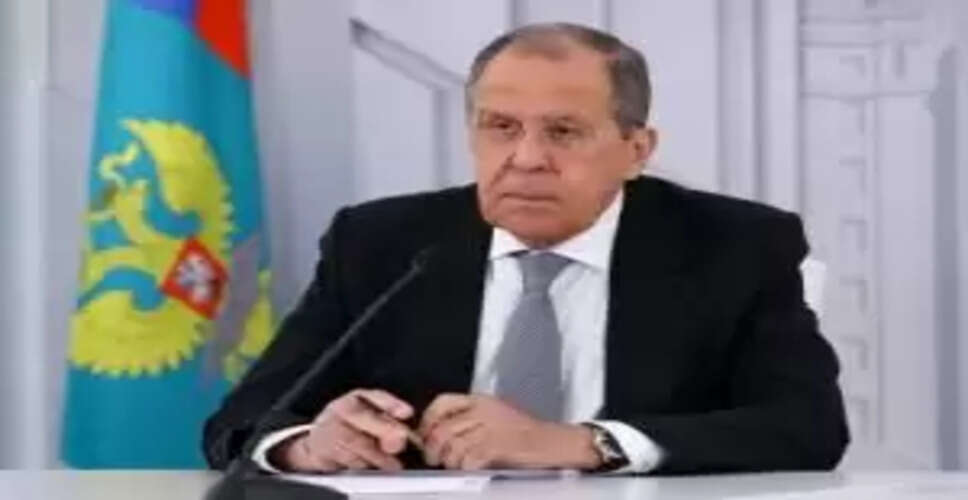
Russia's Stance on European Security
Moscow: Russian Foreign Minister Sergei Lavrov stated on Sunday that the nation has no intentions of launching attacks in Europe, but warned that any aggression towards Russia would be met with severe consequences. He criticized the European Union's 'war party' for obstructing peace negotiations regarding Ukraine.
Lavrov's remarks coincided with Ukrainian President Volodymyr Zelenskyy's meeting with US President Donald Trump at Mar-a-Lago in Florida.
In an interview with a state-run news agency, Lavrov reassured European leaders that there is no reason to fear a Russian offensive. However, he cautioned that any attack on Russia would result in a devastating response.
As Zelenskyy presents his peace proposal, which has the backing of major European nations advocating for troop deployments as security guarantees for Ukraine, Lavrov labeled these forces as 'legitimate targets' for Russia.
He expressed uncertainty about whether European leaders, including Ursula von der Leyen, Friedrich Merz, Keir Starmer, and Emmanuel Macron, have reached an irreversible point in their stance against Russia.
Lavrov emphasized that the European war faction has been focused on achieving a strategic defeat for Russia and is prepared to escalate the conflict.
He reiterated that Russia has never initiated hostile actions against its European neighbors, deeming the EU's actions as illegitimate.
Lavrov acknowledged the efforts of Trump and his administration towards a peaceful resolution, stating that Moscow is willing to collaborate with American negotiators to address the underlying issues of the conflict.
He noted that since Trump's presidency, Europe and the EU have become significant obstacles to peace, openly preparing for military confrontation with Russia.
In a separate statement, Lavrov affirmed Russia's support for China regarding Taiwan, indicating that the West views Taiwan as a strategic military deterrent against China.
He referenced the Treaty of Good-Neighbourliness and Friendly Cooperation with China, highlighting mutual support for national unity and territorial integrity as a core principle.
Lavrov criticized the West for exploiting Taiwan for financial and technological gains, framing it as a tool for military deterrence against the People's Republic of China.