
Security Challenges Along the India-Myanmar Border: A Comprehensive Overview

Introduction to Border Security Issues
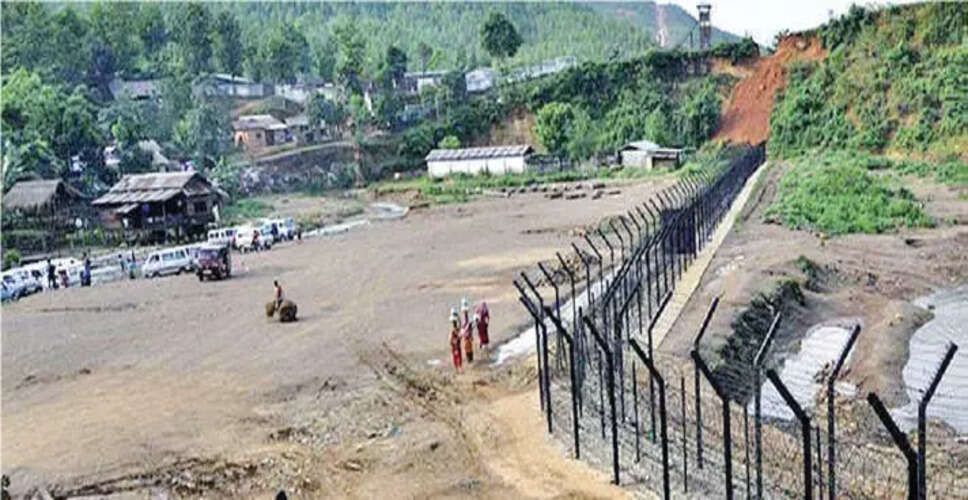
An image of the India Myanmar border
Guwahati, Aug 20: The India-Myanmar border, stretching 1,643 km through Arunachal Pradesh, Nagaland, Manipur, and Mizoram, poses significant and complex security challenges for the North East region.
Insurgency and Cross-Border Militancy
According to security sources, one of the primary issues is the presence of insurgency and cross-border militancy. Various Indian insurgent groups, including NSCN-IM, NSCN-K, PLA, ULFA (I), UNLF, and KCP, operate from camps located in areas controlled by ethnic armed organizations in Myanmar, such as Chin, Sagaing, Kachin, and Shan States.
These locations serve as safe havens for planning attacks, smuggling arms, training cadres, and executing cross-border operations into regions like Manipur, Nagaland, and Arunachal Pradesh. Insurgents can easily retreat after their operations and maintain extortion networks that fund their activities within India.
International Involvement in Militancy
In a significant revelation, the National Investigation Agency (NIA) reported that a US citizen, Matthew Aaron Van Dyke, along with six Ukrainian mercenaries, provided tactical drone warfare training to Chin Ethnic Armed Organizations (EAOs) in Myanmar.
These groups have established connections with Indian insurgent factions. The mercenaries also facilitated the transfer of drones from Europe through India, leading to the first documented use of weaponized drones by militants on Indian territory in September 2024.
Escalation of Attacks
Sources indicate that Kuki insurgents have launched over 40 bombs and grenades on villages in Manipur, particularly in the Koutruk and Kadangband areas, which has notably enhanced the range, accuracy, and lethality of their assaults.
Narcoterrorism and Drug Trafficking
Another critical threat is narcoterrorism and drug trafficking, particularly linked to the Golden Triangle. The porous routes from Myanmar's Shan and Kachin States facilitate the smuggling of heroin, methamphetamine, and other narcotics through hubs like Moreh and Sugnu Churachandpur.
Insurgents impose taxes on these drug consignments, establishing a direct link between narcoterrorism and militancy. Additionally, local cultivation of poppy in Manipur and Arunachal Pradesh contributes to the drug supply.
In 2025, Mizoram authorities seized over 1,000 kg of drugs near the Myanmar border, including 79.2 kg of heroin, 964.4 kg of methamphetamine, and 38.8 kg of crystal meth.
Under Operation Jericho, initiated in September 2025, security forces recovered drugs valued at Rs 317.3 crore, while the North East states played a crucial role in the national seizure of 1.33 lakh kg of drugs worth approximately Rs 2,000 crore by the Narcotics Control Bureau.
Refugee Crisis and Ethnic Tensions
The aftermath of the 2021 military coup in Myanmar has led to a continuous influx of refugees, primarily from Chin State and Sagaing Division, into Mizoram and Manipur due to ongoing armed conflicts, atrocities by the junta, and clashes among ethnic armed groups.
Mizoram currently accommodates around 28,000-32,000 registered Myanmar refugees (mostly from Chin), with unofficial estimates suggesting the number could be as high as 40,000-60,000, including unregistered individuals.
This influx has exacerbated ethnic tensions, particularly between the Meitei and Kuki communities, notably igniting the Meitei-Kuki conflict that began in May 2023.
The arrival of Chin refugees, who share ethnic and cultural ties with the Kuki-Zo community, has faced strong opposition from Meitei groups. They accuse the Kukis of harboring "illegal immigrants" from Myanmar, which they claim alters demographics, encroaches on land, and promotes poppy cultivation.