
Scholars Advocate for Preservation of Dima Hasao's Ancient Stone Jar Sites
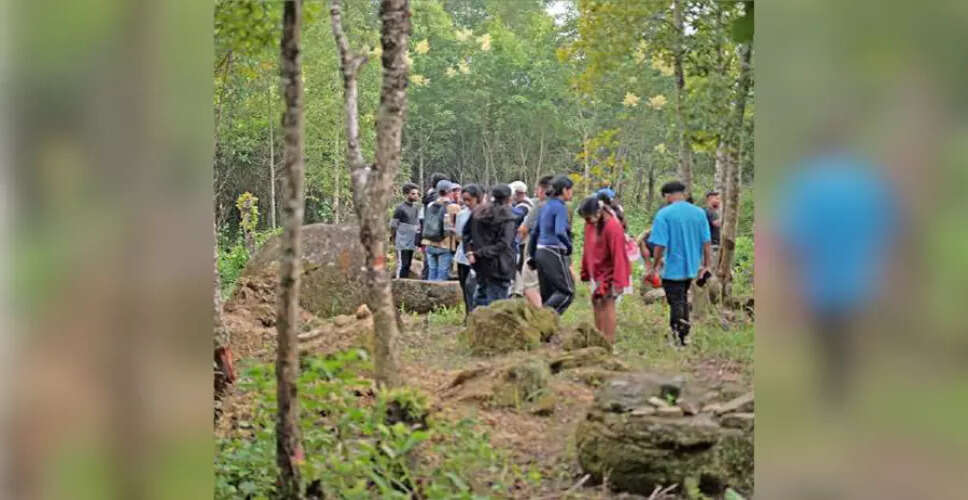

Call for Conservation of Archaeological Heritage
The team examined the ancient structures and highlighted the importance of preserving these archaeological remains for future generations and further academic research
Haflong, Oct 16: A group of scholars from North Eastern Hill University (NEHU) in Shillong has emphasized the need for enhanced conservation measures to protect the prehistoric stone jar sites in Dima Hasao. This call follows a two-day archaeological field study conducted throughout the district.
The delegation, consisting of 48 members including professors, history students, and research scholars, explored key stone jar locations such as Dobongling, Longmailai, and Bolosan. This initiative was organized by the Department of Archaeology in collaboration with the District Museum.
Under the guidance of archaeologist Dr. Sringdao Langthasa, the team assessed the ancient structures and stressed the critical need to preserve these archaeological sites for future generations and academic inquiry.
Participants highlighted the importance of firsthand study of the stone jars and called for increased conservation efforts to safeguard these locations. The field study aimed to spark greater academic interest in the region's archaeological legacy and promote further research into these ancient artifacts.
Dr. Langthasa expressed hope for future archaeological explorations in Dima Hasao, suggesting that there may be additional undiscovered stone jar sites within the district.
Located about 40 km from Haflong, the Dobongling site was first documented by British officials in 1928 and is home to some of the largest known stone jars in the area, with circumferences reaching up to 23 feet.
The Longmailai site, also referred to as Longdisangbill, is approximately 40 km from Haflong and features 97 stone jars of various shapes, including cylindrical and pear-like forms.
Additionally, Bolosan, situated around 30 km from Haflong, boasts the highest density of stone jars in the district, with over 500 artifacts present.