
Sarkaghat Farmers Thrive with Dragon Fruit Cultivation
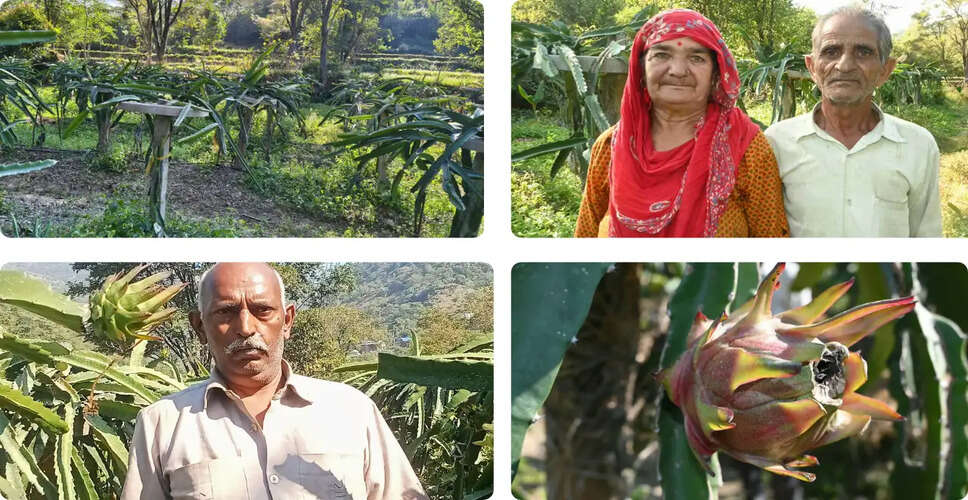

Transforming Agriculture in Sarkaghat
Farmers in Sarkaghat Discover New Revenue Streams through High-Value Crops
By Munish Sood
Mandi: Once viewed as an exotic import, dragon fruit is now making its mark in Mandi district's agricultural sector. Farmers in the Sarkaghat area are embracing its commercial cultivation, reporting promising returns and paving the way for diversification in horticulture.
This transition is particularly beneficial for those with smaller landholdings, allowing them to explore new income avenues and shift towards high-value fruit production. The success stories from villages like Bharnal illustrate how innovative horticultural techniques, supported by government assistance, can unlock economic potential in rural communities.
For instance, progressive farmers Roop Lal and Tek Chand from Bharnal have cultivated dragon fruit on approximately two bighas each. Roop Lal's first commercial harvest yielded around Rs 2 lakh, showcasing the crop's economic viability.
Roop Lal ventured into dragon fruit farming in 2023 after receiving guidance from the local Horticulture Department. He sourced nearly 400 Jumbo Red Flesh plants from a registered nursery in Gopalpur and implemented an RCC ring-pole-supported cultivation system.
His plants began producing commercially in their third year, with harvests occurring in five to six rounds, fetching around Rs 180 per kilogram in the market. Roop Lal has also committed to organic farming practices, steering clear of chemical fertilizers.
A Crop with Long-Term Viability
Dragon fruit's perennial nature makes it particularly appealing. With proper care, a plantation can yield fruit for 17 to 20 years. Additionally, it requires less water than many traditional fruit crops, as it belongs to the cactus family.
Its multiple harvesting cycles and extended productive lifespan make it an attractive option for farmers in Mandi's warmer regions. However, successful cultivation hinges on favorable climatic conditions, effective drainage, sufficient sunlight, quality planting materials, and scientific orchard management.
The RCC ring-pole system is crucial for cultivation, allowing four plants to grow around a concrete pole, optimizing land use and enhancing productivity.
Government Initiatives Supporting Farmers
The Horticulture Department is actively promoting high-value fruit crops through various development initiatives. Under the Mission for Integrated Development of Horticulture (MIDH), eligible farmers can receive financial aid covering up to 50% of the establishment costs for dragon fruit cultivation, adhering to scheme guidelines.
Farmers can also access support for modern irrigation systems, including drip irrigation, through relevant government programs. Shabnam Rana, the Horticulture Development Officer in Sarkaghat, emphasized the crop's potential due to its low water requirements and long production cycle. Dragon fruit can also thrive on well-prepared sloping land, provided soil and drainage conditions are suitable.
Beyond Traditional Farming: A New Opportunity for Mandi
The rising interest in dragon fruit cultivation coincides with the need for diversification in Himachal Pradesh's agricultural landscape. Relying on a limited range of traditional crops exposes farmers to market volatility, unpredictable weather, and increasing cultivation costs.
The Himachal Pradesh Subtropical Horticulture, Irrigation and Value Addition (HPSHIVA) project aims to broaden the state's fruit offerings through subtropical and high-value horticulture. Mandi is one of the districts included in this initiative, which seeks to create new income opportunities through organized horticultural development.
Dragon fruit's increasing popularity in domestic markets, along with its appealing appearance and nutritional benefits, enhances its commercial value. Rich in dietary fiber, antioxidants, and other nutrients, it appeals to health-conscious consumers.
The success of farmers in Sarkaghat indicates that dragon fruit could serve as an additional income source for growers in suitable areas of Mandi. However, scaling up production will necessitate attention to organized marketing, quality planting materials, post-harvest management, and reliable market connections.
For Mandi, this development signifies more than just the introduction of a new fruit crop; it marks a gradual shift towards innovative farming practices, commercial horticulture, and the pursuit of new income opportunities. With the right support in scientific cultivation and assured market access, dragon fruit could significantly contribute to the district's horticultural economy.