
Sabarimala Controversy: A Crucial Constitutional Debate Beyond Women's Entry
The Sabarimala controversy has emerged as a significant constitutional debate, challenging the intersection of faith and equality. This article delves into the broader implications of the Supreme Court's hearings, exploring the conflict between individual rights and religious community regulations. It raises critical questions about the role of the judiciary in determining essential religious practices and the potential impact of government intervention on traditions. As the court navigates these complex issues, the outcome could redefine the boundaries between religion and the Constitution in India, making this a pivotal moment in the nation's legal landscape.
| Apr 13, 2026, 16:33 IST

The Broader Implications of the Sabarimala Dispute
The Sabarimala controversy has once again become a focal point in the nation's constitutional discussions. However, limiting it to the issue of women's entry into a temple would be a significant intellectual oversight. The nine-judge bench of the Supreme Court is addressing a matter that could potentially shake the very foundations of India's religious framework, rights, and judicial boundaries. This is not merely a battle between faith and equality; it is a pivotal moment to determine whether the final authority lies with the Constitution or tradition.
Importantly, the bench is not solely focused on the entry dispute at Sabarimala. The case encompasses much larger issues. There is a conflict between Articles 25 and 26 of the Constitution. On one side is the individual's right to worship, while on the other is the religious community's right to establish its own rules. The critical question is whether an individual can seek judicial intervention to alter a tradition. If this were to happen, every tradition could find itself at the courthouse.
Read More: The Clash of Religion and Law at Sabarimala: Will the Supreme Court's Decision Ignite Political Turmoil?
The question of constitutional morality is also central to this debate. Previous rulings have utilized this concept to challenge numerous traditions. Critics argue that it has become a tool through which the judiciary can dismantle age-old customs from a modern perspective. Should the judiciary be granted such broad discretion? This question is now at the forefront of public discourse.
Another contentious issue is the examination of what constitutes an essential religious practice. Will the court determine which traditions are fundamental to a religion and which are not? Can legal experts truly serve as arbiters of faith? The central government has also raised concerns that the court cannot assume the role of a priest.
The extent of government intervention is also entangled in this debate. If every religious practice is measured against equality standards, could this render every tradition illegal overnight? This fear is not unfounded. Thus, this hearing is not merely about one temple; it could define the future of the entire religious framework in the country.
The definition of religious communities is another critical aspect of this controversy. Hinduism is inherently flexible and multifaceted. Attempting to confine it within a single framework contradicts its very essence. Nevertheless, the court must decide which group qualifies as a distinct community and which does not.
It is essential to note that the 2018 ruling lies at the heart of this entire dispute. At that time, the court deemed the ban on women's entry unconstitutional, heralding it as a victory for equality and dignity. However, it was also perceived as an intrusion into religious tradition. This rift remains unhealed to this day.
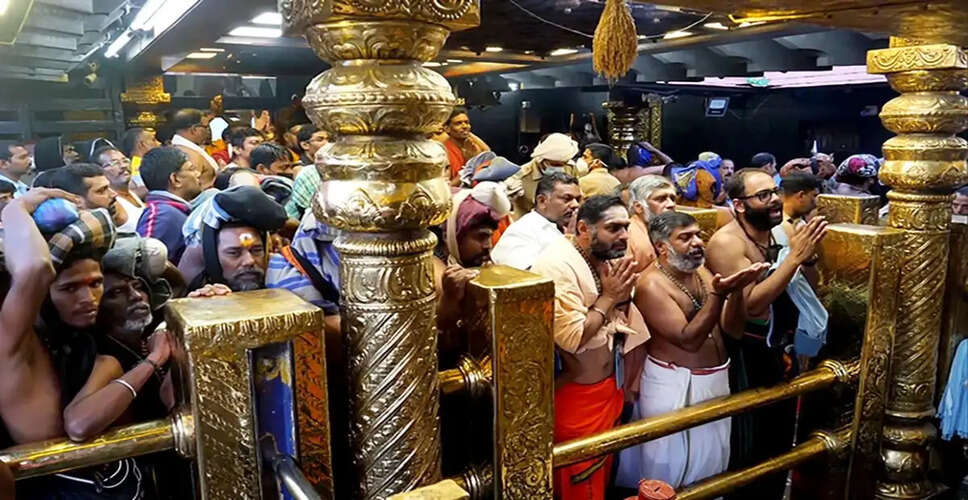
Understanding the Sabarimala tradition is crucial to forming an opinion on this controversy. The pilgrimage is not a casual visit; it begins with a rigorous 41-day vow that requires practitioners to observe celibacy, consume a vegetarian diet, bathe twice daily, sleep on the ground, wear black or saffron clothing, and see the divine in every individual. This entire practice is considered a process to elevate the mind and body to a specific state. In this context, Lord Ayyappa is regarded as a lifelong celibate, and the entry of women of reproductive age is viewed as contrary to this sacred discipline. Supporters argue that this restriction is not anti-women but rather a matter of respecting the unique religious discipline and the deity's nature, where both the devotee and the deity adhere to the same celibacy rule.
It is also worth recalling that after the 2018 ruling, when review petitions were filed, the court did not dismiss the matter but referred it to a larger bench. This action indicates that the issue is far more profound. The court itself recognized that this is not a matter that can be resolved with a single ruling. Ultimately, the decision will not only determine who can enter the temple but will also delineate the boundary between religion and the Constitution in India.