
Russia's Role in Iran's Nuclear Strategy: Unpacking the Misinformation
Understanding the Escalation Narrative
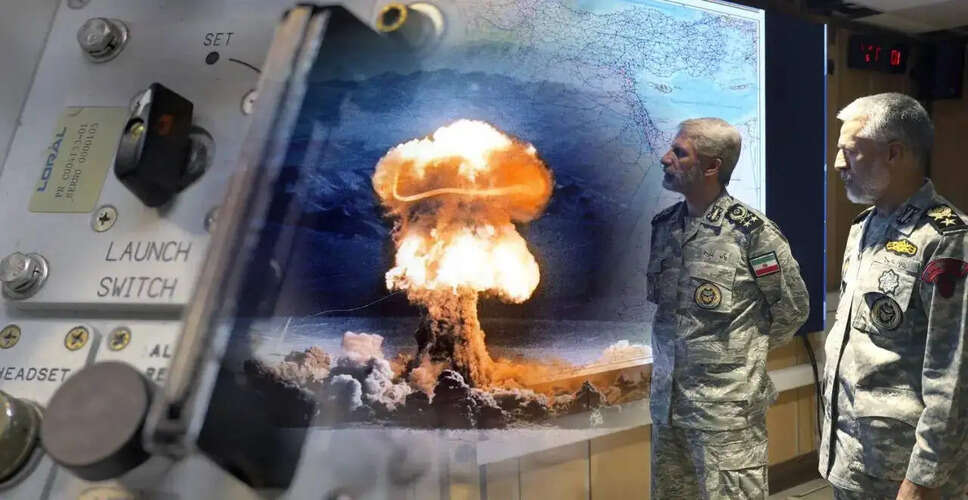
Recent discussions surrounding the conflict in Iran have taken a dramatic turn, even by the standards of wartime narratives. Reports suggest that Russia has positioned itself as a nuclear protector for Iran, with claims that Vladimir Putin has allegedly warned Israel that any nuclear action in the Middle East could provoke a Russian nuclear response. This narrative has gained traction through viral social media posts referencing retired US Army Colonel Douglas Macgregor. While the claim is provocative, it lacks verification. However, the underlying concerns it raises are significant. The rapid spread of this narrative reflects a genuine and escalating strategic situation: Russia's increasing political alignment with Iran, its warnings about potential nuclear disasters related to Iranian nuclear sites, and its role as a counterbalance to US-Israeli tensions.
The Importance of Verification
What Is Not Verified, And Why That Matters
To address this narrative effectively, it is crucial to distinguish between claims and substantiated evidence. The primary assertion is that Macgregor disclosed a nuclear ultimatum from Putin to Netanyahu. However, this assertion lacks verification and is not supported by major news outlets or any official channels associated with Macgregor. This distinction is vital. There is a significant difference between assessing escalation risks and transforming a social media claim into an established fact. Furthermore, Macgregor's verified statements focused on the potential for Israel to consider a nuclear option if it perceives an existential threat, which is a serious warning but does not equate to proof of a Russian nuclear guarantee to Iran or a direct threat to Israel.
Russia's Strategic Position
What Russia Has Actually Signalled
The strategic implications of this narrative lie in Russia's actual stance. Moscow has issued warnings about a 'nuclear catastrophe' concerning strikes near Iranian nuclear facilities and has strengthened its partnership with Tehran. This is not the same as providing a formal nuclear shield, but it indicates that Russia aims to increase the political costs of further escalation and remind all parties that actions around nuclear sites have broader consequences. The evolving Russia-Iran relationship suggests that Moscow is not merely a defender of Iran but a strategic ally using intelligence, diplomacy, and political signals to limit Western actions.
The Power of the Narrative
Why The Narrative Still Has Power
So, why does the 'nuclear shield' narrative resonate? The ongoing conflict has crossed several psychological thresholds. An attack on Dimona symbolizes a significant escalation, indicating Iran's willingness to target areas linked to Israel's undeclared nuclear capabilities. In this context, any mention of Russian red lines gains immediate attention, regardless of whether those lines were explicitly stated. Viral claims often succeed not because they are entirely accurate, but because they encapsulate broader strategic anxieties into a memorable phrase. In this instance, the notion that Russia has transformed Israel's nuclear option into a 'suicide button' lacks verified support but raises a critical question: Is Moscow's growing relationship with Tehran, coupled with the war's nuclear implications, constraining the escalation options for Israel and Washington? Currently, it is evident that Russia has become more than a passive observer, but it is not accurate to label it as Iran's definitive nuclear supporter. Instead, Russia appears to be attempting to influence the escalation dynamics, strengthen diplomatic warnings, and ensure that any moves toward nuclear brinkmanship carry significant geopolitical repercussions.