
Russia Intensifies Drone Production for Ukraine Conflict
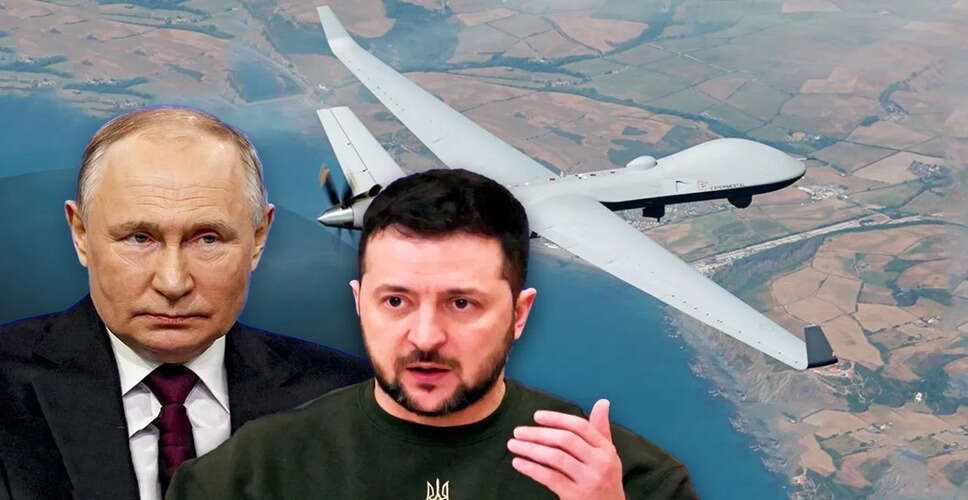
Escalating Threat from Russia's Drone Attacks
The situation in Ukraine is becoming increasingly perilous as Russian military intelligence sources indicate that Russia is preparing to launch over 500 long-range drones towards Ukraine each night. This escalation is accompanied by a rapid increase in production and the establishment of new launch sites.
According to Ukrainian officials, Russia is currently manufacturing approximately 70 drones daily, specifically the 'Geran' model. This figure has surged from just 21 drones per day last year, indicating a threefold increase in production capacity within a year. President Vladimir Putin aims to produce a variety of 500 long-range drones daily, targeting Ukrainian cities and infrastructure.
New Launch Sites and Increased Drone Capacity
Previously, Russia had only five launch sites for attacks on Ukraine, located in Kursk, two ports in Krasnodar (Yeysk and Primorsko-Akhtarsk), and two occupied areas in Crimea (Cape Fiolent and Cape Chauda). However, the establishment of 12 to 15 new launch sites is underway, with most nearing completion. Only three sites are still under construction. On June 1, Russia set a record by launching 472 drones simultaneously at Ukraine, and sources suggest that this number could exceed 500 with the new sites operational.
Types of Drones Used by Russia
Russia employs three main types of deep-strike drones: the Iranian-imported Shahed, a copy of the Shahed, and domestically produced Geran drones, along with a new variant made from Chinese components called Garpiya-A1. Additionally, Russia deploys decoy drones known as Gerber, which resemble real drones but lack explosives. According to Ukrainian defense units, about half of the drones used in each attack are intended to distract.
Growing Challenges for Ukraine
In the past six months, the strength and reach of Russia's drone attacks have significantly increased. These drones are now equipped with jet engines, allowing them to fly at higher altitudes and speeds while carrying heavier bombs. Russia is not only ramping up the production of long-range drones but is also accelerating the manufacturing of FPV (First Person View) drones. Currently, Russia produces 1.5 million FPV drones annually, with plans to increase this number to between 1.8 and 2 million. In contrast, Ukraine aims to produce 4.5 million FPV drones by 2025.