
Russia Conducts New Test of Sarmat Intercontinental Ballistic Missile
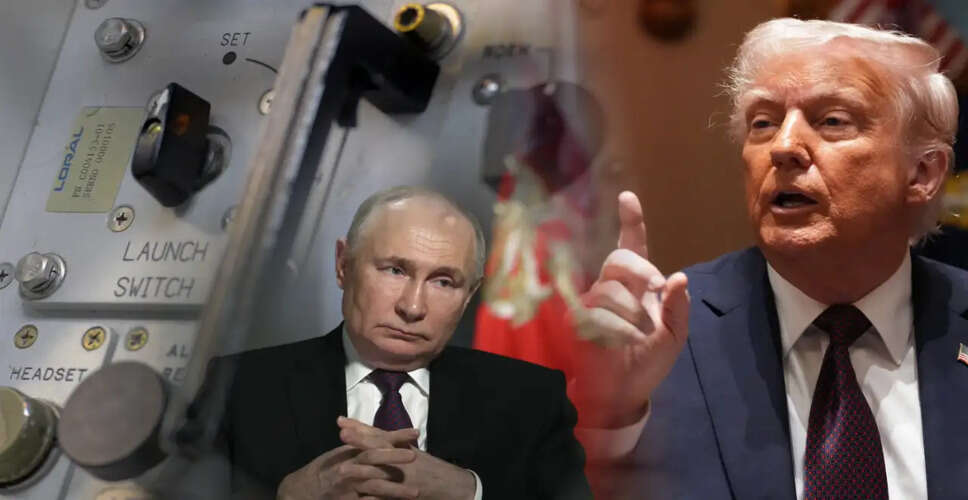

Overview of the Sarmat Missile Test
Russia has successfully executed another test launch of its advanced Sarmat intercontinental ballistic missile. President Vladimir Putin asserts that this missile surpasses any Western counterpart in power and is crucial to Russia's evolving nuclear deterrence strategy. The announcement made on Tuesday signifies a significant advancement in Russia's ongoing initiative to modernize its strategic nuclear arsenal, particularly as tensions with the West reach a historic low reminiscent of the Cold War. Putin emphasized the missile's capabilities, stating, “This is the most powerful missile in the world,” and claimed that its warheads collectively possess a destructive power more than four times that of Western systems.
Significance of the Sarmat Missile
What Makes The Sarmat Missile Significant?
The Sarmat missile, known as “Satan II” by NATO, is intended to replace the outdated Soviet-era Voyevoda system, which has been a cornerstone of Russia's nuclear triad for many years. Putin indicated that the missile is expected to be operational by the end of 2026.
⚡️President #Putin: Following successful test of #Sarmat - world’s most powerful missile system - its payload yield is over 4× any Western counterpart. It can travel on ballistic & suborbital trajectories, extending range beyond 35,000 km while improving accuracy. pic.twitter.com/GLJTVcsqXz
— Russian Embassy in South Africa 🇷🇺 (@EmbassyofRussia) May 12, 2026
This missile is categorized as a “heavy” intercontinental ballistic missile, capable of carrying a substantial payload of up to 10 tonnes. Russian officials assert that the Sarmat features extended range and advanced maneuverability, specifically engineered to bypass missile defense systems developed by the United States and its NATO allies.
Strategic Implications
Beyond being a mere hardware upgrade, the Sarmat missile signifies Russia's increasing focus on maintaining a reliable second-strike capability, which allows for a powerful retaliation even after sustaining a nuclear attack. Putin claimed that the missile can achieve suborbital flight with a range exceeding 21,700 miles.
🇷🇺 Today Russia test-fired Satan II and it worked. RS-28 Sarmat, Plesetsk to Kamchatka. 5,500 kilometers in 30 minutes... direct hit. Putin confirmed within the hour: first combat-ready regiment armed with this missile deploys by end of 2026. This same missile blew up in its… https://t.co/ZX7HGO9XI2 pic.twitter.com/QUIFQvmrHh
— Mario Nawfal (@MarioNawfal) May 12, 2026
This strategic shift has been increasingly influenced by the U.S. withdrawal from the Anti-Ballistic Missile Treaty in 2001, which accelerated the development of missile defense systems. Russian strategists have long contended that the expansion of American missile defenses could potentially compromise Moscow's deterrent capabilities by intercepting any surviving Russian missiles following a hypothetical first strike. “We were forced to consider ensuring our strategic security in the face of the new reality,” Putin remarked while discussing the missile program.
Geopolitical Context
Why The Timing Matters
The timing of the Sarmat test is particularly significant given the current geopolitical climate. Recently, the last major nuclear arms treaty between the United States and Russia lapsed, removing formal limits on the two largest nuclear arsenals for the first time in over fifty years. This situation has heightened concerns about a potential new and unrestricted nuclear arms race between Moscow and Washington. Concurrently, Russia continues to position its strategic weapons modernization as part of its broader confrontation with NATO regarding Ukraine.
Since the onset of the full-scale invasion of Ukraine in 2022, Putin has frequently referenced Russia's nuclear capabilities, often using strategic signaling to deter further Western military involvement. The latest missile launch also followed Putin's recent comments suggesting that the conflict in Ukraine was “nearing an end,” made shortly after Russia's Victory Day parade in Moscow, which notably occurred without heavy armored vehicles for the first time in nearly two decades.