
Russia Clarifies Stance on UNSC Reforms, Backs India and Brazil
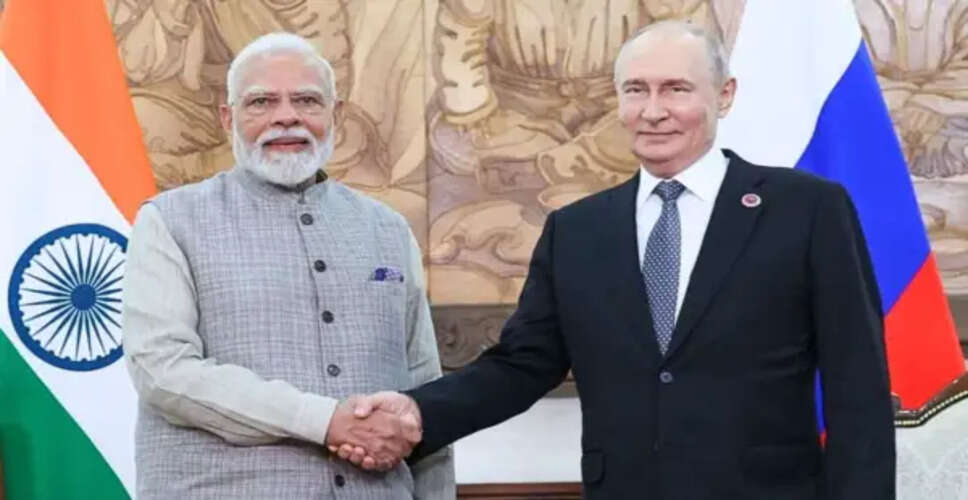

Russia's Position on UNSC Reforms
New York: Russia has made its position clear regarding the reform of the United Nations Security Council (UNSC) and the expansion of permanent membership. During the 81st session of the UN General Assembly (UNGA), Russian Foreign Minister Sergey Lavrov stated that representation from Asia, Africa, and Latin America should be increased within the Security Council. He expressed support for the permanent membership bids of India and Brazil, while opposing additional permanent seats for Germany and Japan.
Support for India and Brazil
In his address at the UNGA, Lavrov emphasized that the goal of UNSC reform should be to enhance global representation. Russia reiterated its backing for India and Brazil to become permanent members.
Moscow has long supported India's permanent membership in the UNSC, arguing that the current global circumstances necessitate increased participation from Asia, Africa, and Latin America.
Russia's Opposition to Germany and Japan
In the same statement, Russia opposed the addition of permanent seats for Western nations. Lavrov specifically mentioned Germany and Japan, asserting that granting them more permanent seats should not be part of the reform process.
This stance is significant as India, Brazil, Germany, and Japan are members of the G4 group, which has long advocated for the expansion of permanent membership in the UNSC.
Recent G4 Meeting
On September 22, foreign ministers from India, Brazil, Germany, and Japan convened in New York. During this meeting, the G4 nations emphasized the need to increase both permanent and non-permanent membership in the Security Council.
The G4's joint statement highlighted that, given the current geopolitical landscape, UNSC reform has become more urgent than ever, advocating for greater participation from underrepresented regions such as Africa, the Asia-Pacific, and Latin America and the Caribbean.
Current Permanent Members of the UNSC
Currently, the UNSC has five permanent members: the United States, Russia, China, France, and the United Kingdom, all of whom possess veto power. Additionally, there are non-permanent members elected for limited terms.
Discussions among UN member states regarding the increase of permanent members have been ongoing for a long time. However, differences in positions on issues such as membership, regional representation, and veto powers continue to persist.
India's Longstanding Demand for Permanent Membership
India has consistently sought permanent membership in the UNSC, arguing that the current structure does not adequately reflect today's global realities.
India has also maintained its stance in the ongoing Intergovernmental Negotiations (IGN) process regarding UNSC reform. In April 2026, India's permanent mission stated that there is an imbalance in the current arrangements concerning membership and veto powers, highlighting the need for reform.
Russia's Broader Perspective on Global Representation
Russia's recent stance extends beyond its support for India. Moscow has emphasized the need for increased participation from countries in Asia, Africa, and Latin America within the Security Council. According to Russia, global institutions should better reflect the changing political and economic realities.
However, achieving final consensus on UNSC reform cannot rely solely on the support of one country. It requires broad agreement among UN member states and further negotiations in the reform process.
Significance of Support for India
Russia's backing is part of the growing international support for India's bid for permanent membership. Recently, countries such as Hungary, Poland, Slovakia, and the Czech Republic have also expressed their support for India's claim.
Despite these supportive statements, the process of changing the UNSC structure is still ongoing. Differences among countries regarding membership expansion, regional representation, and veto rights remain unresolved.
Thus, Russia's recent statement at the UNGA reflects support for the permanent membership of India and Brazil while opposing additional permanent seats for Germany and Japan. The focus will now be on how member states advance this issue in the ongoing intergovernmental discussions on UNSC reform.