
Russia Challenges US Beliefs on Ukraine Conflict Resolution

Russia's Stance on US Claims
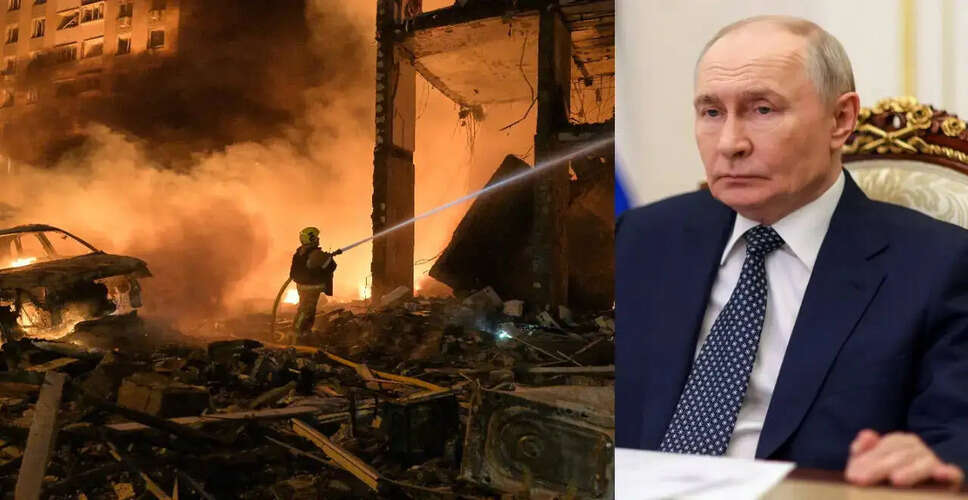
Russia has expressed disagreement with the United States regarding the belief that recent drone attacks by Ukraine on Russian soil could facilitate an end to the ongoing conflict, which has persisted for over four years. The Kremlin cautioned that such actions might actually extend the duration of the war. This response follows comments made by Donald Trump during the NATO summit, where he suggested that both Russia and Ukraine are inclined to seek a resolution, indicating that a solution might be on the horizon. At the same summit in Turkey, US Secretary of State Marco Rubio noted that Russia is struggling to protect its airspace, which he hopes will create opportunities for negotiations to conclude the war. Trump remarked, "It's an escalation, but it's also an escalation that can help lead to an end."
Kremlin's Clarification
Kremlin's Clarification
In response to these assertions, Kremlin spokesperson Dmitry Peskov informed the media that there are "certain misconceptions within the White House administration... regarding the idea that escalation and military pressure can help pave the way for a peaceful settlement." He criticized this notion as fundamentally flawed, suggesting that what Russia refers to as its "special military operation" in Ukraine may continue for an extended period. Peskov stated, "It will result in our having to establish a larger security zone — a larger buffer zone. Consequently, stoking tensions and taking actions that drive escalation will in no way contribute to the peace process."
Putin's Position on Negotiations
Putin's Position on Negotiations
According to three sources familiar with the Kremlin's thinking, President Vladimir Putin is currently dismissing calls for peace talks with Kyiv. They indicated that Ukraine's recent drone strikes targeting Russian oil facilities and ports have only reinforced his determination to continue the fight. Two of these sources suggested that Putin is likely to escalate military actions. One source, who regularly meets with the president, mentioned a "high probability" of increased conflict in the upcoming months. Regarding Trump's decision to permit Ukraine to produce Patriot air defense systems under license, Peskov remarked that Moscow is fully aware of the U.S. arms supplies to Kyiv. He stated, "We do not view the situation through rose-tinted glasses, and President Putin is fully aware of this. At the same time, there is a certain duality in the U.S. position: unlike the Europeans, the United States maintains a desire to facilitate a move toward a peace process. They may be mistaken or wrong at times, but that desire strikes us as sincere." Trump's attempts to mediate the conflict in Ukraine have stalled recently as Washington has shifted its focus to the situation in Iran. However, Peskov reiterated that the Kremlin hopes U.S. mediation efforts will resume once the crisis in the Middle East is resolved.
Conclusion
With inputs from various sources