
Ruben Amorim's Tenure at Manchester United Ends in Disappointment
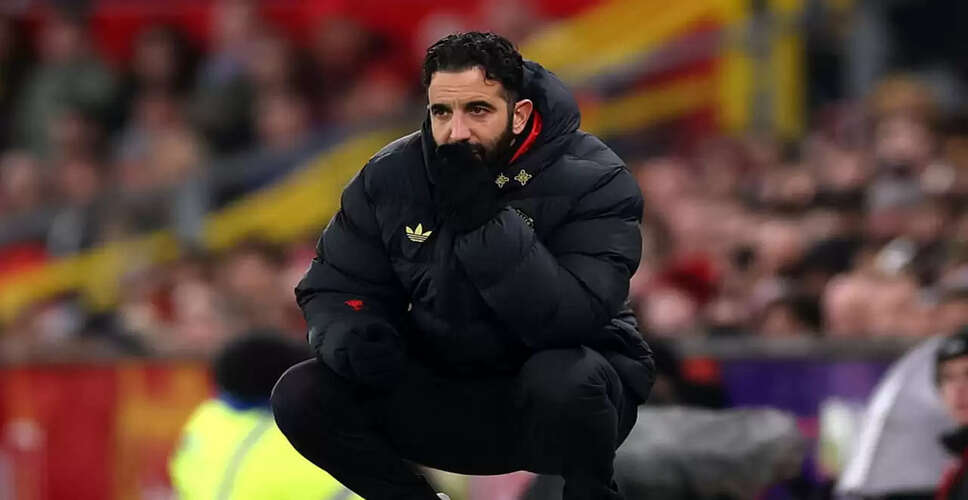
A Charismatic Yet Unsuccessful Era
Ruben Amorim made a notable entrance at Old Trafford, captivating fans with his charm and candidness about Manchester United's struggles. However, his unwavering commitment to a strict 3-4-2-1 formation, which he once claimed was unchangeable, ultimately led to his undoing.
This inflexibility contributed to United's worst-ever finish in the Premier League last season. As he deployed yet another defense-oriented lineup against a struggling Wolves team late last year, even the most loyal supporters began to recognize the futility of his approach.
Unprepared for the Challenge
Amorim became the tenth manager to take charge since Sir Alex Ferguson's departure, including interim coaches. Yet, he appeared the least equipped to handle the immense legacy he inherited. His successes at Sporting Lisbon, including a memorable 4-1 victory over Manchester City in the Champions League, showcased his potential. However, in England, the pressure proved overwhelming.
His press conferences were often engaging but sometimes bordered on melodrama. When he labeled his squad as the worst in United's history, it came off as inflammatory rather than courageous. This raised questions about whether he sought sympathy or was attempting to set the stage for a comeback.
On-Field Failures and Missed Opportunities
While he did guide the team to the Europa League final last season, United suffered a disappointing loss to a mediocre Spurs side, marking one of the dullest finals in recent memory. There was a distinct lack of momentum or signs of genuine progress.
United's home performance told a grim story: just one win in five matches against teams like Everton and Wolves, accumulating only six points from a possible 15. The team seemed to be adrift.
Misjudging the Power Dynamics
When Amorim publicly expressed frustration with the club's recruitment and authority, he miscalculated the power dynamics. Unlike Chelsea's Enzo Maresca, he lacked any trophies to bolster his position. He overestimated his influence and underestimated the board's resolve.
His final outburst after a disappointing draw against Leeds felt like a performance from an actor unaware that the stage had collapsed around him. It was compelling to watch, but he had lost his footing.
Statistics That Tell the Story
Amorim's dismissal, confirmed after the Leeds match, marks one of the most disappointing managerial tenures in United's recent history. His record stands at 24 wins from 63 matches across all competitions.
His win percentage was lower than that of Erik ten Hag and Louis van Gaal, and only slightly better than Ralf Rangnick, who managed fewer than 30 games. To find managers with worse records, one must look back decades, even over a century.
Since his appointment in November 2024, only Wolves, West Ham, and Tottenham have accrued fewer Premier League points than United's 58, with a goal difference of minus six.
A Troubling Start to the Season
Despite over £215 million spent on new signings, including Bryan Mbeumo and Matheus Cunha, the situation did not improve. United's start to the current season has been their worst in 33 years, with only seven points from six matches.
Even more concerning was Amorim's refusal to abandon his back three formation, with success only coming when he finally switched to a back four against Newcastle.
The Inevitable Conclusion
Behind the scenes, the decision to part ways was already in motion. Following a meeting after the Wolves draw, where the board expressed their belief in the squad's potential, Amorim's furious response sealed his fate.
He was officially let go on Monday morning at Carrington, with Darren Fletcher stepping in as interim manager. Amorim was entitled to £12 million in compensation if dismissed before November 1, though the final severance amount remains uncertain.
A Club in Search of Stability
As Manchester United moves forward, they are once again on the lookout for a new manager. Potential candidates include Enzo Maresca, Darren Fletcher, and several high-profile names such as Zinedine Zidane and Mauricio Pochettino.
For now, the club maintains that the squad, designed for Amorim's 3-4-2-1 system, is adaptable, with European competition still a target.
A Legacy of Unfulfilled Potential
Amorim will be remembered at Old Trafford as a charismatic figure who spoke eloquently but failed to deliver results. His tenure began poorly and ended even worse, with a strategy that proved too rigid and outcomes that were disappointing.
In a decade-long quest for stability post-Ferguson, United has seen a series of unsuccessful successors. Amorim joins this unfortunate list, a manager who inspired hope but ultimately delivered disappointment.