
Rising Tensions in India-China Relations Over Shaksgam Valley
Escalating Tensions in India-China Relations
The relationship between India and China is once again experiencing heightened tensions, primarily due to the Shaksgam Valley issue. China has not only reiterated its claim over this disputed area but has also justified the ongoing construction activities there, dismissing India's objections outright. This stance poses a direct challenge to India's sovereignty and territorial integrity. China's approach is part of a long-term strategy aimed at establishing territorial claims through on-ground developments. By constructing roads, bridges, and other infrastructure, China is gradually increasing its military and strategic pressure in the region. By asserting its activities in the Shaksgam Valley, Beijing has made it clear that it disregards India's sensitivities.
China's Justification for Construction
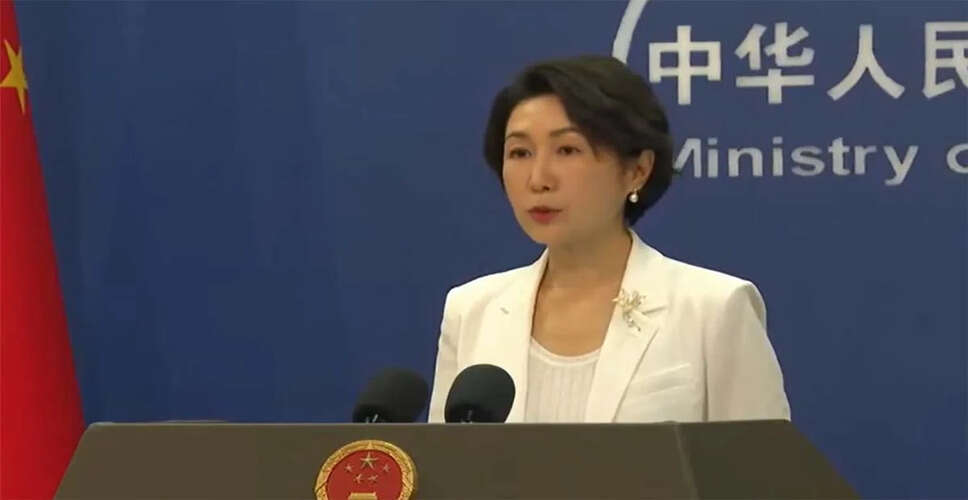
According to China, the Shaksgam Valley is rightfully its territory, and the construction work being carried out is entirely legitimate. They argue that this area falls under a border agreement between China and Pakistan, and the development projects are in the interest of the local population. A spokesperson from the Chinese Foreign Ministry dismissed India's objections, stating that the area in question is part of China. The spokesperson clarified that the infrastructure development is taking place within China's own territory and is both legal and justified. They also mentioned that the border agreement made in the 1960s between China and Pakistan is an internal matter between the two sovereign nations. Furthermore, they asserted that the China-Pakistan Economic Corridor (CPEC) and the border agreement do not influence China's stance on the Kashmir issue, which remains consistent.
Strategic Implications of China's Actions
The arguments presented by the Chinese spokesperson reveal a clear underlying motive. The construction of roads and other infrastructure in the Shaksgam Valley enhances China's military mobility in the Karakoram region, which is in close proximity to the Siachen Glacier and Ladakh. A strong presence in this area signifies an increase in strategic pressure on India and the potential for a united front with Pakistan.
India's Firm Response
India has categorically rejected China's claims, labeling them as illegal and unacceptable. The Indian government maintains that the Shaksgam Valley is an integral part of Jammu and Kashmir, and any Chinese claims over it are not recognized. India has reiterated that Pakistan had no right to cede this territory to any third country. The so-called border agreement between Pakistan and China has always been deemed illegal by India. Additionally, India has dismissed all projects that traverse its territory without its consent.
Significance of India's Stance
India's response is significant as it signals that the country will not limit itself to diplomatic protests. On matters related to national security, India is prepared to take all necessary steps to protect its interests.
Understanding the Shaksgam Valley Dispute
The Shaksgam Valley is a high-altitude region located north of the Karakoram mountain range and is strategically important. This area is considered part of Pakistan-occupied Kashmir, which India has always claimed. In 1963, Pakistan ceded a significant portion of this valley to China, a move India has never recognized, asserting that the territory rightfully belongs to India and that Pakistan is merely an illegal occupant. Since this agreement, China has gradually strengthened its presence in the area, moving from limited patrols to surveys and now large-scale construction.
Strategic Risks for India
The importance of this valley is amplified by its proximity to the Siachen Glacier, which is already the highest battlefield in the world. Any disruption in this area poses a serious threat to India's security. China's activities in the Shaksgam Valley directly impact India's northern borders. If China and Pakistan enhance their military coordination in this region, India could face pressure on two fronts. This situation represents not just a military challenge but a long-term strategic crisis, as this area could become a hub for energy routes, trade pathways, and strategic connectivity. China aims to use this region to expand its influence and limit India's role in South Asia.
A Warning for India
There is no doubt that the Shaksgam Valley issue serves as a warning for India. It underscores that China is not merely engaged in rhetoric but is committed to altering the ground realities. The expansion under the guise of construction is essentially a strategy to challenge India's borders. This matter transcends the valley itself; it concerns the nation's sovereignty, dignity, and future security. A clear and decisive policy regarding the Shaksgam Valley is essential for India to stand firm against upcoming geopolitical storms.
Political Reactions
In light of the Chinese spokesperson's statements, the opposition party has criticized the Modi government, alleging that its foreign policy is in a precarious state. The party highlighted on social media that China has now claimed the Shaksgam Valley as its own. The spokesperson from the Chinese Foreign Ministry stated that the construction of infrastructure in the Shaksgam Valley is not wrong, prompting the opposition to question Modi's stance on the issue.