Rising Sugar Prices: A Blessing in Disguise for Health?
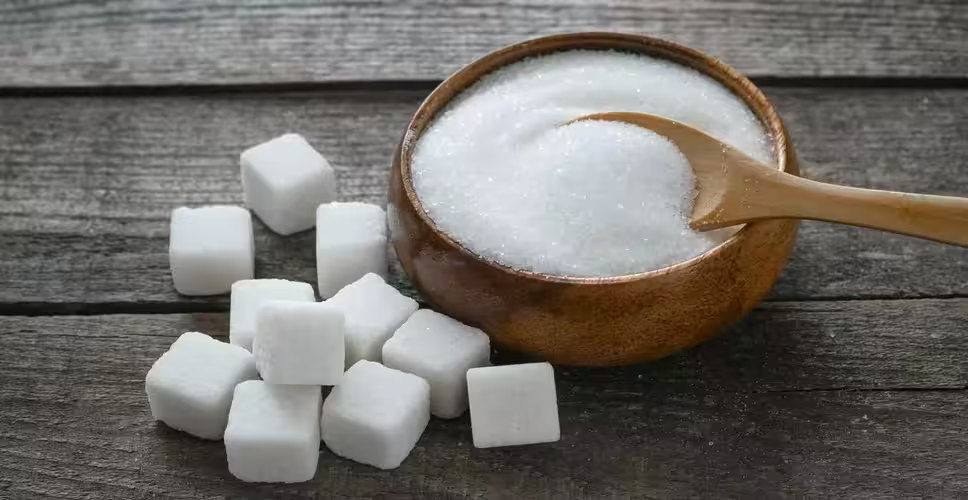

Impact of Sugar Price Hike on Daily Life
Indore, Madhya Pradesh: The surge in sugar prices has created a somber atmosphere across the nation. Many are left grappling with the dilemma of whether to sweeten their tea or pay their children's school fees. However, viewing this situation solely from the perspective of the common man might be shortsighted. The real beneficiaries appear to be the businesses and the government, who have inadvertently aided millions of diabetes patients tired of hearing the same advice from doctors: 'Reduce your sugar intake.'
For years, doctors have emphasized the importance of cutting back on sugar. Patients would smile and respond, 'Doctor, a little sweetness is essential in life.' Unbeknownst to them, the market would soon take care of this issue. With sugar prices skyrocketing, individuals now check their bank balances before adding even a spoonful to their tea. Previously, sugar was added for flavor; now, the rising costs make people hesitate. A housewife might say, 'Honey, today’s tea is bland,' to which her husband replies, 'Not bland, dear, it’s healthier.'
Perhaps the government aims for a healthier nation. Where else can one find such health improvement strategies in books? By increasing sugar prices, the consumption of sweets will naturally decline. Less consumption of sweets means reduced weight, leading to fewer visits to the doctor. Fewer doctor visits will ease the pressure on the healthcare system. Thus, raising sugar prices can be seen as a 'multi-faceted health initiative.'
Business owners have also contributed to this grand scheme, claiming, 'We are merely responding to market demands.' The public questions, 'But why is it always our burden?' The merchants smile and reply, 'Because you are the customers.'
Currently, people scrutinize sweet boxes before gifting them at weddings, as if purchasing precious items. Relatives inquire, 'How much sweets did you send?' The response is often, 'Have you seen the prices? We managed with half a kilo.' Sweet vendors appear serious, having reduced the size of their sweet platters. The rasgulla remains the same, but its size evokes childhood memories of playing marbles. Customers glance at a few strands of jalebi, pondering whether it’s a sweet or just a teaser.
Diabetes patients are experiencing newfound joy. When someone insists on offering them sweets, they can politely decline, saying, 'No, the doctor advised against it.' The other person, recalling the high sugar prices, will quickly agree, 'Absolutely, don’t eat it. It’s too expensive anyway.'
Those who have long claimed that 'giving up sweets is tough' are now relieved. This unique health initiative has achieved what willpower could not.
While inflation is often seen as a curse for the public, in our context, every curse seems to hide a beneficial policy. If petrol prices rise, walk; if vegetable prices soar, eat less; if electricity costs increase, enjoy nature in the dark; and if sugar prices climb, embrace health.
So, fellow citizens, there’s no need to fret. With rising sugar prices, consider it a 'national health campaign.' Tea may be less sweet, sweets may be fewer, and wallets may feel lighter, but in the eyes of the government and the market, your health is progressing towards a brighter future.
And if someone asks, 'Why has sugar become so expensive?' just smile and say, 'This isn’t inflation; it’s a joint campaign against diabetes by the government and businesses. The only difference is that the public always bears the cost!' This is what we call a clear burden.
Author's Note
Sanjay M. Taranecker
Visual Representation