
Rising Jihadi Threats in Assam: Authorities on High Alert
Concerns Over Jihadi Activities in Assam
Guwahati, Jan 1: The emergence of jihadi activities in Assam has raised significant alarms, with law enforcement agencies actively working to counter these threats. Despite multiple arrests of suspected jihadi operatives, these anti-national elements continue to attempt to establish a presence in the region.
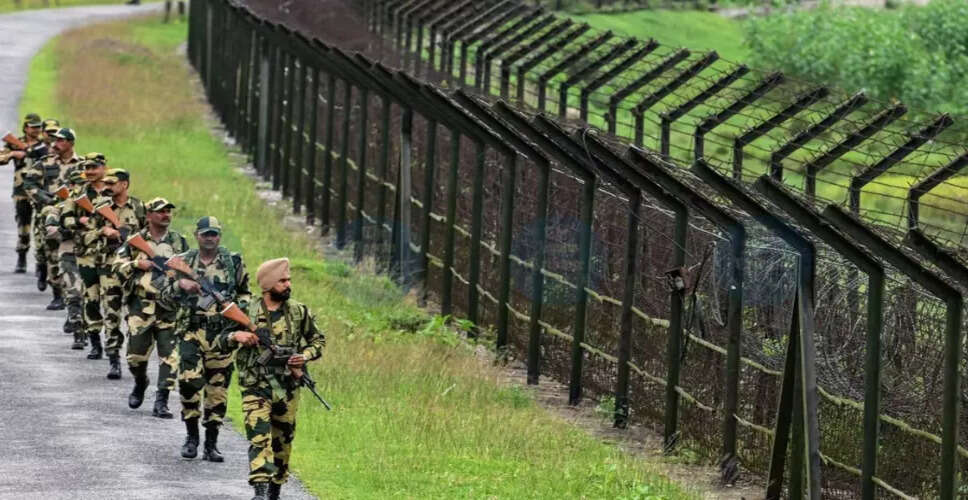
According to police sources, security forces are vigilant in addressing these jihadi movements. Reports indicate that these organizations are not only trying to gain a foothold in Assam but are also leveraging the state's border with Bangladesh to infiltrate India and expand their operations across the country. Their strategy appears to involve creating a network within India to facilitate acts of sabotage.
The Assam Police are closely monitoring these jihadi activities. "We are collaborating with central intelligence agencies. Our analysis has revealed the activities of the Imam Mahmuder Kafila (IMK) module," sources stated. The Special Task Force (STF) of Assam Police has apprehended 11 individuals linked to this group.
The IMK is identified as a Bangladesh-based faction of the Jamaat-ul-Mujahideen Bangladesh (JMB), which is banned in India. Established in 2018 by Jewel Mahmud, also known as Imam Mahmud Habibullah, the group promotes the ideology of "Ghazwatul Hind." Following a political shift in Bangladesh in August 2024, directives were issued to IMK leaders to activate and broaden their operations in India.
To facilitate this, Bangladeshi nationals Umar and Khalid have been tasked with overseeing the group's activities in Assam, with Nasim Uddin alias Tamim from Barpeta Road leading the local cell.
These operations are coordinated through secure social media channels. One prominent group, 'Purba Akash', serves as a key platform for communication and recruitment. Individuals from Assam, West Bengal, and Tripura are being radicalized and recruited, including those with Indian passports who have previously traveled to Bangladesh, as well as known former members of banned terrorist organizations.
The IMK positions itself as an extremist module centered on Ghazwatul Hind, promoting ideologies aligned with international jihadi groups. Following the governmental changes in Bangladesh, members of JMB, ABT, and AQIS have been emboldened, leading to a resurgence of their influence and networks in India, particularly through IMK-linked platforms. The group disseminates extremist propaganda advocating for violent jihad and the armed conquest of India via digital channels, including dedicated websites and social media under the Ghazwatul Hind banner.
Additionally, radical literature authored by IMK leaders, such as 'Sarbobhoumo Khamatar Malik Allah' and 'Ghazwatul Hind er Sonkhip-to Alochona', is systematically circulated online to indoctrinate followers and sympathizers.
In Assam, extremist content has been shared on the encrypted social media platform 'Purba Akash'.
The IMK employs a structured approach to radicalize and recruit new members. Indian recruits are identified through online jihadist channels, exposed to IMK propaganda (books and lectures), and monitored in secure social media groups. To formally join IMK, recruits must pledge allegiance to Amir Mahmud Habibullah, submitting personal details and identity verification through a prescribed form, along with a video of their oath sent to an 'Indian Zimmedar' for verification. Only after this process are recruits officially accepted into the group. This method has reportedly led to the radicalization of numerous youths in Assam, particularly in Barpeta and Chirang districts, as well as West Bengal.
IMK also takes advantage of social and religious gatherings. Several secret meetings were conducted at local mosques in December 2024. During a meeting on December 28, 2024, IMK leaders, including Nasim Uddin and Manirul Islam, made statements advocating for violent armed resistance in India, asserting that "atrocities against Muslims in India must be countered with armed struggle."
Typically, each meeting involves six to eight local youths who are indoctrinated and encouraged to prepare for jihad. Furthermore, some IMK members have traveled to Bangladesh on valid passports and visas to meet with IMK leadership, with many being urged to visit Bangladesh (even with their families) for arms training. Notably, at least two operatives from Assam (Nasim Uddin and Siddik Ali from Barpeta) crossed into Meghalaya in April 2025 to meet their Bangladeshi handlers.