
Rising Japanese Encephalitis Cases in Assam: Urgent Action Needed

Increasing Death Toll from Japanese Encephalitis
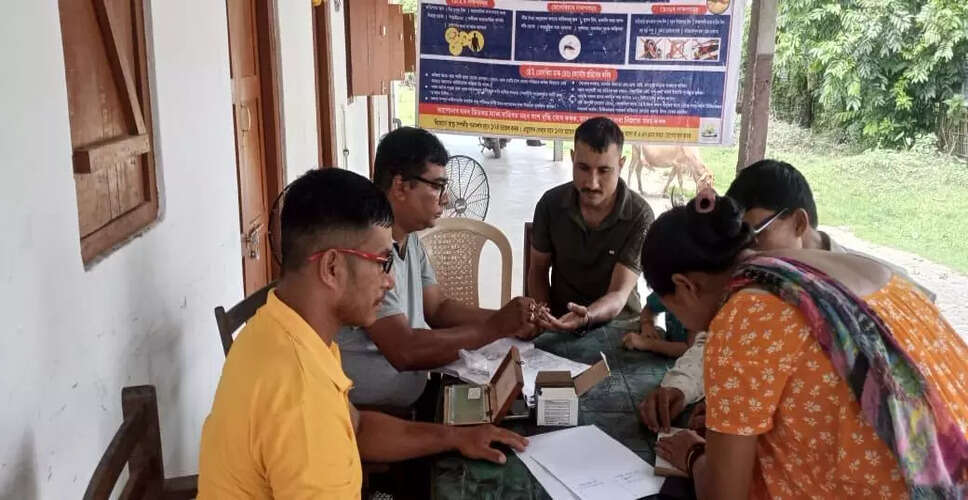
File image of an awareness programme on vector borne disease. (Photo: NHM Sonitpur)
Guwahati, July 4: In Assam, the death toll from Japanese Encephalitis (JE) has risen to 15, with five fatalities reported in the past ten days as the mosquito-borne disease continues to spread throughout the region.
Currently, there are 119 confirmed cases of the virus, with Kamrup district reporting the highest number at 17, followed by Morigaon with 8 and Sivasagar with 7.
Kamrup district has seen four deaths, while Barpeta, Jorhat, and Lakhimpur each recorded two fatalities. Additionally, one death was reported in Kamrup (Metro), Cachar, Bongaigaon, Dima Hasao, and Tamulpur.
Researchers indicate that Assam's ecological factors, including extensive rice farming, wetlands, and a significant pig population, contribute to the transmission of the JE virus.
A study titled "Japanese Encephalitis Crisis in Assam, India: Call for Targeted Action as Cases Surge Statewide" by Dr. Biswa Prasun Chatterji and Sabrina Sultana Rahman, published in 2025, emphasizes the increasing risk of JE in Assam. This research appeared in the Transactions of the Royal Society of Tropical Medicine and Hygiene (London).
Despite the success of childhood vaccination programs in reducing infections among younger populations, adults now represent the majority of JE cases in the state.
“Following the mass vaccination initiative for children aged 1-15 that started in 2006, a notable demographic shift in JE cases has occurred. An analysis from 2011-2012 revealed that out of 194 confirmed cases, only 41 (21 percent) were in children under 15, while 153 (79 percent) were adults. This indicates that childhood vaccination has effectively lowered infections among children, leaving adults more vulnerable,” explained Chatterji.
In 2025, Assam reported 389 laboratory-confirmed JE cases and 72 deaths, accounting for nearly half of India's total JE cases and the majority of fatalities nationwide.
The researchers advocate for enhanced adult vaccination, improved vector control measures, better surveillance, and increased clinical readiness to prevent future outbreaks.
“With the monsoon season ongoing and the potential for further escalation, immediate and effective public health interventions—focused on vaccination, vector management, and clinical preparedness—are essential to address this ongoing JE crisis,” Chatterji concluded.