
Rising Concerns Over Abductions and Forced Conversions of Minority Girls in Pakistan
Alarming Trend of Abductions
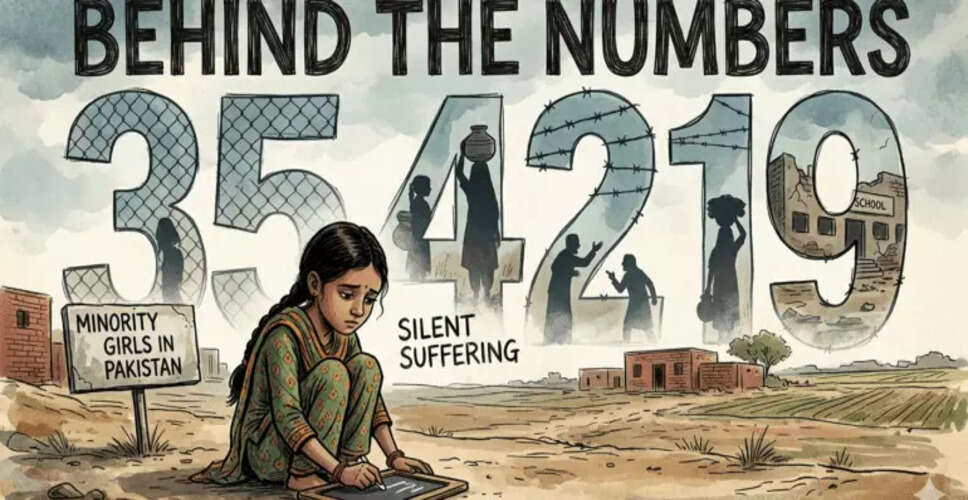
Islamabad, March 18: A prominent organization advocating for minority rights has raised alarms regarding the increasing incidents of abductions and coerced religious conversions of girls from minority communities in Pakistan, with 515 cases documented between 2021 and 2025.
The Voice of Pakistan Minority (VOPM) emphasized that these statistics represent more than just numbers; they signify individual tragedies involving frightened girls, devastated families, and communities living in fear.
According to their findings, Hindu girls make up 69% of the victims, while 31% are from the Christian community, with a few cases involving Sikh girls.
"These statistics reveal the precarious situation of minority groups that are already marginalized. When a community lacks social power and institutional support, its most vulnerable members, particularly young girls, are at the highest risk," the VOPM stated.
Highlighting the age demographics of the victims, the organization noted that 52% are aged between 14 and 18 years, and 20% are younger than 14.
These cases often lead to a painful quest for justice, where parents are informed that their daughters have "converted" or "married willingly," raising significant concerns about consent, especially for minors.
Human rights advocates have consistently voiced their concerns regarding these occurrences.
The VOPM referenced reports indicating that many victims are pressured or deceived into conversions and marriages, particularly in scenarios where minority families lack the means or influence to pursue legal action.
In some instances, Pakistani courts have even validated these marriages and conversions, leaving families in despair and without recourse.
The Centre for Social Justice (CSJ), a human rights organization based in Pakistan, underscores the gravity of this issue, documenting numerous cases of abduction and forced conversion of minority girls, many of whom are minors.
"These findings underscore the urgent need for enhanced legal protections and accountability within institutions. What exacerbates the situation is the pervasive silence surrounding these issues. A case may momentarily ignite outrage in the media or on social platforms, but the attention quickly wanes, replaced by another story, leaving previous victims out of the public discourse. The cycle continues unabated," the VOPM remarked.
"For minority communities, this silence can feel like neglect. It conveys a painful message—whether intentional or not—that their suffering does not elicit the same urgency or empathy," it added.
The VOPM asserted that addressing the abduction and forced conversions of minority girls in Pakistan requires more than just sympathy or fleeting outrage. It calls for stronger legal protections for minors, transparent investigations, accountability for offenders, and meaningful safeguards for vulnerable communities. Most importantly, it necessitates that society listens to the voices of victims and their families—voices that are often overlooked.