
Rising Cases of Japanese Encephalitis in Assam: Health Department Takes Action

Increasing Death Toll from Japanese Encephalitis
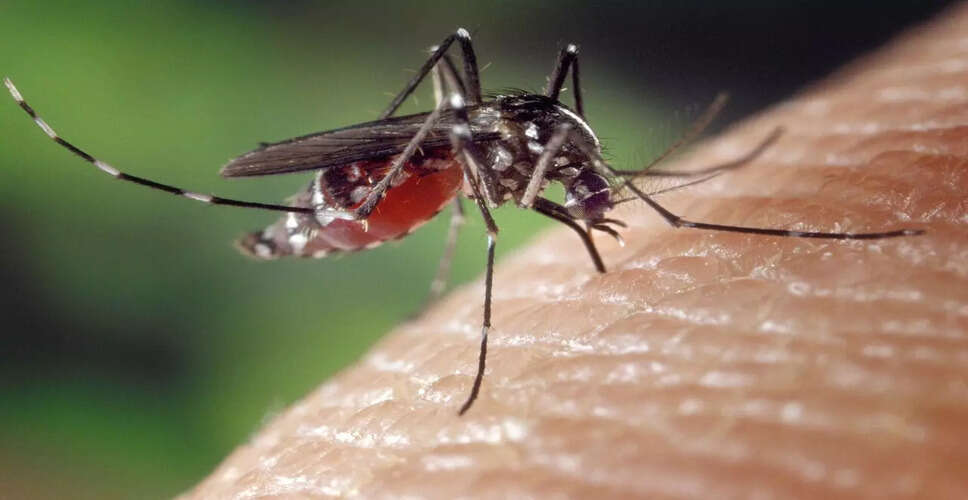
Early symptoms of JE include high fever, stiff neck, and severe headaches (Representational Image)
Guwahati, June 24: This year, Assam has reported a total of 10 fatalities attributed to Japanese Encephalitis (JE), with 42 confirmed cases documented to date.
Kamrup district has seen the highest number of deaths, totaling three, while Barpeta and Lakhimpur each reported two. Additionally, one death was recorded in Kamrup (Metro), Cachar, and Jorhat.
The state has also noted 519 instances of Acute Encephalitis Syndrome (AES), resulting in 36 deaths thus far.
As JE continues to be a seasonal health concern in Assam, the State Health Department has implemented various preventive strategies in at-risk districts. These include extensive vaccination campaigns, training sessions for healthcare professionals, and initiatives to raise public awareness.
Health officials have confirmed that adult vaccinations against JE have been effectively conducted in districts such as Dhubri, Bongaigaon, Majuli, Sonitpur, Charaideo, and Sribhumi, achieving over 85% coverage of the targeted adult population.
Since February, the department has launched multiple efforts to enhance preparedness. Personnel from the 108 emergency ambulance service have received training on the appropriate handling and transport of JE patients to medical facilities. Medical officers and staff at health centers and sub-centers have also been trained specifically for the early detection and management of JE cases.
Officials noted that while upper Assam districts have historically reported the majority of JE cases, there has been a concerning rise in cases in lower and central Assam districts, including Barpeta, Bajali, Baksa, Tamulpur, Nalbari, Kamrup, Morigaon, and Nagaon.
Health experts indicate that Assam's climate renders it particularly susceptible to JE, especially during the monsoon months of June, July, and August. Individuals working in rice fields are at a heightened risk due to increased exposure to mosquito bites. Wild birds, which can carry the virus without showing symptoms, are also a significant concern.
Statistically, one JE case arises from every 500 infections, with a mortality rate of approximately 30% among confirmed cases.
To alleviate the financial strain on affected families, the government has made JE treatment free at all public healthcare facilities. Furthermore, reimbursement of up to Rs 1 lakh is available for treatment costs.
The Health Department has also initiated fogging operations in impacted regions. However, officials caution that extensive fogging may not always be advisable, as it can negatively impact beneficial insect species and the local ecosystem.
Health officials are urging the public to adopt preventive measures against mosquito bites. “Achieving effective results will not be feasible solely through treating infected individuals or employing mosquito-control methods. People are encouraged to wear loose, long-sleeved clothing that covers their arms and legs when visiting rice fields, wetlands, and gardens. Women are generally less affected by Encephalitis, likely due to their tendency to wear more covering attire,” an official stated.