
Return to Roots: Arunachal Pradesh's Vibrant Villages Initiative Sees Migration Back to Border Areas
Reviving Border Villages in Arunachal Pradesh
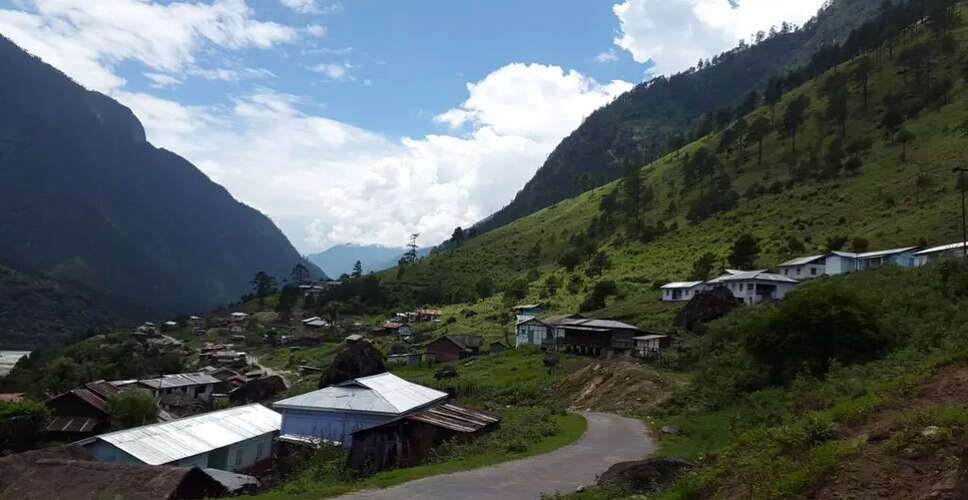
New Delhi, Feb 4: Residents are beginning to return to their homes in certain border districts of Arunachal Pradesh as part of the Vibrant Villages Programme, despite the absence of a formal evaluation regarding reverse migration or its effects.
In a written statement, Nityanand Rai, the Minister of State for Home Affairs, indicated that while the central government has not conducted any assessment of the programme's effects, the state government has reported an influx of people back to border villages.
“No formal impact assessment has been conducted. However, the Arunachal Pradesh Government has indicated that individuals are returning to villages in the border districts of Kurung Kumey, Dibang Valley, and Shi-Yomi,” Rai stated following a query in the Lok Sabha on Tuesday.
This response was prompted by BJP MP Baijayant Panda, who inquired whether the government had evaluated the Vibrant Villages Programme (VVP) regarding its influence on reverse migration, women's entrepreneurship, and youth-driven rural innovation in border areas, and if so, what the findings were.
Rai explained that the first phase of the Vibrant Villages Programme was approved in February 2023 as a centrally sponsored initiative aimed at the “comprehensive development of selected villages” along the northern border, encompassing 46 blocks across 19 districts in Arunachal Pradesh, Himachal Pradesh, Sikkim, Uttarakhand, and the Union Territory of Ladakh.
“Initially, 662 villages were prioritized for comprehensive development under VVP-I,” he added.
To further this initiative, the government sanctioned the second phase of the Vibrant Villages Programme in April 2025, which aims to include border blocks along international land borders in 15 states and two Union Territories beyond the northern border.
“Under VVP-II, a total of 1,954 villages have been earmarked for comprehensive development,” the minister noted.
Regarding implementation, Rai mentioned that 2,558 projects and initiatives with a budget of Rs 3,431 crore have been approved under VVP-I, including collaborations with other central ministries and departments.
He also highlighted that over 8,500 activities have been executed so far, which include awareness campaigns, service delivery camps, training and capacity-building sessions, health and veterinary camps, fairs and festivals, and the promotion of tourism across the involved states and UTs.
The primary goal of this scheme is to provide adequate incentives for individuals to remain in the selected villages.