
Renewed Tensions Between the U.S. and Iran: A Fragile Truce at Risk
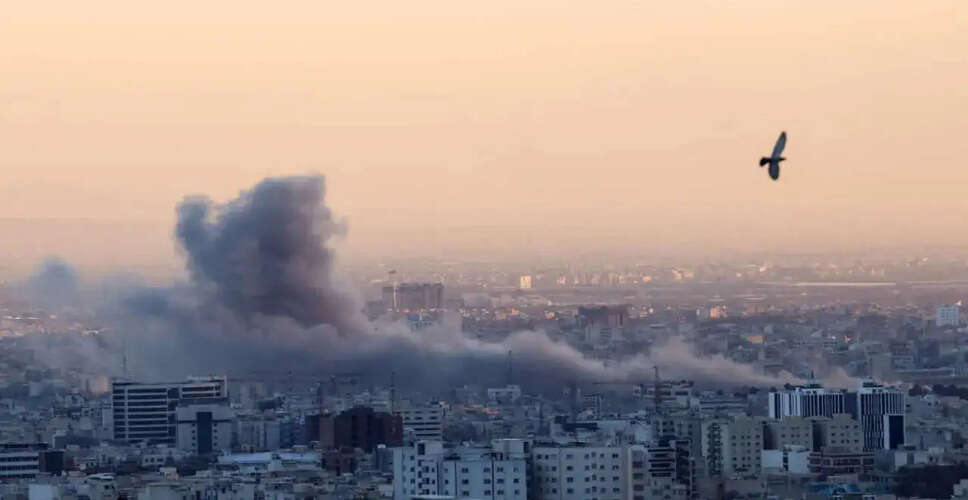

Escalating Conflict
The delicate truce that once existed between the United States and Iran is rapidly deteriorating, resembling an active conflict once more. In recent hours, both nations have engaged in strikes against each other, leading President Trump to openly consider abandoning diplomatic efforts.
RapidResponse47
2071010348908347537
On Saturday, the situation intensified with another series of attacks, prompting Trump to declare on Truth Social that the U.S. might resume military action to 'complete the job.'
The Importance of the Situation
Labeling the current state as a ceasefire would be overly optimistic. The U.S. and Iran are actively targeting each other's military forces, raising significant doubts about the viability of the truce established just over a week ago.
Disputes Over Agreement Terms
The resurgence of hostilities can be attributed to differing interpretations of the memorandum of understanding signed ten days prior, particularly regarding the operational status of the Strait of Hormuz.
Reports indicate that this disagreement has escalated to the point where the upcoming technical negotiations scheduled for Tuesday in Switzerland may not proceed as planned.
Understanding the Original Agreement
To grasp the current situation, it's essential to revisit the goals of the memorandum. Under this agreement, Iran pledged to facilitate the safe passage of commercial vessels through the Strait of Hormuz, while the U.S. agreed to lift its blockade on Iranian ports.
During last week's discussions in Switzerland, the U.S. delegation, led by Vice President Vance, established a direct communication line between the U.S. military and Iran's Islamic Revolutionary Guard Corps to coordinate maritime traffic. However, as of Saturday, this hotline had yet to be activated, according to reports. Meanwhile, Iran has reiterated its demand for ships to coordinate directly with its authorities, further escalating tensions.
Recent Military Actions
The situation escalated on Saturday evening when the U.S. military targeted Iranian sites in retaliation for an earlier attack on a commercial tanker. This marked the second wave of U.S. strikes within a 24-hour period.
Iran responded with drone and missile strikes aimed at U.S. bases in Kuwait and Bahrain. Iranian state media reported threats from the IRGC of more aggressive actions against vessels in the Strait of Hormuz, jeopardizing the ongoing peace efforts.
The Initial Attack
Earlier that day, the IRGC launched a drone strike against the Panama-flagged tanker M/T Kiku, which was transporting over 2 million barrels of crude oil through the strait. This attack followed U.S. strikes in response to a separate incident involving a Singapore-flagged commercial vessel on Thursday.
Trump's Remarks
In a Truth Social post on Saturday evening, Trump addressed the recent strikes, confirming U.S. actions and indicating that patience is running thin. He warned that there may come a time when the U.S. would no longer be able to exercise restraint, stating, 'If that happens, the Islamic Republic of Iran will no longer exist.' The fate of the upcoming talks in Switzerland remains uncertain.