
Renewed Conflict Erupts Along Afghanistan-Pakistan Border

Escalation of Tensions in the Border Region
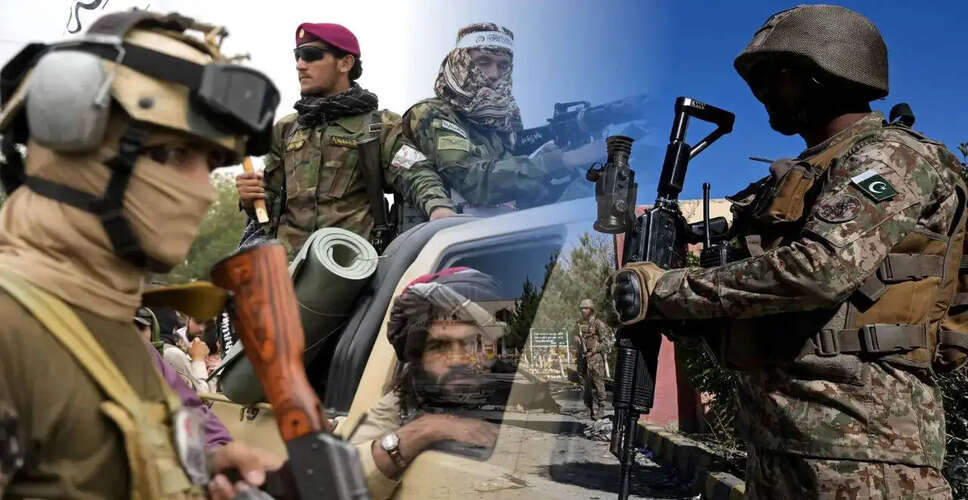
The volatile border between Afghanistan and Pakistan has once again become a site of intense conflict. Reports linked to the Taliban indicate that their fighters clashed with Pakistani military forces in the Tanai district of Khost province, an area historically marked by cross-border disputes. The Taliban claims that they have taken control of several Pakistani military posts, with reports of at least four Pakistani border guards losing their lives in the skirmishes. However, the Pakistan Army has yet to officially confirm these assertions. This lack of immediate acknowledgment is typical in such conflicts, where both parties often present conflicting narratives regarding the outcomes of engagements. Nonetheless, it is evident that the situation remains dynamic, with ongoing exchanges of fire and sporadic clashes occurring in critical border areas.
Background of the Current Conflict
A Conflict Rooted In February Escalation
The latest round of hostilities can be traced back to late February 2026, when Pakistan conducted airstrikes across various Afghan provinces, including Khost, Nangarhar, and Paktika. Islamabad asserted that these strikes were aimed at militant infrastructure associated with Tehrik-i-Taliban Pakistan (TTP) and Islamic State Khorasan Province (ISIS-K), framing the operation as a necessary response to a series of attacks within Pakistan. However, both Taliban authorities and the United Nations Assistance Mission in Afghanistan reported civilian casualties, further escalating tensions. Within days, the conflict transitioned from isolated airstrikes to a more extensive confrontation, characterized by artillery exchanges, drone operations, and ground battles along the border, indicating a shift from mere retaliation to ongoing military engagement. On February 26, Taliban forces declared a calculated response, targeting Pakistani military installations and border posts, which set the stage for the current escalation in Khost.
Pakistan's Military Response
‘Operation Ghazab lil Haq’ Failing its Objectives
In light of the Taliban's counterattacks, Pakistan escalated its military operations. The initiation of “Operation Ghazab lil Haq” marked a significant shift towards a broader campaign involving both aerial and ground assaults across several Afghan provinces, including Kabul, Kandahar, and Khost. Pakistani officials have claimed substantial success on the battlefield, asserting that hundreds of Taliban fighters have been killed and numerous positions neutralized. However, these claims are sharply contested by the Taliban, who argue that Pakistani airstrikes have resulted in civilian casualties and that their forces have inflicted considerable losses on Pakistani troops. Independent evaluations suggest that while many Pakistani strikes targeted military-related sites, civilian infrastructure, including healthcare facilities, was also impacted. The conflicting narratives highlight a deeper information war layered over the physical conflict, where verification remains challenging and narratives are tightly controlled.
Humanitarian Impact and Strategic Challenges
Humanitarian And Strategic Fallout
The ramifications of this conflict extend beyond the battlefield. Reports indicate that thousands of individuals have been displaced on both sides of the border, with civilians trapped amid retaliatory strikes and ongoing clashes. The United Nations Assistance Mission in Afghanistan has called on both parties to comply with international law and minimize harm to civilians. Inside Afghanistan, there are signs of increasing internal pressure, with reports of forced mobilization efforts and restrictions on media coverage, which hinder the flow of independent information from the affected regions. For Pakistan, the situation presents a dual challenge; while it seeks to demonstrate strength through Operation Ghazab lil Haq, it continues to face persistent resistance along the border, raising concerns about the viability of its current military strategy.