
Remembering the October 30 Tragedy: Assam's Darkest Day

A Day Forever Etched in Memory
The aftermath of the October 30 serial blasts that ripped Assam (Photo: @Sagar4BJP / X)
Some days are impossible to forget, lingering in the collective consciousness of a community, bringing back pain that time cannot erase. For the people of Assam, October 30 is one such date.
It has been eighteen years since a series of horrific bomb blasts devastated Guwahati, Kokrajhar, Barpeta Road, and Bongaigaon, transforming an ordinary day into one of the most tragic events in the state's history.
The explosions shattered countless lives, leaving families in ruins and a sorrow that persists. As this October 30 approaches, the neglected state of a memorial at Ganeshguri and the lack of a remembrance event have highlighted the significance of this anniversary.
The Ganeshguri flyover, a prominent landmark in Guwahati, serves as a reminder of the tragedy. Underneath it lies a memorial for the victims, yet this year, no commemorative event took place at this site, which has reportedly fallen into disrepair.
A Somber Reflection
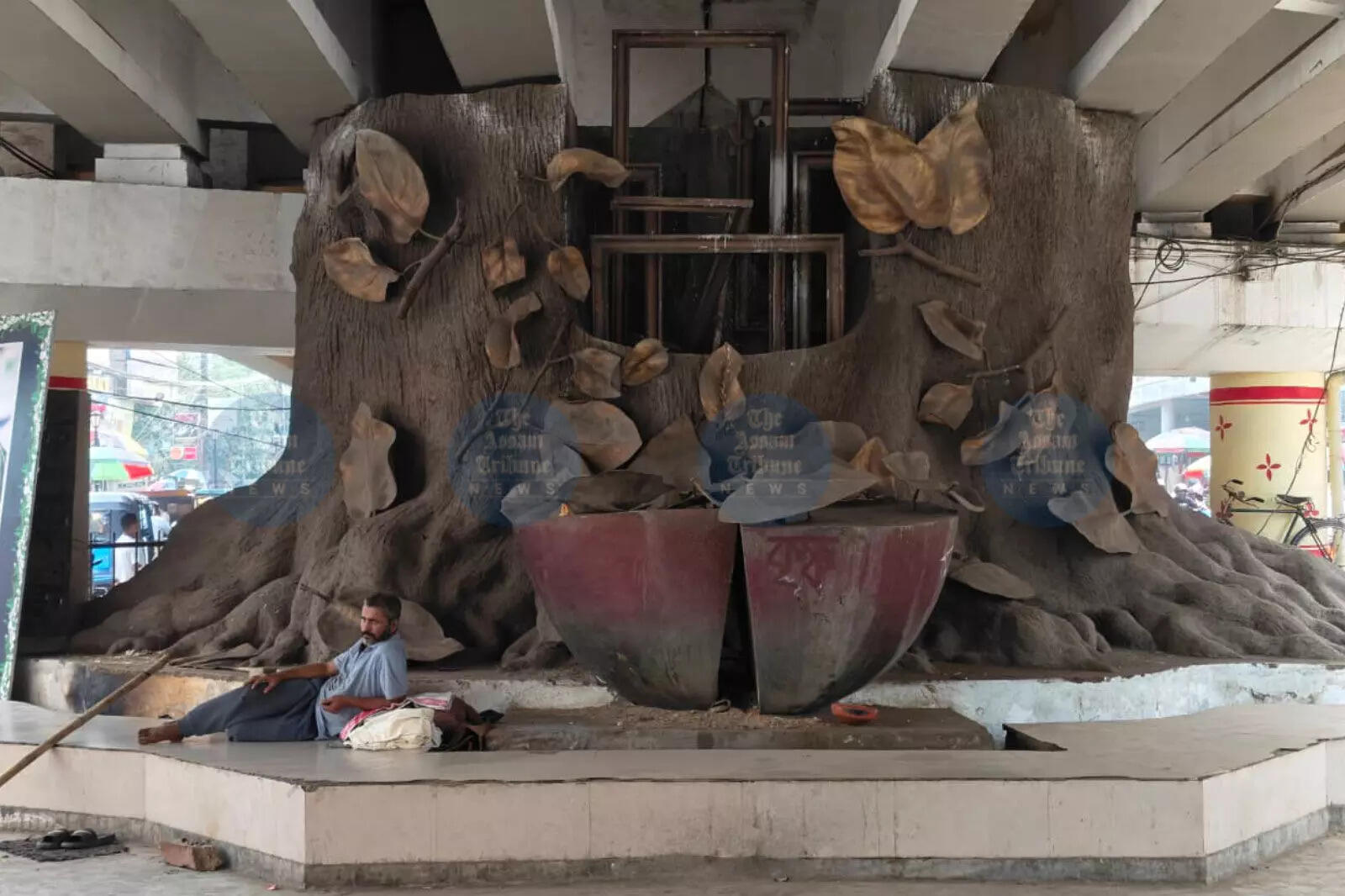
The memorial for October 30 blast victims lay neglected in Ganeshguri (Image)
While a memorial service was held at the Chief Judicial Magistrate (CJM) Court in Guwahati, the absence of a gathering at Ganeshguri marked a significant shift from the usual observances.
The Day That Changed Assam
On October 30, 2008, a series of nine bomb blasts struck various locations in Assam, including Ganeshguri, Panbazar, and Kachari in Guwahati, as well as Kokrajhar, Barpeta Road, and Bongaigaon.
The attacks sent shockwaves throughout the state, turning bustling streets into scenes of chaos. Individuals who had stepped out for daily activities found themselves caught in an unimaginable disaster.
The blasts resulted in 88 fatalities and left over 300 individuals injured. Many survivors continue to bear both physical and emotional scars. Families that had spent years building their lives were suddenly faced with profound loss.
Parents lost children, and children lost parents, leaving countless individuals to deal with injuries and trauma that would linger long after the explosions.
Behind the statistics were real lives, families, and futures irrevocably altered by the blasts.
Tributes and Silence
Traditionally, remembrance events have been held across Assam to honor the victims of the October 30 blasts. This year, a condolence service took place at the CJM Court in Guwahati, where members of the legal community gathered to pay their respects.
The Lawyers' Association of Guwahati organized the memorial, lighting candles and offering flowers at the court's memorial. Advocates who lost colleagues in the blasts attended, continuing to observe October 30 as a day of mourning.
Advocate Shikha Rani Das emphasized the importance of remembering their colleagues who perished in the attacks. However, she raised concerns about the support provided to the victims' families over the years.
“We, the advocates, have been observing October 30 as a Black Day every year to keep the memories of our colleagues alive. But even after so many years, the steps taken by the government to address the concerns of the victims and their families remain a matter of concern. Many victim families have not received the assistance they were entitled to,” Das stated.
The Ongoing Struggle of Survivors
For advocates present in Guwahati on that fateful day, the memories of the blasts extend beyond the loss of colleagues. They also recall the injured victims and the desperate attempts to save lives, as well as the long-term consequences faced by survivors.
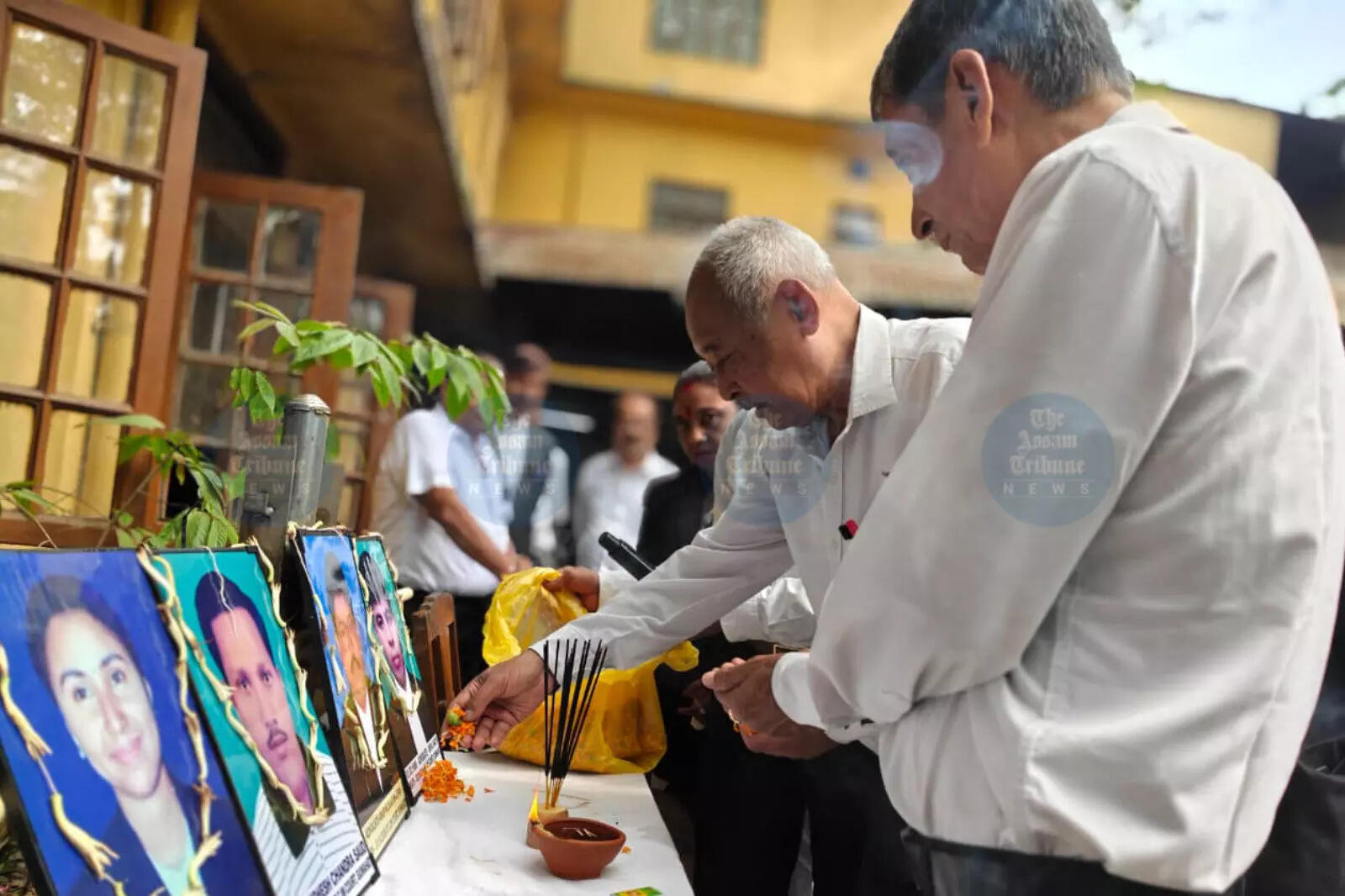
Members of the legal fraternity pay tributes to the October 30, 2008 blast victims at CJM court premises (Image)
Pradip Kumar Konwar, president of the Lawyers' Association, Guwahati, recounted the plight of several victims who suffered severe disabilities due to the explosions.
“Those who were present in court at the time know the situation we faced. Many people were left with disabilities. Some lost their ability to hear, speak or see. We later learned that one individual who had been brought to court for a hearing had lost his memory in the blast,” Konwar shared.
He mentioned that the association had reached out to human rights organizations and the courts for assistance for victims still suffering from the aftermath of the attacks.
A Call for Government Support
Recalling the immediate aftermath of the explosions, Konwar noted that advocates and others rushed to aid the injured.
“We ran to help people that day. Our shoes were burnt as we went to pick up the injured. I remember carrying a man to the hospital. He was alive when we picked him up, but by the time we reached the hospital, he had died. Many people lost their lives in similar circumstances,” he recounted.
Konwar urged the government to extend support to the families of the deceased and to survivors who continue to face hardships.
“There are many victims who are still suffering. We request the government to provide assistance to the affected families,” he added.
Apurba Kumar Sarma, secretary of the Lawyers' Association, Guwahati, stated that the association has observed October 30 as a Black Day every year since 2008.
“October 30, 2008, is a day known to everyone in Assam. We lost many of our colleagues in the blasts. We have observed this day as a Black Day since 2008 and continue to appeal to the government to provide assistance and ensure justice for the victim families,” Sarma said.
Justice and Ongoing Grief
The investigation into the October 30 blasts led to the arrest of several individuals, including the main suspect, NDFB leader Ranjan Daimary.
Daimary was apprehended in 2010, and in January 2018, a special court in Guwahati convicted him and others involved in the attacks, sentencing them to life imprisonment. In September 2022, the Gauhati High Court upheld the life sentences of Daimary and six of his associates while acquitting four others.
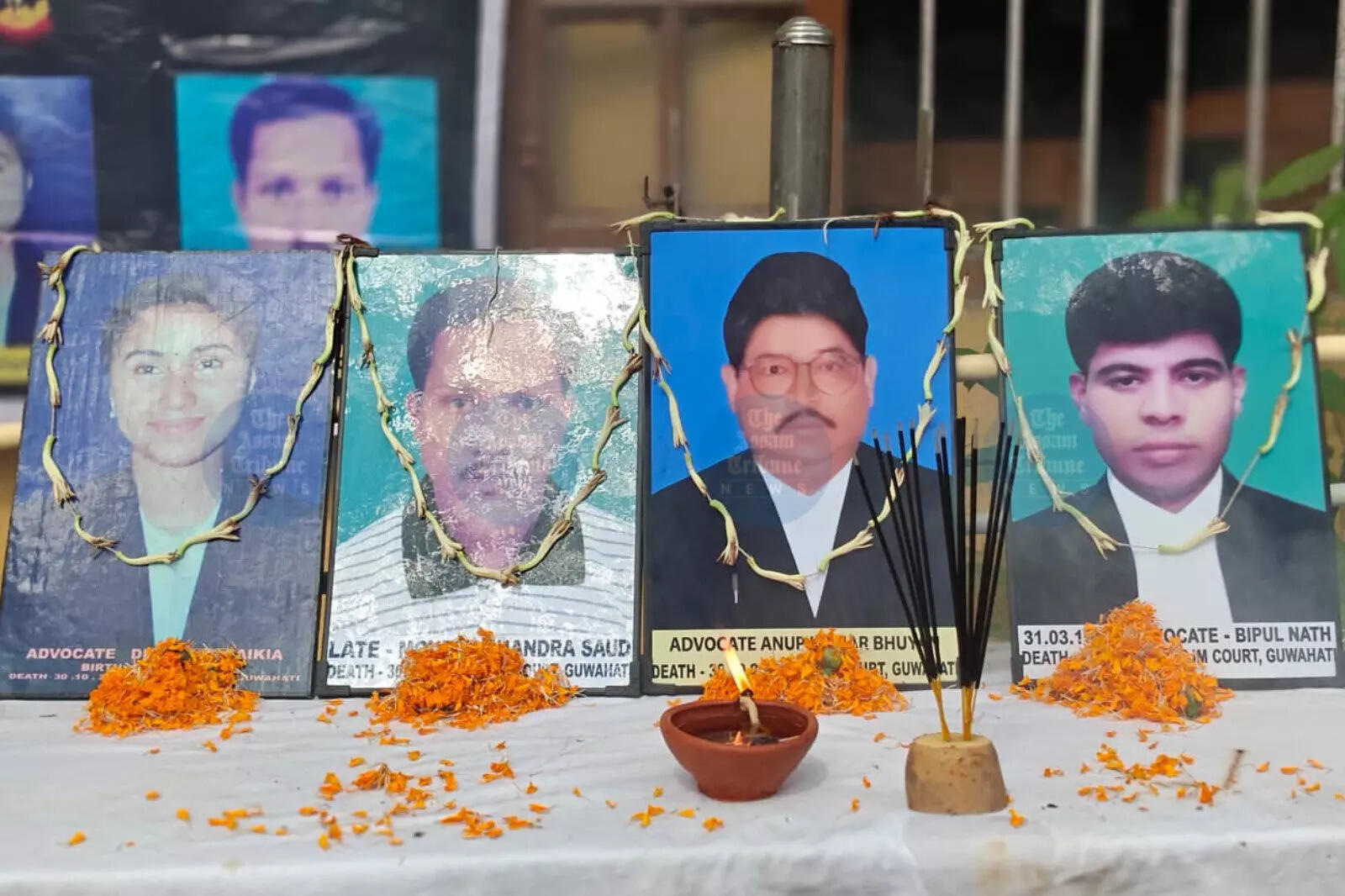
An image of the CJM court people who lost their lives in the October 30 serial blasts (Image)
While the judicial proceedings marked a significant step forward in the case, the repercussions of the blasts continue to resonate beyond the courtroom.
For survivors, the physical injuries and emotional trauma remain a part of their daily lives. Families who lost loved ones continue to grapple with the absence of those who never returned home.
Time has not diminished the personal impact of the tragedy, even as legal actions have progressed.
Eighteen Years Later: The Pain Persists
Eighteen years may seem like a long time, especially for a generation that may only know October 30 through history books or stories from their elders.
However, for those who experienced the explosions or lost someone that day, the date remains a painful reminder.
A photograph, a familiar street, or a reminder of the blasts can evoke memories of that tragic afternoon. Survivors continue to deal with physical injuries and emotional scars, while bereaved families navigate lives forever altered by their loss.
The blasts remain a crucial chapter in Assam's history, remembered through the stories of survivors, the experiences of affected families, and the memorials dedicated to those who perished.
Years later, October 30 continues to be a day of mourning and remembrance. For the families of the victims and those who survived, the day serves as a poignant reminder of lives lost, futures changed, and a tragedy that continues to shape their memories.