
Remembering the Legendary Allah Jilai Bai: A Tribute on Her 34th Death Anniversary

A Voice That Resonated Across Borders
The sound was so powerful that microphones had to be removed during her performance at London's Queen Elizabeth Hall in 1987.
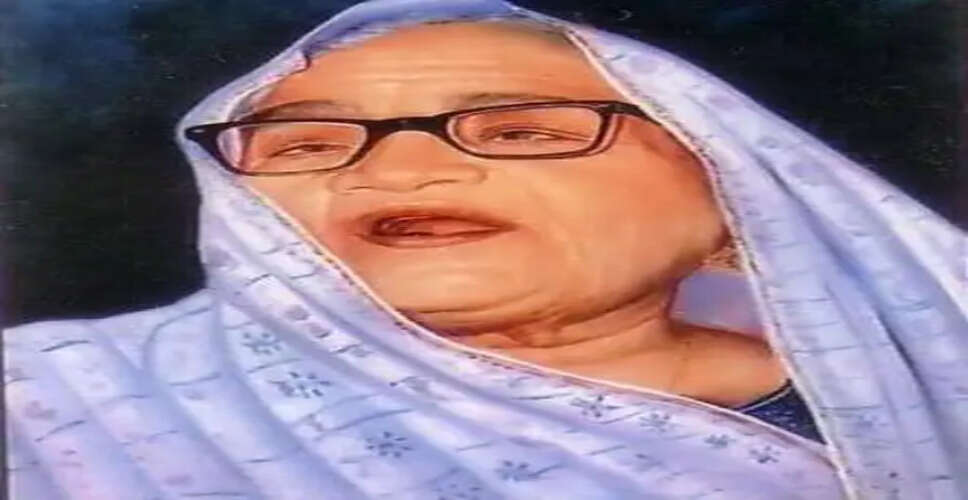
In memory of the legendary folk singer Allah Jilai Bai, who was honored with the Padma Shri and Rajasthan Ratna, her great-granddaughter shares her story on the 34th anniversary of her passing on November 3.
Jaipur. Rajasthan is renowned for its rich culture and history, but it has also produced remarkable talents who have brought pride to the nation. One such figure is Allah Jilai Bai, born in Bikaner, whose folk singing has touched millions. Her iconic song, 'Kesariya Balam Aao Ni Padharo Mhare Desh,' still sends chills down the spine. Starting her career at the court of Maharaja Ganga Singh, we remember her legacy through the words of her great-granddaughter.
Some voices entertain, some touch the heart, and others become the identity of a land. My great-grandmother, Padma Shri Allah Jilai Bai, was one such voice. To me, she was not just a celebrated folk singer whose melodies enchanted audiences worldwide; she was my beloved Jayi Maa. She taught me courage, self-reliance, humanity, integrity, and how to live fearlessly.
I still recall a chilly evening in the Thar Desert. The sky was filled with stars, the moon shone brightly, and her voice echoed through the vast sands, as if the entire desert was breathing with her melodies. As the song concluded, the applause resonated throughout the atmosphere. Standing before us was a petite woman in a white cotton saree with a dark border and neatly tied white hair—Allah Jilai Bai. Whether local residents or foreign tourists, everyone admired her personality and voice. This image remains vivid in my memory.
A Voice That Needed No Microphone
Allah Jilai Bai was born to Nabi Bakhsh and Aleem in a family where she was the fourth child but the only one to survive. Her parents named her Allah Jilai, meaning 'one who has been granted life by God.' Little did they know that this child would one day be among the most cherished voices of Rajasthan. Her singing had an extraordinary allure. I was always amazed that unlike other singers, she did not practice daily, yet her voice had such depth and power that it captivated listeners.
Stories from her July 1987 performance at the Queen Elizabeth Hall, Purcell Room in London are still shared today. It is said that her voice was so strong that the technical team had to remove the microphones placed in front of her. Her voice resonated throughout the auditorium without any assistance. Attendees from various countries were so moved by her singing that many were brought to tears. Language never created a barrier between her and her audience; her melodies reached straight to the heart. In recognition of her talent, the Indian government awarded her the Padma Shri in 1982, followed by the Sangeet Natak Akademi Award in 1988 and the Rajasthan Ratna in 2012. These accolades reflect her achievements, but for those who knew her closely, she was much more than that.
My Jayi Maa, My Childhood Companion
My father, Dr. Aziz Ahmed Sulemani, was her favorite grandson, and I am her first great-granddaughter. My childhood was spent under her love and affection. I remember during the Desert Festival in Jaisalmer, I would fall asleep in her lap while she sang. I was also present at the inauguration ceremony of Doordarshan in Bikaner. She would accompany me to the school bus stop and instruct the conductor to take special care of me. When I was preparing for my 10th-grade board exams, she would wake me up at five in the morning for math tutoring, keeping a watchful eye on me. She was always concerned about my education, my results, and my success. When she recorded at Jaipur Akashvani, we often traveled by train. Those journeys remain close to my heart. Carrying bedding, a pitcher for water, and travel essentials was a unique experience. She would lay her bedding on the train floor so I could sleep comfortably across the berth. On our return, buying pakoras and rabri at Sudsar station became a cherished part of our journey. Today, I wish I had been born a few years earlier to travel to more cities with her.
Lessons in Feminism from My Jayi Maa
Looking back, I realize that my early lessons in feminism and women's empowerment did not come from books or classrooms but from the life of my Jayi Maa. She often proudly stated, 'I earn my own living. I am not dependent on anyone. Why should someone else make decisions for my life?' She believed that it was crucial for women to be financially independent. She understood that dependence was not just about money but also about relying on others for small and big decisions, needs, and desires. A story about my birth is still told with pride in our family. In the early 1970s, when I was born, the family was expecting a boy. However, when the midwife announced that a girl had arrived, Jayi Maa celebrated by distributing coconuts, sweets, and silver coins. She turned my birth into a celebration, just as boys were celebrated during that era. I witnessed her standing firmly with my mother. When someone was upset with my mother, she would provide emotional support and mediate.
A Fearless Woman with Strong Principles
She was incredibly fearless. If she saw someone doing wrong, she would not hesitate to speak up. Even high-ranking government officials were not immune to her straightforwardness. I once asked her, 'What if someone shouts at you?' She confidently replied, 'Why would anyone shout? Who dares to do that? I am Allah Jilai, not an ordinary woman.' Her philosophy of life was simple—live truthfully, do not engage in wrongdoing, and fear no one. She would say, 'There is no need to fear anyone except Allah. If you must fear, fear only doing wrong.' One lesson she imparted to me remains with me: live fearlessly, maintain dignity, and hold your head high.
A Deep Connection to Her Roots and Faith
Jayi Maa was deeply religious. She performed her prayers five times a day, observed Ramadan, and maintained silence between Asr and Maghrib. She had a profound relationship with her God, believing in the power of sincere prayers and good intentions. However, her connection to her homeland was equally strong. During the partition, when many of her relatives moved across the border, she refused to leave Bikaner. She wanted to remain on the land where her ancestors were buried, where her memories and identity resided.
She would say, 'Where would we go leaving our home? Everything is here—our soil, our existence.'
An Influential Figure Inspired by Great Leaders
She was greatly influenced by Mahatma Gandhi, Jawaharlal Nehru, and Indira Gandhi. I remember when the news of Indira Gandhi's assassination broke; she cried uncontrollably in front of the television. For several days, she could not eat due to the shock. Her patriotism was evident not in grand speeches but in her deep connection to her country and its soil. She was also a curious and aware woman. Reading Hindi newspapers word by word was her daily routine. She enjoyed listening to Sindhi news, slow-paced news, and even cricket commentary in English on the radio. Her thirst for knowledge never diminished with age.
A Great-Grandmother Who Nurtured Dreams
Another aspect of her personality is reflected in an incident involving my father. He grew up in financial hardship, often facing shortages of food. Despite limited resources, Jayi Maa ensured he received a good education. She wanted him to become a doctor who could treat patients. In 1959, when my father decided to teach at a medical college after completing his studies, Jayi Maa was not pleased. She believed she had educated him to treat patients, not just to teach in a classroom. She immediately called for a carriage, took him along, and went to meet the principal of the medical college, K.D. Gupta. With folded hands but full confidence, she stated that she had enrolled her grandson in medical college to become a doctor who treats people. She did not want him to be limited to teaching. Her determination and my father's hard work paid off; he earned an MD degree, received a gold medal, and eventually retired as a professor of medicine. He became a well-known physician. Jayi Maa may not have had many formal educational opportunities, but she understood the power of education. She knew how important it was to provide the next generation with the encouragement and opportunities to fulfill their dreams.
Little Quirks That Made Her Unique
Sometimes, Jayi Maa would get bored of home-cooked meals. She would find some excuse to tease my grandmother and refuse to eat the food. After that, we would order puri-aloo and fenugreek vegetable from the famous Chotu-Motu Joshi's shop near Bikaner railway station. She also had a fondness for Coca-Cola. The artists who accompanied her were an essential part of her musical journey. Memories of artists like Ustad Hanif Khan, Dayam Ali Qadri, Munshi Ji on the sitar, Nazar Mohammad on the harmonium, and Ustad Fakhruddin on the sarangi are still shared with great respect in our family.
A Legacy That Lives On
On November 3, 1992, the world heard her magical voice for the last time. Today, on her 34th death anniversary, I remember that great singer whose folk singing became an integral part of Rajasthan's cultural identity. I am not just remembering the artist who won hearts worldwide with her voice; I am honoring the woman who passed down the legacy of courage, self-respect, and humanity to generations of her family. As a professional in the development sector, I work on issues related to girls' education, women's leadership, and gender equality. Looking back at my work and life, I realize that the values I advocate today first emerged from the life of my Jayi Maa.
She may not have used terms like feminism, gender equality, or empowerment, but she lived those values. The Padma Shri and Rajasthan Ratna awards reflect the achievements of a great artist, but for me, her most significant identity is that of a woman who celebrated the birth of a daughter, took pride in her earnings, spoke out against wrongs, and taught me to live with dignity. Though her voice may have become silent, the lessons she imparted continue to resonate within me.
A Lasting Tribute
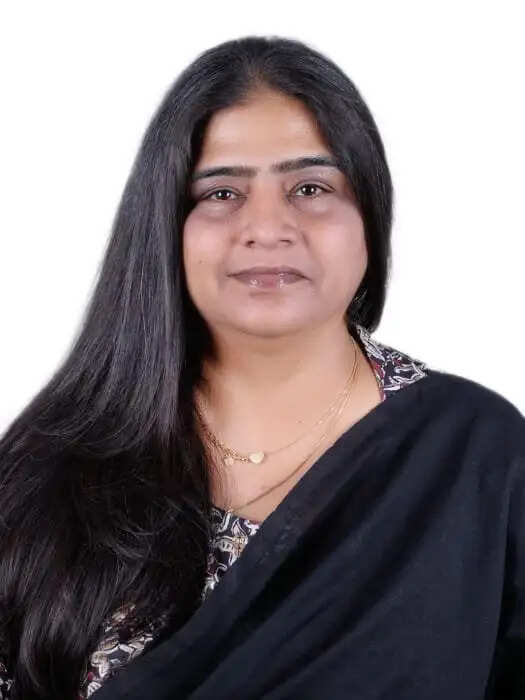
Shabnam Aziz
(An experienced professional in the development sector, currently leading the education initiative at the Center for Catalyzing Change (C3))