
Remembering Shankar Lall Goenka: A Pillar of Northeast Cinema

A Legacy in Filmmaking
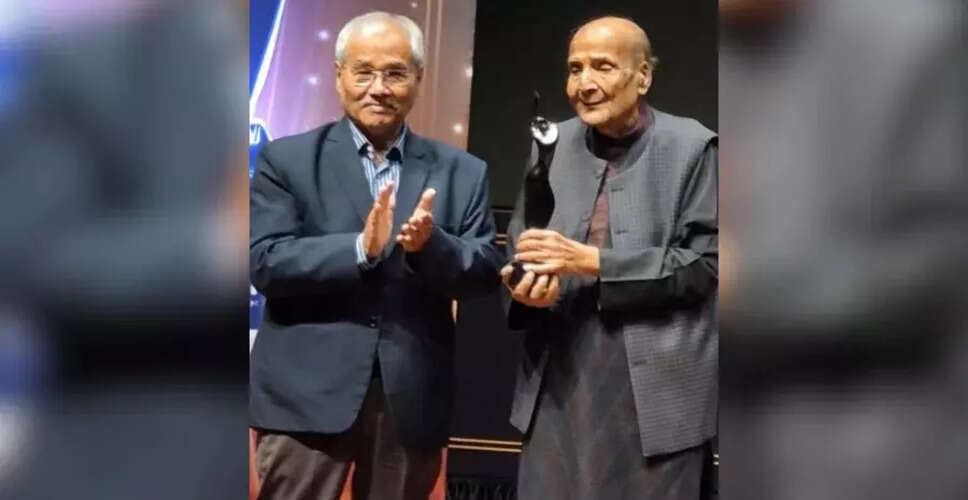
Shankar Lall Goenka with Jahnu Barua
Guwahati, Nov 11: Shankar Lall Goenka was not just a producer for filmmakers in the Northeast; he was a true supporter of the arts. His unwavering belief in cinema and its creators allowed directors the freedom to explore their creative visions without hesitation. Goenka's financial backing was accompanied by a rare commitment to uphold their artistic endeavors.
At the age of 90, Goenka passed away last Friday, leaving a significant gap in the film community. He was regarded not only as a benefactor but also as a family member, mentor, and friend. His departure is felt deeply by many, marking the loss of someone whose kindness and belief in their work made their cinematic paths possible.
Jahnu Barua, a National Award-winning filmmaker, fondly remembers Goenka as an extraordinary individual whose influence extended well beyond business. “I have met many successful individuals, but few have impacted me like Goenka. His legacy is defined not just by his achievements but by his generosity towards others,” Barua shared.
Their collaboration began through an introduction by playwright Arun Sharma, culminating in the production of Ajeyo, which won the National Film Award in 2014. “He was a true gentleman, always respecting a director's creative freedom. Unlike many in the industry, he prioritized the art of filmmaking over financial gain,” Barua reflected.
Filmmaker Manju Borah, whose Bodo-language film Dau Huduni Methai (Song of the Horned Owl) was produced by Goenka and won a National Film Award in 2015, reminisced about the trust and support he provided to filmmakers. “Goenka ji was a vital part of my life. Our relationship blossomed since our first meeting in the early 2000s. He was not just my producer but also like an elder brother and a cherished friend,” she expressed.
Borah emphasized that Goenka's commitment to regional cinema stemmed from his belief in the narratives and the storytellers rather than commercial success. “He was a staunch supporter of quality cinema in Assam and Meghalaya. For him, filmmaking was never about profits; it was about the stories and the people behind them. His unwavering support empowered filmmakers like us to pursue meaningful projects,” she added.
She also voiced her disappointment regarding the lack of official recognition for Goenka's contributions after his passing. “Someone who contributed so significantly to Assamese and regional cinema deserves to be honored and remembered,” she stated.
Actor-director Jatin Bora regarded Goenka as a reliable source of support during challenging times. Their relationship dates back to 1989, when Bora made his debut with Uttarkal. “Goenka uncle was a mentor and guide. His encouraging words during tough times uplifted my spirits and gave me the strength to persevere,” Bora recalled.