
Remembering Raghu Rai: The Iconic Photographer Who Captured India's Essence
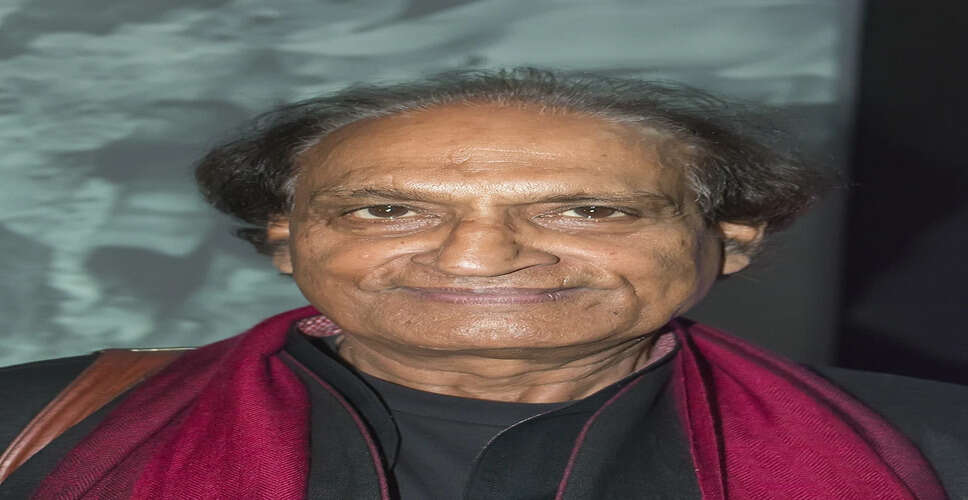

A Legacy of Visual Storytelling
New Delhi: Renowned Indian photographer Raghu Rai, celebrated for his profound portrayal of India's diverse culture, passed away early Sunday morning at a private hospital. He was 83 years old.
His son, Nitin Rai, shared that his father had battled prostate cancer two years prior, which was treated successfully. However, the illness later spread to his stomach and ultimately to his brain, compounded by age-related health issues.
Rai is survived by his wife Gurmeet, his son Nitin, and daughters Lagan, Avani, and Purvai.
The final rites are scheduled to take place at Lodhi Crematorium at 4 PM on Sunday.
Born on December 18, 1942, in Jhang, Punjab (now in Pakistan), Rai initially trained as a civil engineer but transitioned to photography at the age of 23. He began his career as the chief photographer for The Statesman newspaper in 1966.
The subsequent six decades of his career are a vivid chronicle of India's socio-political evolution.
A protégé of the legendary Henri Cartier-Bresson, Rai documented pivotal moments in modern Indian history, including the Bangladesh refugee crisis in 1972 and the Bhopal gas tragedy in 1984.
His portraits of influential figures such as Indira Gandhi, the Dalai Lama, Mother Teresa, Satyajit Ray, Hariprasad Chaurasia, and Bismillah Khan provided unique insights into their lives.
Beyond capturing newsworthy events, Rai's lens also focused on the everyday person, transforming the mundane into the extraordinary, often through black-and-white imagery that softened life's harsh realities.
He served on the jury for the World Press Photo three times and was part of UNESCO's International Photo Contest jury twice, having been nominated to Magnum Photos by Cartier-Bresson in 1977.
In recognition of his work, Rai received the Padma Shri in 1972 for his coverage of the Bangladesh war and numerous other national and international accolades.
He was honored as Photographer of the Year in the United States for his National Geographic photo essay titled 'Human Management of Wildlife in India.'
In 2009, the French government awarded him the Officier des Arts et des Lettres.
Rai authored several books, including 'Raghu Rai's India: Reflections in Colour and Reflections in Black and White' and 'Exposure: Portrait Of A Corporate Crime.'
As per the Raghu Rai Foundation's website, established in 2010 and housing over 50,000 of his images, he was in the process of completing his 57th book.