
Reflections on the Pahalgam Terror Attack: A Survivor's Story

A Year After the Pahalgam Attack
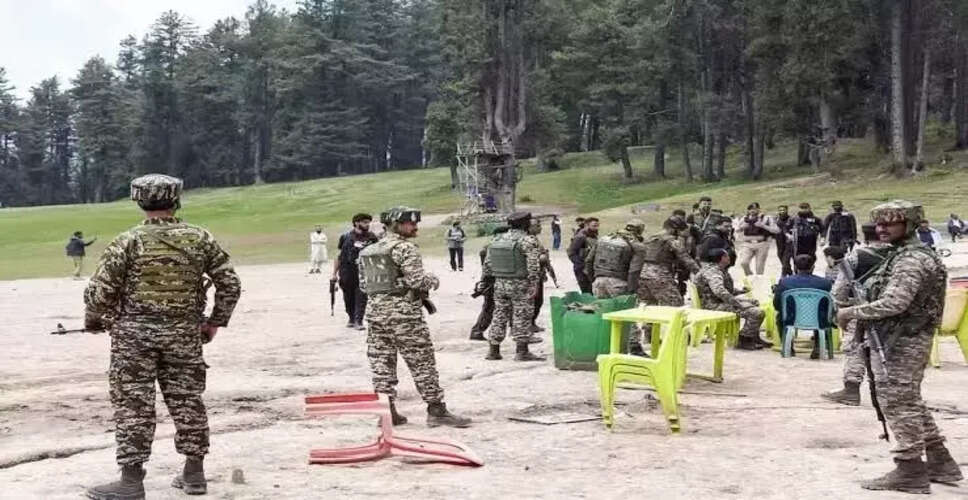
Security personnel at the scene of Pahalgam terror attack
Silchar, April 23: The memories of the tragic events that unfolded in Baisaran Valley, Pahalgam, remain vivid for Prof Debashish Bhattacharjee from Silchar, even a year later. The echoes of that day linger, blurring the lines between past and present.
In an interview, the Assam University professor recounted how a seemingly normal holiday turned into a life-threatening experience on April 22 last year. The Pahalgam terror attack resulted in over 20 fatalities, leaving survivors to grapple with the incomprehensible reality of that day.
Prof Bhattacharjee and his family were fortunate to escape unharmed. He described the haunting memories of conversations abruptly halted, lives extinguished in an instant, and the violence that unfolded alarmingly close. He expressed that survival felt more like a stroke of luck than a deserved outcome.
"We were right next to a deceased individual... we narrowly escaped," he recalled.
The psychological aftermath, he noted, has not diminished over time.
His sleep has become more restless, focus has waned, and daily life is frequently disrupted by sudden reminders of that fateful afternoon. For someone who thrives on reading and contemplation, the struggle to maintain concentration has been a subtle yet persistent shift.
Within his family, the emotional toll is profound. His wife continues to grapple with the unsettling realization of how close she came to losing both her husband and son. He reflected that their grief is not rooted in loss but in the haunting possibility of it; an imagined absence that feels all too real. Their son, while appearing composed, also carries his own unspoken burdens.
Amidst the violence, however, Bhattacharjee cherishes memories of local residents who stepped up during the crisis, offering guidance and comfort to tourists. He emphasized that this instinctive compassion starkly contrasts with the brutality of the attack and remains etched in his memory. "We witnessed two sides of Kashmir: one marred by violence, the other defined by innate humanity. They were embarrassed and heartbroken... 'We never wished this for our guests and tourists,'" he recalled.
During their ordeal, Bhattacharjee recounted a particularly poignant moment involving a young girl who became separated from her mother amidst the chaos. The child stayed with his family for a significant time as they sought safety, eventually helping to reunite her with her mother. They managed to reconnect after returning to Silchar, providing a rare moment of solace in an otherwise traumatic experience.
A year later, Prof Bhattacharjee advocates for a thorough investigation into the factors that allowed such an attack to occur in a popular tourist destination.
He stated that survival remains the most valuable outcome, yet time has not provided closure. Some memories, he reflected, do not stay confined to their origins; they follow us, embedding themselves in our consciousness and refusing to fade away.