
Reflecting on 250 Years of American Independence Amidst Political Turmoil
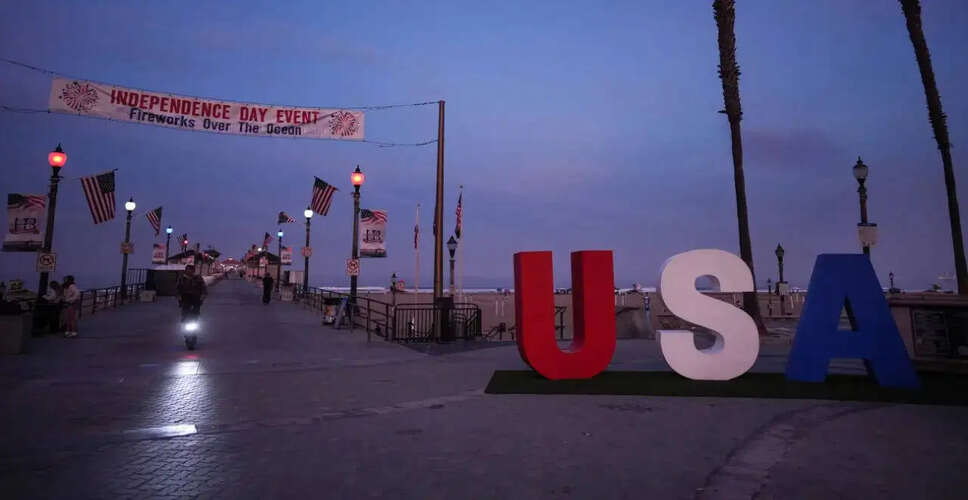

A Historic Milestone in a Divided Nation
In 1776, the United States proclaimed its independence, laying the groundwork for a nation founded on principles of freedom, representative governance, and individual rights. Fast forward 250 years, and these ideals are being commemorated amidst significant political discord, ongoing debates about the health of American democracy, and uncertainties regarding the nation's role in a fragmented global landscape. President Donald Trump has positioned the semiquincentennial as a pivotal initiative of his second term, with nationwide festivities focused on the "America 250" celebrations. In a discussion with a digital news outlet, political expert Sophie Fullerton, affiliated with Pace and Columbia Universities, shares insights on how the 250th anniversary of America stands apart from previous celebrations, her views on the current democratic decline, and whether the U.S. is nearing a political crossroads.
Q. How does President Trump's focus on America's 250th anniversary differ from past celebrations?
A. The nature of the celebration has evolved due to the heightened politicization of daily life in the U.S. under Trump. This anniversary is heavily influenced by his political stance and the broader politicization of American life, including traditional events like state fairs. Unlike the 200th anniversary, which fostered a sense of unity, the 250th anniversary appears more aligned with Trump’s supporters and his political agenda. Events that were once community-centric have now taken on a political tone, which may explain the lower attendance we've observed.
Q. What does this 250-year milestone signify for American democracy?
A. Historians will likely view this era as one marked by extreme polarization. The U.S. has seen increasing political division for over a decade, but since Trump's second election, this trend has intensified to a critical point. The administration's polarizing actions, such as ICE deportations and tariffs, have not only defined Trump's presidency but have also influenced how Americans celebrate this anniversary. This period may be seen as one of accelerating democratic decline, with uncertainty about whether American democracy can revert to its former ideals.
Q. Has the U.S.'s global standing shifted in recent years?
A. The administration has enacted unpopular policies while largely ignoring those outside its political base, leading to a perception of unpredictability. The "America First" movement anticipated a more isolationist approach, yet the U.S. has engaged in conflicts in places like Venezuela and Iran, diverging from the expected agenda. Consequently, America's credibility on the world stage has diminished, with long-standing allies expressing disagreement with the administration's stance, particularly regarding Israel and its relations with the Global South.
Q. Is there a coherent long-term strategy behind the Trump administration's foreign policy?
A. I don't believe there is a consistent long-term strategy. The administration seems primarily focused on maintaining Trump's personal image, which fluctuates frequently. This unpredictability is evident in its foreign policy decisions. Many of its policies are unpopular, leading to short-term objectives aimed at protecting Trump's political standing rather than a well-defined vision.
Q. Is American democracy at a pivotal moment?
A. The primary challenge facing the U.S. is democratic backsliding. The current governance style raises questions about adherence to democratic principles. The American public's response remains uncertain; while there have been protests, many seem to expect a return to normalcy through future elections. However, we are witnessing a flawed democracy, and future scholars may characterize this period as the onset of a transformation into a system that, while still democratic in name, increasingly undermines civil rights and liberties for ordinary citizens.