
Record Voter Turnout in West Bengal and Tamil Nadu Assembly Elections
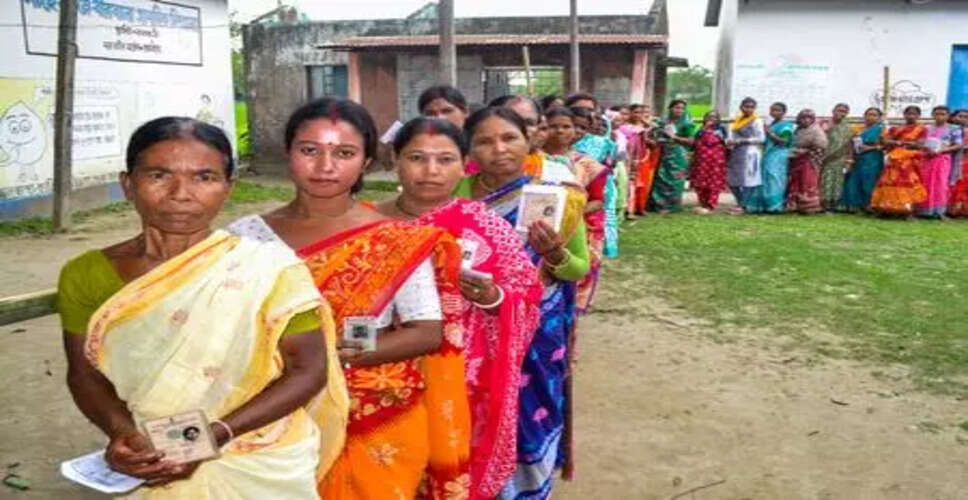

High Voter Engagement in Assembly Polls
KOLKATA/CHENNAI, Apr 24: In the initial phase of assembly elections, West Bengal achieved an impressive voter turnout of 92.72 percent, despite some isolated incidents of violence. Meanwhile, Tamil Nadu saw an extraordinary participation rate of 85.14 percent as the BJP aimed to challenge Mamata Banerjee's leadership in Bengal and strengthen its presence in the southern region.
During this first phase, voting occurred in 152 constituencies across West Bengal, while Tamil Nadu conducted its elections for all 234 assembly seats simultaneously.
The elections are unfolding amidst significant political tensions regarding the SIR of the electoral rolls, which has become a contentious issue between the BJP and opposition parties, notably the Trinamool Congress (TMC).
In West Bengal, the BJP is striving to gain control from the TMC, which is seeking a fourth consecutive term in a state where the saffron party has yet to hold power. In Tamil Nadu, the main competitors are the ruling DMK and the opposition AIADMK, with actor-politician Vijay's TVK and Tamil nationalist Seeman's NTK also actively participating.
The electoral battle in Tamil Nadu primarily features the DMK-led Secular Progressive Alliance against the AIADMK-led NDA. Chief Minister M K Stalin has focused his campaign on the "Dravidian Model" of governance, accusing the AIADMK of being under BJP influence from Delhi. AIADMK General Secretary Edappadi K Palaniswami is aiming to reclaim his position after five years in opposition.
In the previous 2021 elections, Tamil Nadu recorded a voter turnout of 73.63 percent, with its highest turnout of 78.29 percent occurring in the 2011 assembly elections, which the AIADMK won decisively.
Notably, the electorate size has decreased from 6.41 crore in October 2025 to 5.73 crore currently due to the SIR adjustments. This year, approximately 6.29 crore individuals were registered to vote, which is 56 lakh fewer than in 2021.
BJP leader Narayanan Thirupathy attributed the increased voter turnout in Tamil Nadu to reforms by the Election Commission, stating that the high participation reflects a strong democratic spirit and indicates a promising path to victory for the NDA.
Prime Minister Narendra Modi characterized the substantial voter turnout in Bengal as a clear mandate for change, predicting that May 4, the day of vote counting, would signify the end of the TMC's 15-year rule and its associated issues. Conversely, Banerjee claimed that the initial phase of polling suggests the TMC is well-positioned for victory, forecasting wins in 125-134 of the 152 constituencies.
The second phase of voting for the remaining 142 of 294 seats in West Bengal is scheduled for April 29, with the counting of votes for all four states and one Union Territory—Kerala, Assam, West Bengal, Tamil Nadu, and Puducherry—set for May 4.
With over 90 percent turnout in the first phase of the West Bengal Assembly elections, the stage is set for a highly competitive contest, marked by allegations regarding electoral roll changes, sporadic violence, and contrasting political narratives between the ruling TMC and the BJP.