
Record-Breaking Bluefin Tuna Auctioned for ₹29 Crore in Japan
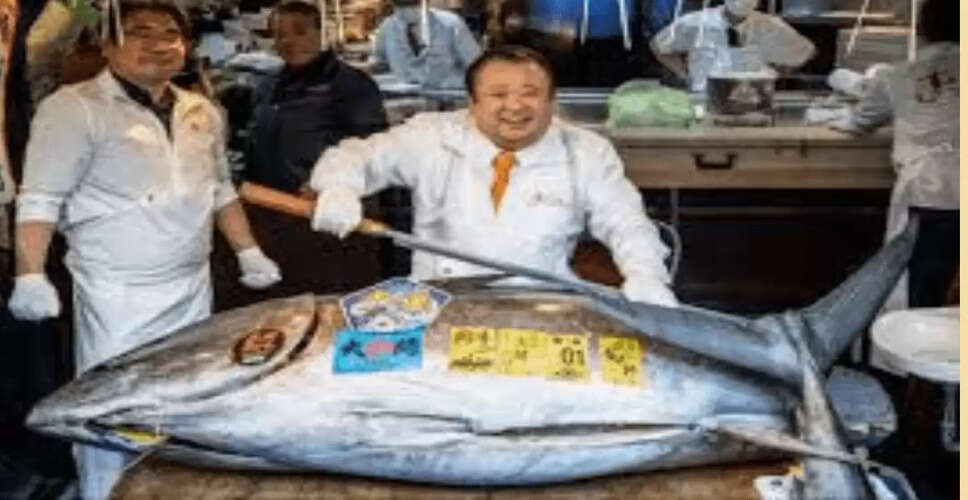
Extravagant New Year Auction in Japan
Pallavi Sharma
Dharamshala:
Japan has once again showcased its extravagant New Year tradition, with a single bluefin tuna fetching an astonishing ¥510 million, equivalent to approximately ₹29 crore, during the first fish auction of the year.
The 243-kilogram fish was sold on January 5 at Tokyo's Toyosu Fish Market, setting a new record as the most expensive fish ever auctioned, highlighting the cultural significance and marketing prowess behind this annual event.
The record-setting tuna was purchased by Kiyoshi Kimura, the president of Kyomura Corporation and owner of the well-known Sushi Zanmai restaurant chain.
Known as the 'Tuna King' in Japan, Kimura is familiar with making headlines through his bids. After the auction, he acknowledged that the price escalated more quickly than anticipated but emphasized that passing on high-quality tuna was not an option.
The Value of Bluefin Tuna
Why Bluefin Tuna is Highly Prized
Bluefin tuna is considered the pinnacle of sushi, celebrated for its rich fat content, vibrant color, and buttery texture, especially the belly cut known as otoro. The larger and older the fish, the more desirable it becomes, significantly increasing its market value.
Additionally, the rarity of bluefin tuna enhances its appeal. Overfishing in past decades has led to a drastic decline in their populations, resulting in strict international regulations and quotas. The fish's migratory nature across vast oceans makes it challenging and costly to catch. Tuna sourced from Japan's Oma coast is particularly esteemed, as local fishermen employ specialized line-fishing techniques that reduce stress and damage, ensuring the highest quality meat.
Cultural Significance and Marketing Impact
Beyond Food: Prestige and Branding
In Japan, the first auction of the year is viewed as a harbinger of good fortune, with a high opening bid believed to usher in prosperity for the months to come. For significant buyers, the rationale extends beyond merely recouping costs through sushi sales. Industry experts suggest that such purchases serve as global marketing strategies. The media coverage and social media buzz generated are far more valuable than conventional advertising, instantly elevating the buyer's status as a symbol of unparalleled quality.
Interestingly, Kimura previously held the record as well. In 2019, he purchased a 278-kilogram tuna for ¥333.6 million (around ₹20 crore at that time). By surpassing that figure now, he has set a new personal benchmark.
While ₹29 crore for a single fish may seem extraordinary, similar instances can be found elsewhere. In India, the highest fish auction involved ghol (black-spotted croaker), where a lot of 157 fish sold for ₹1.33 crore in Maharashtra's Palghar district in 2021, driven by the demand for its medicinally valuable swim bladder. However, in Japan, bluefin tuna remains unmatched, representing not just seafood but a potent mix of tradition, luxury, and global branding.