
RBI Lowers Repo Rate to Boost Economic Growth
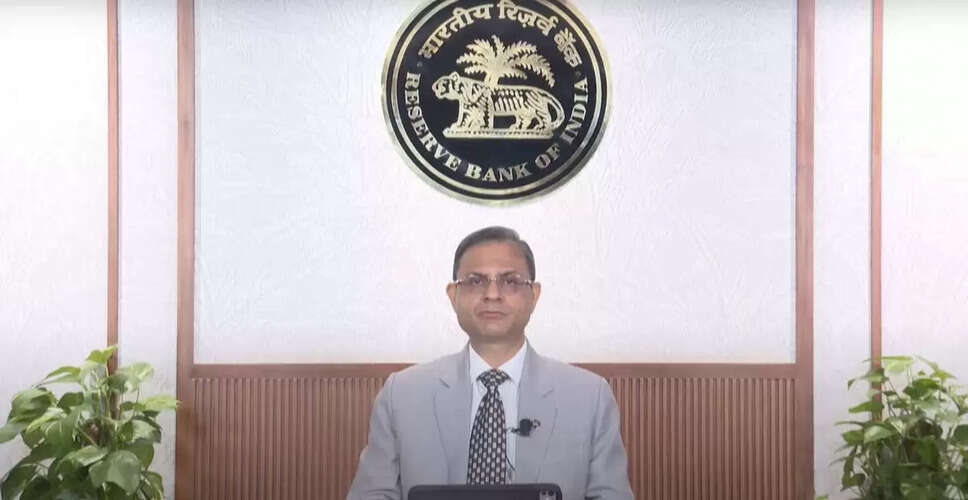
RBI's Recent Repo Rate Cut
On Friday, the Reserve Bank of India announced a reduction in the repo rate by 50 basis points, bringing it down from 6% to 5.5%.
This marks the third consecutive reduction under the leadership of Governor Sanjay Malhotra, who assumed office earlier this year. In April, the committee had previously lowered the repo rate by 25 basis points, decreasing it from 6.25% to 6%.
The repo rate represents the interest rate at which the central bank lends to commercial banks. The Monetary Policy Committee reviews this rate every two months.
A basis point is defined as one-hundredth of a percentage point, commonly used to indicate changes in the value of financial instruments.
Typically, central banks lower repo rates to encourage economic growth by making borrowing more affordable for both individuals and businesses, resulting in reduced equated monthly installments for borrowers.
#WATCH | RBI Governor Sanjay Malhotra stated, "... The MPC decided to reduce the policy Repo Rate under the liquidity adjustment facility by 50 basis points to 5.5%. This will be with immediate effect. Consequently, the Standing Deposit Facility (STF) Rate shall stand adjusted to… pic.twitter.com/siUUlBmcrG
— News Media (@NewsMedia) June 6, 2025
During a press conference on Friday, Malhotra also indicated that the Reserve Bank has shifted its monetary policy stance from 'accommodative' to 'neutral', as reported by a leading financial publication.
A neutral stance implies that the Reserve Bank is prepared to adjust policy rates based on current economic conditions. Conversely, a withdrawal of accommodation indicates a restrictive approach, where the central bank seeks to decrease the money supply by raising interest rates to combat inflationary pressures.