
Rastriya Swatantra Party Poised for Victory in Nepal's Parliamentary Elections
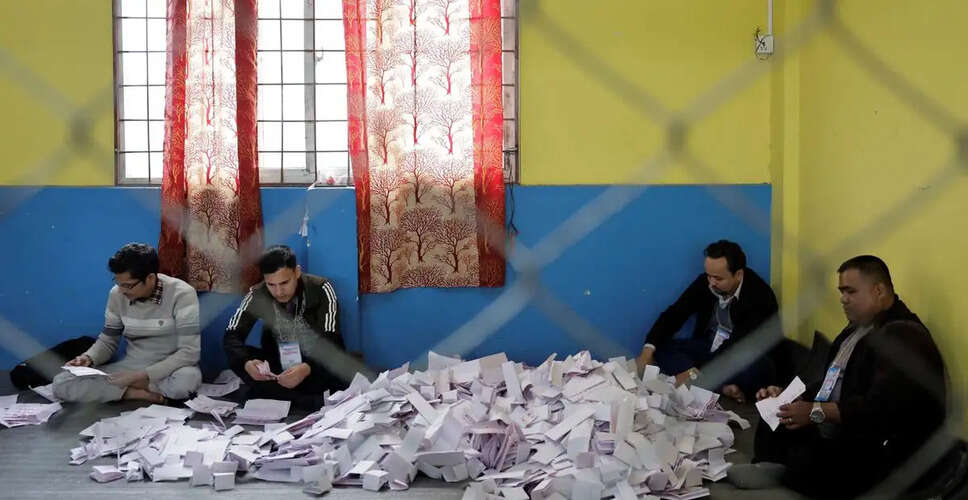
Election Results Update
The Rastriya Swatantra Party, a relatively new political entity, appears to be on track for a significant victory in Nepal's parliamentary elections as vote counting progresses on Saturday.
As of 2:40 PM, the party, which has been active for three years, was reported to be leading in 78 constituencies and had secured 41 seats, according to reports from a local news source.
The elections, aimed at filling 275 parliamentary seats, took place on Thursday, with a voter turnout recorded at 58%.
Out of the total seats, 165 are determined through direct voting, while the rest will be allocated based on proportional representation, allowing parties to nominate lawmakers according to their vote share.
The Nepali Congress party was leading in nine seats and had won six by this time.
Balendra Shah, a rapper-turned-politician and the Rastriya Swatantra Party's candidate for prime minister, was ahead of former Prime Minister KP Sharma Oli by over 38,000 votes in the Jhapa-5 constituency.
Shah, aged 35, previously served as the mayor of Kathmandu.
Oli's Communist Party of Nepal (Unified Marxist-Leninist) was leading in nine seats, having won two so far.
Pushpa Kamal Dahal, known as Prachanda and a leader of the Nepali Communist Party, won the Rukum East-1 seat, with his party leading in eight seats and winning two.
Officials from the Election Commission indicated that the final results might take up to a week to be declared, as counting for the proportional representation votes is expected to be time-consuming.
This election marks the first general election in Nepal following the widespread protests in September that resulted in the ousting of the Oli government.
The crisis leading to Oli's removal began after protests erupted against a ban on 26 social media platforms on September 4.
Although the ban was lifted on September 8, the protests escalated into a larger movement against perceived corruption and mismanagement, culminating in Oli's resignation the following day.
At least 72 individuals lost their lives during the protests.
These demonstrations were largely driven by the younger generation, often referred to as 'Gen Z', encompassing those born from the late 1990s to 2010.
On September 12, Sushila Karki, a former chief justice, was appointed as interim prime minister until a new government is established.
In total, over 3,400 candidates from 65 different parties participated in the general election held on Thursday.