
Rare Copy of US Declaration of Independence Found in London
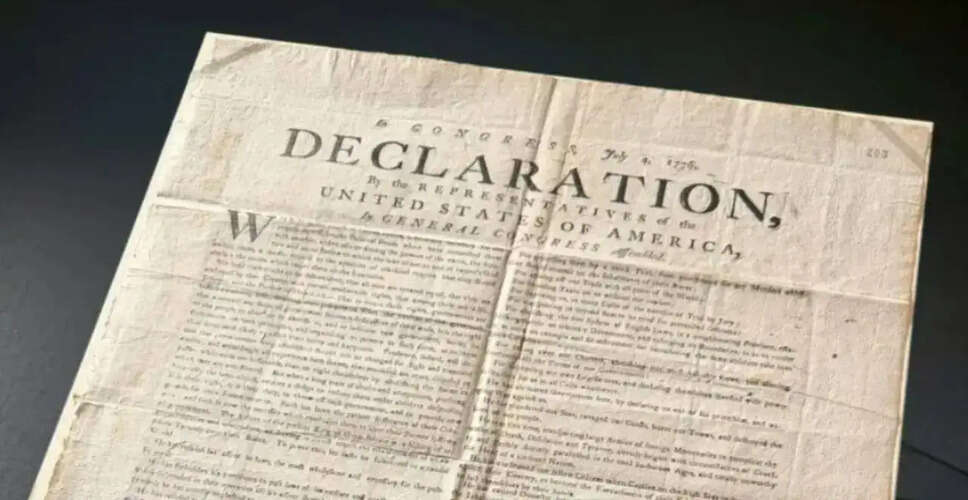

Historic Discovery at The National Archives
An extraordinary piece of American heritage has been uncovered in an unexpected location. A unique copy of the US Declaration of Independence was found at The National Archives in Kew, London, marking it as the only known surviving version outside the United States. This significant document was discovered by volunteer Michael Scurr in February while he was organizing the papers of Royal Navy captains from the American Revolutionary War. What seemed to be just another old document quickly transformed into one of the archive's most remarkable finds. "I felt butterflies in my stomach," Scurr recounted to BBC News upon realizing he had stumbled upon a rare copy of one of America's pivotal historical documents. He promptly informed the archive staff, who verified the astonishing discovery.
One of Only 11 Surviving Copies
This document is one of merely 11 surviving copies that were printed in Exeter, New Hampshire, in July 1776. These early editions were created shortly after the Declaration of Independence was ratified on July 4, 1776, with the intention of quickly disseminating news of American independence throughout the colonies. Unlike the official John Dunlap printings made in Philadelphia, these New Hampshire versions were meant for rapid distribution rather than long-term preservation. Historians believe that many copies were lost, destroyed, or deteriorated over time, making the remaining examples exceedingly rare.
A Captivating Historical Journey
The document has an intriguing backstory. Historians indicate that it was captured by the Royal Navy on Christmas Eve in 1776 when the British warship HMS Raisonable seized the American ship Dalton after a lengthy pursuit off the coast of Portugal. Along with military documents, commissions, and official correspondence from the Continental Congress, the Declaration was confiscated and sent to Britain. The papers eventually made their way into government archives, where the Declaration was merely catalogued as "another paper." It remained unnoticed among the correspondence of Royal Navy Captain Thomas Fitzherbert for nearly 250 years.
A Treasure of Historical Significance
Experts regard this discovery as one of the rarest surviving versions of the Declaration of Independence. After meticulous conservation efforts to stabilize the delicate paper and mend a small tear, the document is now prepared for public exhibition. Visitors can view this historic artifact as part of "Revolution 250: America's Independence Story, 1763–1783" at The National Archives. Currently, only 26 original Dunlap copies of the Declaration of Independence are known to exist out of an estimated 200 that were printed on the night of July 4, 1776. The newly identified New Hampshire printing adds another fascinating chapter to the narrative of America's founding, serving as a rare reminder of how history can remain concealed in plain sight for centuries.