
Ranikhamar: A Traditional Sesame Cultivation Hub in Assam

Introduction to Ranikhamar
PALASBARI, Nov 20: Ranikhamar, a tribal village located approximately 60 kilometers from Guwahati and seven kilometers from Chandubi Beel, lies along the Assam-Meghalaya border in South Kamrup, under the Rabha Hasong Autonomous Council (RHAC). Nestled by the Kulsi river in the Palasbari Legislative Assembly Constituency, this village boasts significant agricultural potential, with local farmers traditionally growing crops such as paddy, sesame, mustard, coconut, areca nut, betel leaf, black pepper, banana, and orange.
Sesame Cultivation Tradition
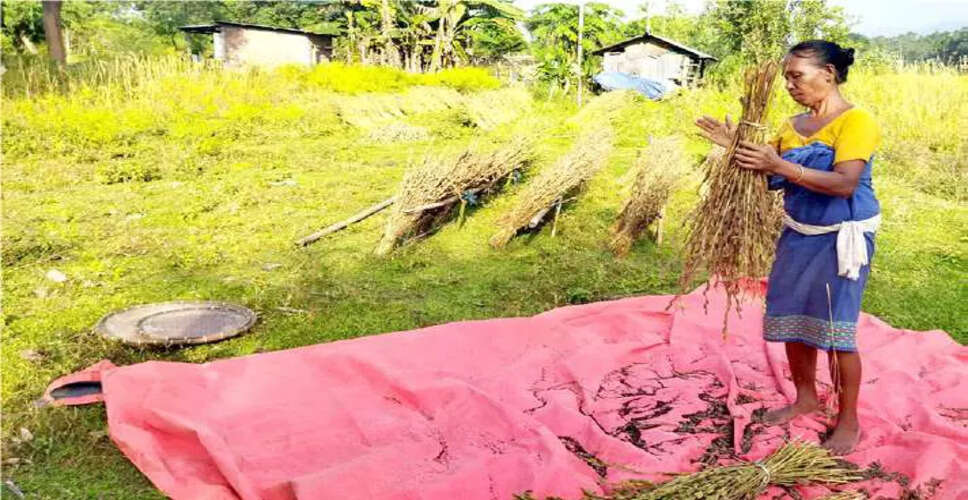
Among these crops, sesame holds a unique significance in Ranikhamar, with a cultivation tradition that spans nearly 150 years. This practice, initiated by their great-grandparents, has been passed down through generations, establishing Ranikhamar as a notable sesame-growing village in the region.
Community Efforts in Farming
Binudhar Rabha, a 68-year-old farmer, reminisces about the community's collective effort in cultivating sesame across approximately 32 bighas of land. He stated, “Sesame farming is a time-honored tradition in our village, initiated by our ancestors and now upheld by our generation. This community practice has persisted for nearly 150 years.”
Current Yield and Market Trends
Rindu Rabha, another elder at 75, has been cultivating sesame on his two bighas for several years and anticipates a yield of at least one quintal per bigha this season. He noted that sesame typically sells for around Rs 100 per kg, with retail prices soaring to Rs 200 per kg during the Magh Bihu festival. He mentioned that farmers generally do not encounter significant marketing challenges due to consistent demand for their produce.
Involvement of the Younger Generation
The younger generation is also actively participating in this agricultural tradition. Jayanta Rabha (45) and his wife Sanjita Rabha (37) have been cultivating sesame on 2.5 bighas of their seven-bigha land for the past three years. They sell their sesame at prices ranging from Rs 100 to Rs 160 per kg and expect a yield of about one quintal per bigha this year.
Challenges in Cultivation
“Our land is primarily sandy, making cultivation challenging during dry spells. We plant sesame during the rainy season, but water scarcity also hampers paddy cultivation, often leading to crop failures,” the couple explained.
Harvesting Season and Employment
As the harvesting season commences, many farming families are engaged in collecting their sesame crops. Even those without agricultural land, like Runa Rabha and Nirada Rabha, are finding seasonal work in the fields. Runa mentioned that women earn Rs 300 per day, while men receive Rs 350.
Potential for Expansion
Despite the promising potential of sesame farming, a lack of strategic planning, modern agricultural techniques, and institutional support has hindered farmers from scaling up their operations commercially.
Land Utilization and Future Prospects
Farmers in Ranikhamar have access to nearly 200 bighas of sandy riverbank land along the Kulsi river. However, as the river dries up in winter, these sandy areas become nearly barren. Consequently, sesame is sown during the Bhadra-Ahin period, relying heavily on rainfall, with harvests occurring at the end of the rainy season. Much of the land remains unused post-harvest.
Need for Government Support
Despite relying on rainfall, farmers have managed to achieve promising returns from sesame cultivation, indicating significant potential for expansion through scientific farming methods, improved seeds, irrigation, and effective agricultural planning.
Conclusion
With the right technological support and government intervention, farmers could potentially utilize the same plots for multiple cropping cycles each year, enhancing productivity and income. However, the lack of such facilities and a comprehensive development strategy has left a substantial portion of potentially productive agricultural land underutilized.
Given the village’s long-standing tradition and favorable agricultural conditions, farmers are hopeful that a dedicated government initiative could transform sesame cultivation into a sustainable commercial enterprise. The pressing question remains whether the Agriculture Department will implement a special development scheme to promote sesame farming in Ranikhamar, aiding farmers in turning this traditional practice into a more lucrative livelihood.