
Rajya Sabha Approves New Employment Bill Amid Opposition Protests
Rajya Sabha Passes New Employment Legislation
In the early hours of Friday, the Rajya Sabha approved the 2025 Viksit Bharat – Guarantee for Rozgar and Ajeevika Mission (Gramin) Bill, which aims to replace the 2005 Mahatma Gandhi National Rural Employment Guarantee Act (MGNREGA). This decision came amidst significant protests from opposition parties.
The Lok Sabha had already passed the bill on Thursday, despite opposition members vocally expressing their dissent by storming the well of the House, criticizing the government for removing Mahatma Gandhi's name from the initiative.
The bill is now set to be forwarded to the president for approval.
Initially introduced in 2005 by the Congress-led United Progressive Alliance, MGNREGA was designed to improve livelihood security for rural households, guaranteeing 100 days of unskilled work annually for those who sought it, across all districts in India.
While the Union government covers the wage costs, states are responsible for material and administrative expenses.
The new legislation proposes to increase the guaranteed workdays from 100 to 125 and raises the states' financial contribution to 40%.
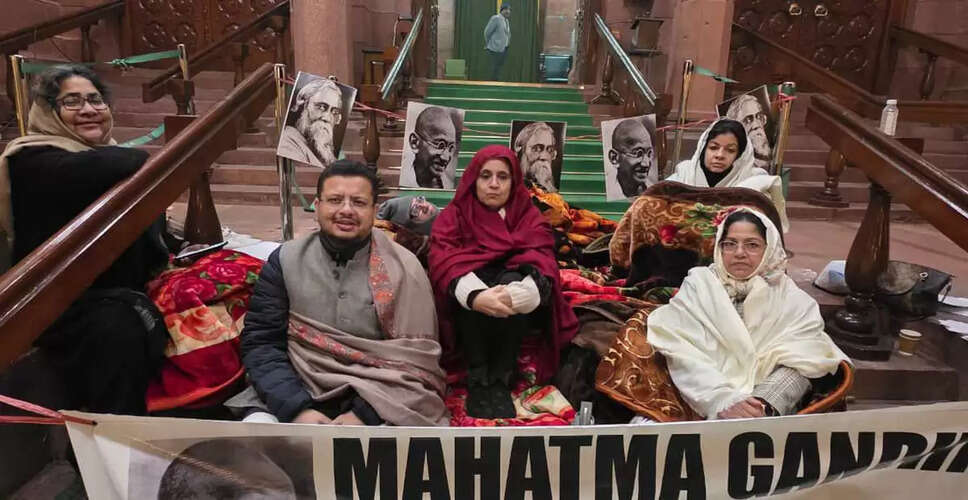
Following the bill's passage via voice vote in the Rajya Sabha, opposition leaders condemned the government for hastily pushing the legislation through the Upper House, leading to an overnight protest within the Parliament complex.
Trinamool Congress’ Rajya Sabha deputy leader, Sagarika Ghose, took to social media to express the opposition's grievances regarding the introduction of what they termed an 'anti-poor, anti-people' bill.
She noted, 'We received this bill with only five hours' notice and were denied a proper debate.'
Ghose further emphasized that such a significant bill should have been sent to a select committee for thorough examination and discussion among all stakeholders.
During the Congress' critique of the bill in the Rajya Sabha, party MP Mukul Wasnik highlighted that MGNREGA was unanimously passed after careful scrutiny in Parliament, questioning whether the same could be said for the current legislation.
He raised concerns about whether state governments were consulted before increasing their financial responsibilities and requested that any such discussions be presented in the House.
All India Anna Dravida Munnetra Kazhagam MP M Thambidurai criticized the government's decision to increase the states' share of costs, arguing that if states are to cover 40% of the expenses, they should also receive 100% of the taxes and cesses collected by the Centre.
The proposed bill stipulates that the Union government will determine the state-wise allocation for each financial year based on 'objective parameters' and that only the Union government can designate rural areas within a state for the scheme's implementation.
For the North East states, Himalayan states (Uttarakhand and Himachal Pradesh), and Union Territories with legislatures (like Jammu and Kashmir), the contribution will be set at 10% of the scheme's funding, while the Centre will cover all costs in Union Territories without legislatures.
The legislation maintains a provision for a daily unemployment allowance for individuals who do not receive work within 15 days of applying, with the financial burden of this allowance falling on state governments.