
Rajnath Singh Leads High-Level Meeting on West Asia Situation
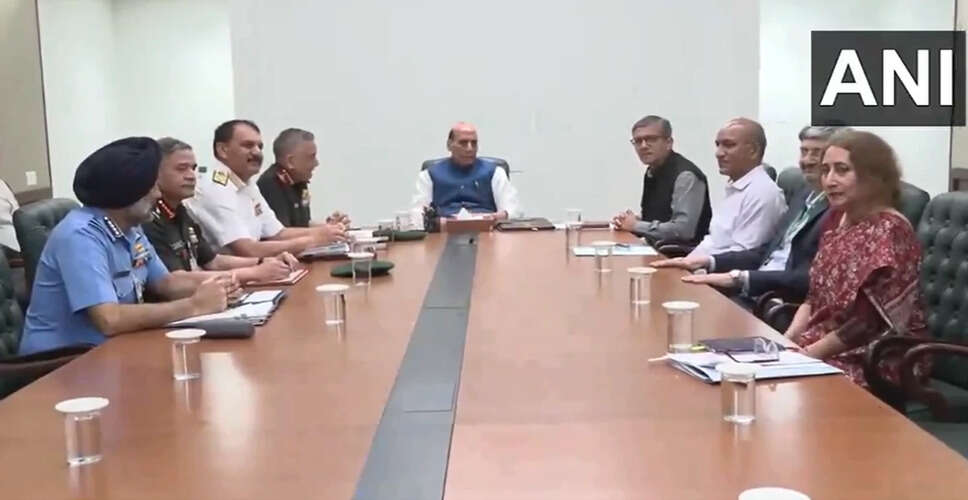
Reviewing the Situation in West Asia
On Tuesday, Defence Minister Rajnath Singh chaired a high-level meeting to assess the ongoing situation in West Asia. The meeting included all military chiefs and key officials such as the Chief of Defence Staff General Anil Chauhan, the head of DRDO, and the Defence Secretary. This review comes amid the ongoing conflict in the region, with the government closely monitoring developments. The war has now entered its fourth week.
Engagement with U.S. Officials
Meanwhile, U.S. Under Secretary of War Elbridge Colby is in India for discussions with senior officials. Prior to this, the Cabinet Committee on Security (CCS) reviewed the situation arising from the conflict in West Asia, focusing on the availability of essential needs such as food, energy, and fuel security for the general populace. Prime Minister Narendra Modi presided over this meeting.
Government's Comprehensive Approach
Following the CCS meeting, an official statement revealed that Prime Minister Modi instructed the formation of a dedicated group of ministers and secretaries to work on the government's comprehensive approach to address the impacts of the West Asia conflict. He emphasized that this evolving situation affects the entire world in various ways and that every possible effort should be made to protect citizens from its repercussions.
Ensuring Availability of Essential Goods
Modi directed all government entities to collaborate to minimize inconvenience for citizens. The CCS meeting discussed medium- and long-term measures to ensure the continuous availability of essential goods. The statement released after the meeting noted that the ongoing conflict in West Asia will have significant short, medium, and long-term impacts on the global economy, and assessments were made regarding its effects on India, along with discussions on both immediate and long-term strategies. The CCS, which is the highest decision-making body on national security and strategic matters, conducted a thorough evaluation of the availability of critical needs such as food, energy, and fuel security for the public.