
Rajnath Singh Inaugurates Hanumant Bhavan in New Delhi
Defence Minister Rajnath Singh inaugurated Hanumant Bhavan in New Delhi, highlighting its role as a center for spiritual education and cultural service. He emphasized the historical significance of saints in India's identity and their contributions to the freedom struggle. Singh called for integrating science with values in education and stressed the importance of spiritual institutions in urban settings. The event marks a significant step towards enhancing cultural preservation and holistic development in society. Discover more about this initiative and its implications for India's future.
| Jun 22, 2026, 18:39 IST
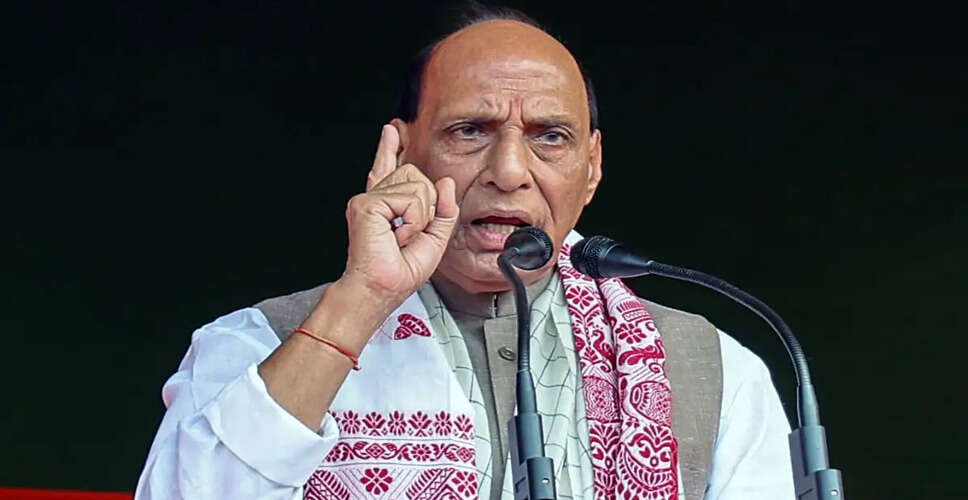

Inauguration of Hanumant Bhavan
On Monday, Defence Minister Rajnath Singh inaugurated the 'Hanumant Bhavan' in New Delhi. He described it as a center for service, culture, and spiritual education, emphasizing the contributions of saints to India's civilizational history. While addressing the event, Singh expressed his honor in inaugurating the building and conveyed his respect for the saint community. He stated that the opening of Hanumant Bhavan brings great joy, and on this occasion, he pays homage to the saint community. He also expressed gratitude to the Sadashiv Temple Trust, noting that such a dedicated structure for the service of saints will benefit the entire society.
Cultural Significance of Saints
S Singh remarked that India has long been associated with sages and spiritual traditions. He noted that the essence of India is rooted in the penance of sages and saints, and the country's identity is shaped by the values they imparted, which have guided humanity. Historically, even kings considered it a privilege to serve the saints. He highlighted the significant role saints played in the freedom struggle, igniting a sense of nationalism among the people. Singh also referenced the Ram Temple movement, acknowledging the well-known involvement of saints in this cause post-independence.
Regarding cultural preservation, Singh stated that a culture that honors its saints can never perish. He mentioned that this institution will also work towards the holistic development of students and provide Vedic education and moral training through value camps. Singh emphasized the importance of spiritual institutions in urban areas, stating, “In bustling metropolises like Delhi, people often seek spiritual peace. Thus, the presence of Kanakhal Peeth is crucial. I have had the privilege of being guided by the Shankaracharya tradition multiple times in my life.”
Integration of Education and Culture
On the topic of education and cultural integration, he suggested that in today's era of science and technology, it is essential to connect science with values. Singh urged the trust to organize regular camps that incorporate subjects like yoga, meditation, and Sanskrit alongside science and technology education. He also highlighted India's cultural and developmental achievements, mentioning the celebration of 'Somnath Swabhiman Utsav' marking 75 years since the reconstruction of the Somnath Temple. Initiatives like the Ram Temple and Kashi Corridor have enhanced the nation's pride, and the digitization of manuscripts is a significant step forward. He concluded by stating that this is a new India where respect, opportunities, and development reach every segment of society.
Stay updated with the latest political events and major news across the country.