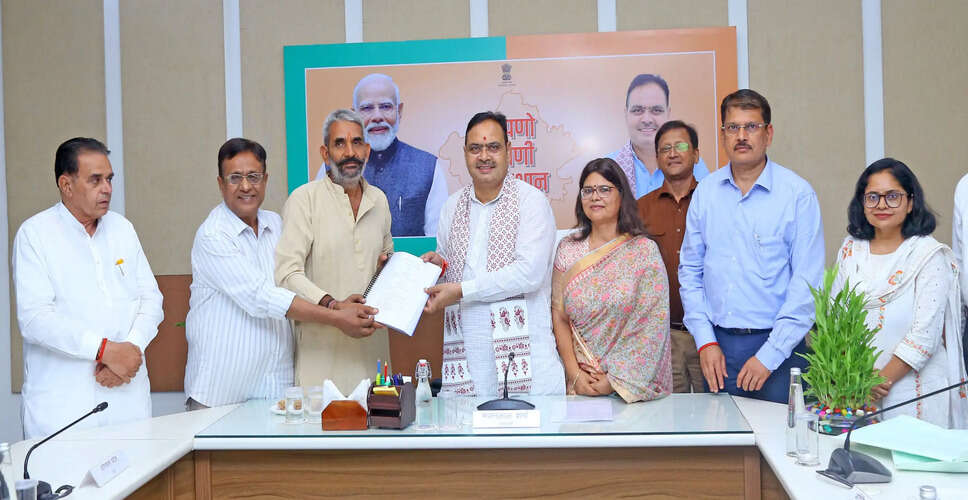
Jaipur. The process regarding the Uniform Civil Code (UCC) in Rajasthan has reached a crucial stage. The committee responsible for drafting the UCC has submitted its draft to Chief Minister Bhajanlal Sharma. With the draft now in the hands of the Chief Minister, all eyes are on the next steps regarding the UCC in Rajasthan.
The UCC has been a topic of discussion in Indian politics and legal frameworks for a long time. Its aim is to establish a uniform legal system for personal matters such as marriage, divorce, inheritance, and family affairs, replacing the diverse personal laws associated with different communities.
Draft Prepared by the Committee
After examining various aspects, the committee formed for the UCC has finalized its draft. Following its submission to the Chief Minister, the government will now review the provisions outlined in the draft.
Details regarding the topics included in the draft and the proposed implementation in Rajasthan will become clearer once the government officially releases this information.
Understanding the Uniform Civil Code
The Uniform Civil Code refers to a legal framework that applies uniformly to all citizens in personal civil matters. It typically encompasses discussions around marriage, divorce, inheritance, property rights, and adoption.
Currently, India has various personal laws and traditions applicable to different religious communities. The concept of UCC is linked to the implementation of uniform regulations in these civil matters.
Significance of This Step in Rajasthan
The completion of the UCC draft and its submission to the Chief Minister is considered significant both politically and socially in a large state like Rajasthan. The government now faces the challenge of legally, socially, and administratively reviewing this draft.
The government may also seek opinions from experts and relevant stakeholders regarding the draft's provisions. Following this, the next steps for implementation will be determined.
What Issues Will Be Focused On?
The most attention will be on the provisions of the UCC draft that directly relate to family and personal laws. Key topics such as marriage age, marriage registration, divorce, inheritance, property rights, and family-related regulations will be crucial to examine.
Additionally, how the proposed framework will align with existing personal laws of different communities remains a significant question.
Next Steps in the Process
The submission of the draft to the Chief Minister does not finalize it as law. The government must evaluate its provisions and complete the necessary legal processes before moving forward with implementation.
This entire development is likely to intensify political debates regarding the UCC in Rajasthan. Supporters may view it as a step towards equality and uniformity in civil laws, while opponents may raise concerns about its social and legal implications.
Currently, the most crucial aspect is that the Uniform Civil Code Drafting Committee has submitted its draft to Chief Minister Bhajanlal Sharma. The government's study of this draft and subsequent actions will determine the future direction of this issue.