
Rajasthan's Cooperative Model: A Pathway to Rural Prosperity
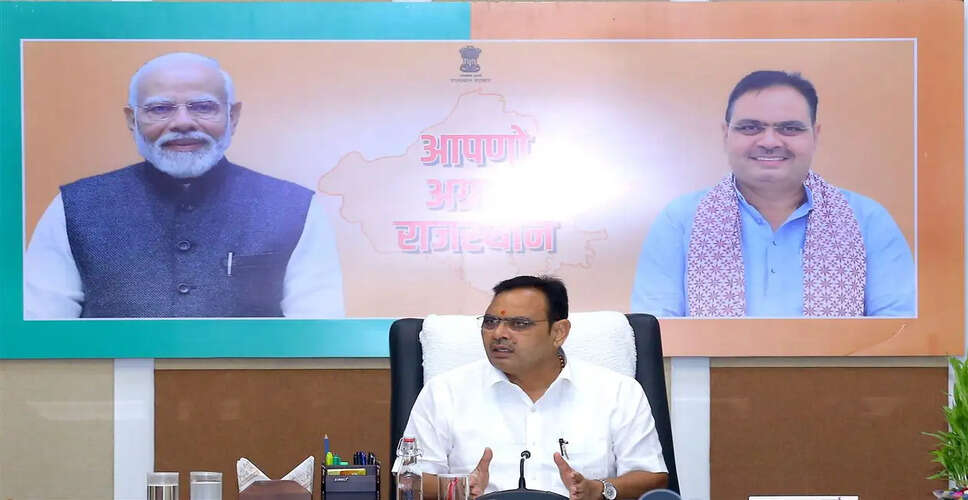

Chief Minister Bhajanlal Sharma Advocates for Cooperative Growth
In Jaipur, Chief Minister Bhajanlal Sharma emphasized that cooperatives serve as a vital means for rural prosperity and job creation. He noted that these initiatives create new opportunities for farmers, livestock breeders, youth, and rural families, thereby strengthening the local economy. Sharma highlighted Rajasthan's emerging leadership in the cooperative sector, aligning with Prime Minister Narendra Modi's vision of 'prosperity through cooperation.' The state government is actively working to enhance cooperative institutions.
During a meeting held at the Chief Minister's residence on Sunday, he instructed that the warehouses established by the cooperative department should be utilized efficiently and to their fullest potential. Additionally, he urged the expansion of cooperative activities into new areas and the promotion of innovations. The Chief Minister also directed the advancement of the cooperative model-based 'Bharat Taxi' initiative and encouraged the support of Prime Minister's Indian Public Medicine Centers.
Rajasthan's Cooperative Model to Gain National Recognition —
It is noteworthy that a ceremony marking the 5th anniversary of the Ministry of Cooperation will take place on Monday (July 6) at Bharat Mandapam in New Delhi, with Union Home and Cooperation Minister Amit Shah as the chief guest. Chief Minister Bhajanlal Sharma is expected to attend this event, which will showcase Rajasthan's cooperative model's innovations, reforms, and historical achievements, giving the state a new identity.
Rajasthan Leads in Digitization of Cooperative Institutions —
Under the leadership of Chief Minister Bhajanlal Sharma, Rajasthan has achieved numerous national milestones in the cooperative sector, establishing itself as a leading state. The state has received approval for 200 warehouses under the world's largest food storage scheme, with 120 already constructed, placing Rajasthan at the forefront of this initiative.
Furthermore, Rajasthan has made significant strides in digitizing cooperative institutions, including enrolling primary agricultural credit societies into the Indian Seed Cooperative Society, forming new multi-purpose cooperative societies, and computerizing e-PACS. The state has also recorded over 10 crore ERP transactions, enhancing the digital landscape of cooperatives. The PACS now operate as common service centers, Prime Minister's Kisan Samriddhi Centers, and farmer producer organizations, creating an effective service delivery model in rural areas.
Expansion of the Cooperative Family with 890,000 New Members —
Rajasthan has taken robust steps to promote transparency, technological innovation, and public participation in the cooperative sector. Initiatives such as the Kisan Samman Nidhi, Gopal Credit Card Scheme, and Risk Relief Fund Scheme are currently being implemented. Notably, the recovery rate of crop loans distributed by cooperative banks and PACS reached 97.48% in the fiscal year 2025-26, and the effective payment system by Rajfed has reduced the payment period for farmers from 15 days to just 4-5 days. As part of the cooperative membership campaign, 890,000 new members have been added across the state. Rajasthan has been invited to the national celebration of the Ministry of Cooperation's anniversary.
The meeting was attended by State Minister for Cooperation (Independent Charge) Gautam Kumar Dak, Chief Secretary V. Srinivasan, and officials from the Chief Minister's office, Finance, and Cooperation Department.