
Rajasthan High Court Rules Against Tax Collection on Out-of-State Vehicles
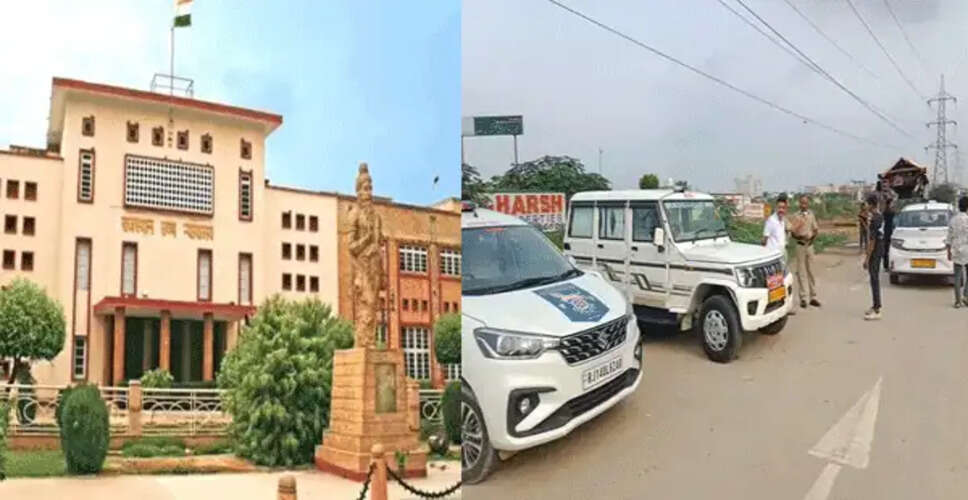

High Court's Ruling on Vehicle Tax Collection
Jaipur. The Rajasthan High Court has declared the tax collection and vehicle seizure actions by the transport department against privately registered cars and jeeps from other states, when used for more than 30 days, as illegal. The court clarified that the transport department cannot collect a lump-sum tax from non-transport vehicles registered in other states without valid legal provisions and relevant notifications. The bench, led by Chief Justice Sanjay K. Agarwal and Justice Sameer Jain, ordered the refund of the collected tax amounts to the petitioners within 30 days and directed the immediate release of the seized vehicles.
Background of the Case
The court issued this order while disposing of petitions filed by Harpy Core Network India Private Limited and other petitioners. The court emphasized that there must be clear and valid legal provisions in place to collect taxes from individuals. Tax cannot be demanded from vehicle owners based solely on administrative orders or interpretations of notifications. This ruling provides relief to vehicle owners whose private cars are registered in other states and who faced actions from the transport department for keeping or using their vehicles in Rajasthan for over 30 days.
Details of the Legal Challenge
In this case, several owners of privately registered cars from other states challenged the transport department's actions in the Rajasthan High Court. Their vehicles were registered outside Rajasthan, including states like Haryana, Delhi, Punjab, Gujarat, Uttar Pradesh, and Madhya Pradesh, and had already paid the required lifetime tax in their respective states.
Despite this, when these private vehicles were operating in Rajasthan, the transport department's enforcement teams stopped several cars during inspections. The department informed the vehicle owners that, despite being registered in other states, their vehicles had been used in Rajasthan for over 30 days, necessitating the payment of road tax in Rajasthan. Failure to pay the tax led to the seizure of vehicles and tax collection actions.
Arguments Presented by Petitioners
The petitioners argued in the High Court that their vehicles were legally registered in their respective states and that the lifetime tax had already been paid. Therefore, there was no clear legal basis for demanding a lump-sum tax based on their use of the vehicles in Rajasthan. They contended that the transport department's actions were unconstitutional, as Article 265 of the Constitution states that tax can only be collected if there is a valid legal provision.
The petitioners maintained that the transport department could not demand taxes based solely on administrative orders or interpretations of notifications without a clear legal framework for such actions.
State Government's Defense
The state government defended the transport department's actions in court, arguing that privately registered vehicles from other states were being used in Rajasthan for more than 30 days. According to Rule 28, if a vehicle remains in Rajasthan for over 30 days, it becomes liable for tax under state regulations. The government also mentioned a notification issued on July 10, 2024, which set tax rates for non-transport vehicles.
The government claimed that this notification included provisions for vehicles registered in other states, justifying the tax collection and seizure actions against vehicles that did not comply with the rules.
Court's Findings and Conclusion
After hearing both sides, the High Court examined the legal provisions and relevant notifications. It found that while the July 10, 2024 notification set tax rates for passenger and goods vehicles, there was no separate notification required for the non-transport category of private cars.
The court clarified that merely mentioning previously registered vehicles in a notification is insufficient. A specific notification under the relevant legal provisions is necessary for tax collection from a particular category of vehicles. The court ruled that the transport department's tax collection from privately registered cars from other states was illegal.
Consequently, the court ordered the refund of the collected tax amounts to the petitioners within 30 days and directed the immediate release of the seized vehicles.
Implications of the Ruling
This ruling from the Rajasthan High Court is seen as a significant relief for owners of privately registered vehicles from other states, especially those who were asked to pay taxes or had their vehicles seized for using them in Rajasthan for over 30 days. The court emphasized that adherence to the legal process for tax collection is mandatory, and no department has the authority to collect taxes from citizens without a valid legal basis.
The decision also highlights the necessity of following constitutional provisions and legal boundaries during administrative actions. The court's directive mandates that the petitioners receive their refunded amounts and that the seized vehicles be released as per the established guidelines.