
Rajasthan Aims for Energy Self-Sufficiency with New Initiatives
Rajasthan's Energy Minister, Hiralal Nagar, has unveiled ambitious plans to achieve self-sufficiency in electricity production. The state aims to enhance energy generation and develop battery storage capabilities to meet peak demand. Key initiatives include connecting 300,000 households to solar energy under the PM Suryagarh scheme. The minister emphasized the importance of uninterrupted electricity supply, particularly for the agricultural sector, with a commitment to provide daytime electricity across all districts by 2027. Ongoing projects and collaborations with various energy corporations are set to strengthen the state's electricity infrastructure. This strategic approach aims to ensure reliable energy access for all residents.
| Aug 12, 2026, 10:28 IST

Rajasthan's Energy Minister Outlines Vision for Electricity Production
Jaipur. The Energy Minister, Mr. Hiralal Nagar, emphasized the state government's commitment to achieving self-sufficiency in electricity production. To this end, the electricity corporation is set to enhance energy production while also accelerating the development of battery storage capacity. This initiative aims to meet peak demand using local resources. Additionally, he highlighted the importance of the PM Suryagarh free electricity scheme, which plans to connect 300,000 households to solar energy under a utility-led aggregation model.
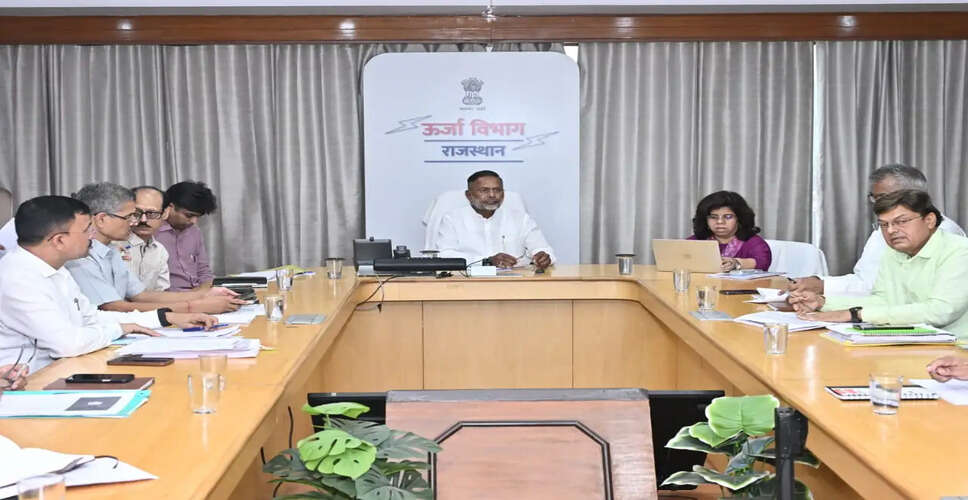
During a review meeting at the electricity building on Tuesday evening, Mr. Nagar assessed the current electricity supply situation in the state, along with the progress of various schemes such as RDSS and PM Suryagarh, the construction of grid substations announced in the budget, and other projects aimed at strengthening the electricity infrastructure.
The Energy Minister stated that providing uninterrupted electricity to residents is a top priority for the government. Chief Minister Mr. Bhajanlal Sharma has committed to ensuring daytime electricity supply for the agricultural sector across all districts by 2027. Therefore, efforts to enhance electricity infrastructure should be expedited to connect farmers in remaining districts with daytime supply in two blocks.
Energy Secretary Ms. Aarti Dogra reported that all three DISCOMs have invited tenders to develop a pilot battery storage capacity of 172 MW/688 MWh. The production and renewable energy corporations are also rapidly advancing projects to develop a battery storage capacity of 12,400 MWh. She noted that farmers in 26 districts have already been connected to daytime electricity supply in two blocks, with ongoing efforts to strengthen transmission capacity, expand lines, and construct new substations in the remaining districts.
Mr. Shivprasad Nakate, Managing Director of the Energy Development Corporation, shared that on July 18, the state achieved its highest electricity consumption of 4040 lakh units without any interruptions. He mentioned that the average daily electricity consumption in July this year was recorded at 3369 lakh units, which is a 22% increase compared to the same month last year. The peak demand during this period reached 18164 MW, marking a 24% rise from July of the previous year. This indicates that uninterrupted supply is being ensured for consumers across the state.
During the meeting, Mr. Nagar also reviewed the progress of smart meter installations and the construction of grid substations as announced in the budget. The Managing Directors of Jodhpur and Ajmer Electricity Distribution Corporations, Dr. Bhawarlal, participated via video conference. Senior officials from the production corporation, the energy department, and the technical directors of the distribution and renewable energy corporations were also present.