
Rahul Gandhi Exits CBI Director Selection Meeting, Raises Concerns Over Process
In a recent high-level meeting regarding the selection of the next CBI director, opposition leader Rahul Gandhi exited after just five minutes, citing a biased process. He presented a letter of dissent to Prime Minister Modi, alleging misuse of the CBI against political opponents. Gandhi emphasized the need for transparency and fairness in the selection process, claiming that critical evaluation reports were withheld. His departure has sparked renewed political tensions, with the government yet to respond to his allegations. The meeting's significance is heightened as the current director's term ends in May 2026, making the selection process a focal point of political scrutiny.
| May 13, 2026, 11:34 IST
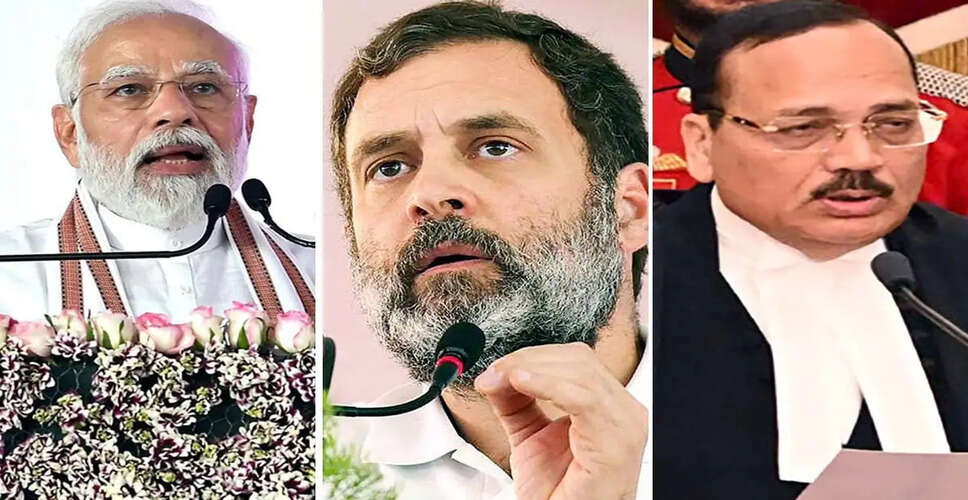

High-Level Meeting on CBI Director Selection
During a high-level meeting chaired by Prime Minister Narendra Modi on Tuesday regarding the selection of the next CBI director, opposition leader Rahul Gandhi left after just five minutes. Before departing, he handed over a two-page letter of dissent to the Prime Minister, criticizing the selection process as biased and stating he could not participate in a predetermined exercise.
Significance of the Meeting
This meeting, held at the Prime Minister's residence on Lok Kalyan Marg, also included Chief Justice of India D.Y. Chandrachud. The committee was formed to select the next CBI director, as the current director, Praveen Sood, will complete his term on May 24, 2026. Therefore, this meeting was deemed crucial for the selection process.
Allegations by Rahul Gandhi
During the meeting, Rahul Gandhi accused the government of misusing the CBI, a major investigative agency, to target political opponents, journalists, and critics. He pointed out that the inclusion of the opposition leader in the selection committee was intended to prevent such institutional misuse, but he felt he was not given a meaningful role in the process.
Concerns Over Transparency
In his dissent letter, Gandhi mentioned that he had repeatedly requested written self-assessment reports and 360-degree evaluation reports of qualified candidates, but the government failed to provide them. He noted that he was only shown the evaluation records of seventy candidates during the meeting, while the 360-degree reports were completely withheld. According to him, reviewing these documents was essential for a fair assessment of any candidate's tenure, performance, and background.
Government's Alleged Manipulation
He further alleged that the government had turned the entire selection process into a farce by withholding critical information without any legal basis, ensuring that a pre-decided candidate would be chosen. Gandhi emphasized that the opposition leader's role should not be merely ceremonial and that he could not shy away from his constitutional responsibilities.
Outcome of the Meeting
Sources indicated that Gandhi did not participate in discussions regarding the candidates' names, leading to the meeting's abrupt conclusion after just five minutes. Following this, discussions on various international and political issues, including Iran, continued for about thirty-five minutes, with the meeting lasting over an hour in total.
Public Opposition on Social Media
Later, Gandhi took to social media to express his dissent, stating that he could not compromise his constitutional duties by being part of a biased process. He reiterated that the opposition leader should not be treated as a rubber stamp.
Previous Dissent and Government Response
In his letter, Gandhi also reminded that he had previously registered dissent during a meeting on May 5, 2025, and had written to the Prime Minister on October 21, 2025, suggesting measures to ensure a fair and transparent selection process. However, he claimed that the government ignored his requests.
Government's Stance on the Selection Process
As of now, the government has not officially responded to Gandhi's allegations. However, sources claim that the selection process is proceeding according to regulations, with the committee considering names of qualified officials. Several senior Indian Police Service officers from various states, including Parag Jain, Shatrujeet Kapoor, Yogesh Gupta, G.P. Singh, and Praveer Ranjan, are reportedly among the potential candidates.
Political Implications of the Selection Process
It is noteworthy that the CBI is regarded as one of the country's most significant investigative agencies, and the appointment of its director has always been sensitive. The controversy surrounding the selection process has intensified the political atmosphere, with Rahul Gandhi's strong opposition and his exit from the meeting raising new concerns regarding this appointment.