
Rahul Gandhi Criticizes PM Modi Amid Rising Tensions in West Asia
Gandhi's Concerns Over India's Security
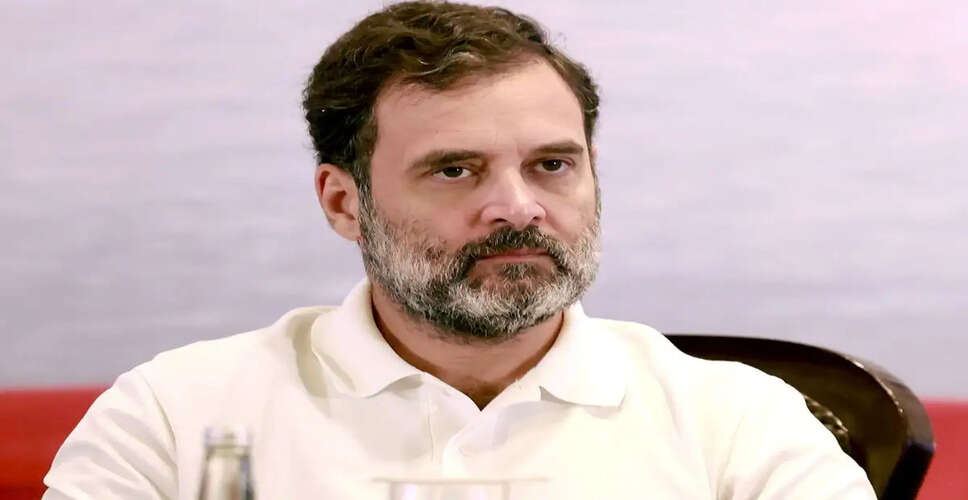
New Delhi: On Thursday, Congress leader Rahul Gandhi launched a scathing critique of Prime Minister Narendra Modi, asserting that the ongoing conflict in West Asia has encroached upon India's interests, yet the Prime Minister has remained silent. He emphasized the need for strong leadership during such turbulent times, claiming that the nation is instead led by a 'compromised PM' who has relinquished India's strategic independence.
Gandhi pointed out the precarious situation regarding India's oil supplies, noting that over 40% of imports pass through the Strait of Hormuz, with even more alarming conditions for LPG and LNG supplies. He expressed his concerns on social media, stating, 'The conflict has reached our backyard, with an Iranian warship sunk in the Indian Ocean. Yet the Prime Minister has said nothing.'
The world has entered a volatile phase. Stormy seas lie ahead.
India’s oil supplies are under threat, with more than 40% of our imports transiting the Strait of Hormuz. The situation is even worse for LPG and LNG.
The conflict has reached our backyard, with an Iranian warship…
— Rahul Gandhi (@RahulGandhi) March 5, 2026
He reiterated that India requires a steady hand at the helm during such crises, contrasting this with what he perceives as a failure in leadership from Modi.
Gandhi's comments followed a significant military incident where a US submarine sank an Iranian warship in international waters near Sri Lanka, marking a notable escalation in US-Iran tensions. US Defence Secretary Pete Hegseth confirmed this was the first instance of a torpedo sinking an enemy vessel since World War II.
Reports indicate that 87 bodies were recovered, with 32 individuals rescued after the sinking of the IRIS Dena warship, as per the Sri Lankan Navy.
This incident raises serious concerns regarding maritime security in the Indian Ocean, an area predominantly overseen by the Indian Navy. The conflict has intensified following military strikes by the US and Israel on Iran, which resulted in the death of Iranian Supreme Leader Ayatollah Ali Khamenei.
In retaliation, Iran has launched a series of attacks targeting Israel and US military bases across several Gulf nations, including the UAE, Bahrain, Kuwait, Jordan, and Saudi Arabia. The situation has escalated with ongoing exchanges of attacks between the involved parties.
India has advocated for a resolution through dialogue and diplomatic means.