
Rahul Gandhi Accuses PM Modi of Compromising Farmers' Interests in Trade Deal
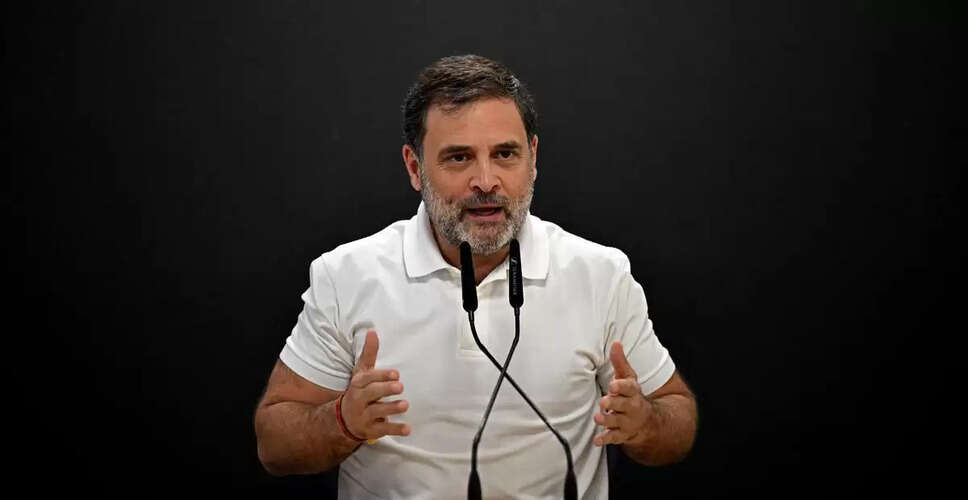
Gandhi's Strong Allegations Against Modi
On Tuesday, Rahul Gandhi, the leader of the Opposition, asserted that Prime Minister Narendra Modi has been 'compromised', claiming he has 'sold out' the hard work of farmers in India by succumbing to pressure from the United States to finalize a trade agreement.
These remarks were made by Gandhi while addressing journalists outside Parliament, where he was barred from quoting sections of an unpublished memoir by former Army chief Manoj Mukund Naravane regarding political decisions during the 2020 border standoff with China.
During the debate on the Motion of Thanks to the president’s address, Gandhi expressed frustration, noting that it was unprecedented for the Opposition leader to be silenced on such an important issue.
He emphasized that the focus should not be on the memoir but rather on the fact that 'our prime minister has been compromised'.
Gandhi stated, 'I want to convey three points, but I cannot even express the first one in the House. Modi ji is scared.'
PM Modi is Compromised.
— Rahul Gandhi (@RahulGandhi) February 3, 2026
PM is too afraid to let me speak in Parliament about Naravane, Epstein Files and how he has surrendered on Tariffs. pic.twitter.com/V1J6yxZDM2
He further claimed that a trade deal, which had been on hold for four months, was signed just a day prior, hinting at undisclosed reasons known only to Modi.
Indian exports had been subjected to a hefty US tariff rate of 50%, which included a 25% penalty imposed in August for purchasing Russian oil.
Recently, President Trump announced that India and the US had reached a trade agreement, reducing tariffs on Indian goods to 18% effective immediately.
Gandhi accused Modi of being under 'immense pressure', suggesting that the prime minister's inflated public image could soon collapse.
He urged farmers to recognize that their efforts had been 'sold out' through this trade deal, stating, 'He has not just sold you off, but the whole country.'
Additionally, Gandhi referenced an alleged $265 million bribery and fraud case involving Gautam Adani, asserting that this was not merely an attack on the businessman but rather on Modi's financial framework.
In November 2024, the US Attorney’s office indicted Adani, alleging that executives from his conglomerate engaged in bribery for solar energy contracts while misleading US investors about their anti-bribery measures.
While the indictment included conspiracy to obstruct justice and violations of the Foreign Corrupt Practices Act, Adani and his team were not charged with these offenses.
However, the indictment did name Gautam Adani in what was described as a 'massive bribery scheme'.
The Adani Group has denied these allegations and pledged to take legal action. In a stock exchange filing, they clarified that Gautam Adani faced charges in the US for securities fraud, but not bribery.
On Tuesday, Gandhi remarked that the 'Epstein files' contained significant information.
The 'Epstein files' refer to a trove of documents released by the US Department of Justice that detail the activities of Jeffrey Epstein, a financier and convicted sex offender, along with his connections to various public figures.
A purported email from Epstein referencing one of Modi's visits to Israel was included in the latest release of documents.
India’s Ministry of External Affairs dismissed any implications regarding Modi in the Epstein files as 'deserving utmost contempt'.
Gandhi reiterated that both the Epstein files and the Adani case represented significant pressure points for the government.
Later, he took to social media to reaffirm his stance that Modi was 'compromised' and too fearful to allow him to speak in Parliament about Naravane, the Epstein files, and tariff issues.