
Péter Magyar Sworn in as Hungary's New Prime Minister, Signaling a Shift in Politics

A New Era Begins in Hungary
Péter Magyar officially took the oath of office on Saturday, marking the start of a new political chapter in Hungary after 16 years under Viktor Orbán's leadership. Magyar's center-right Tisza party achieved a remarkable victory last month, surpassing Orbán’s Fidesz party in both votes and parliamentary seats, a first in Hungary's post-Communist era. This win grants Tisza a two-thirds majority, enabling them to reverse many of Orbán's controversial policies that earned him a reputation as a far-right authoritarian.
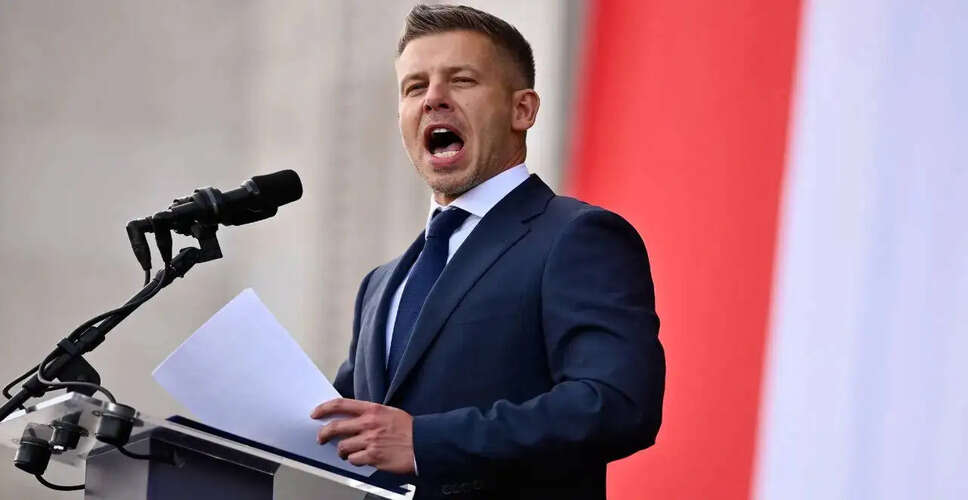
Addressing a large crowd outside the parliament following his swearing-in, Magyar expressed, “Today, every freedom-loving person in the world would like to be Hungarian a little.” He praised the citizens for demonstrating that ordinary people can triumph over tyranny, receiving enthusiastic applause from the audience.
As the new prime minister, Magyar has committed to reinstating democratic institutions and checks and balances that were significantly weakened during Orbán's tenure, alongside tackling corruption. His leadership is anticipated to reshape Hungary's political landscape within the European Union, where Orbán had frequently vetoed crucial decisions, including those related to support for Ukraine.
A Parliament Without Orbán
On Saturday, Magyar, a 45-year-old lawyer and founder of Tisza in 2024, entered the grand neo-Gothic parliament building with 140 party representatives. Tisza now holds 141 seats in the 199-seat parliament, while Orbán’s Fidesz-KDNP coalition has seen its seats drop to 52 from 135, and the far-right Mi Hazánk party holds six seats. This marks the first time since 1990 that Orbán was absent from the parliamentary oath-taking ceremony.
Magyar had previously invited Hungarians to a day-long celebration on Kossuth Square to commemorate his inauguration and the end of the Orbán era. Many attendees waved Hungarian and EU flags and donned Tisza T-shirts. In his address, Magyar emphasized unity and pledged to mend the social rifts created by Orbán's administration, stating, “Today is the fulfillment of the long journey that we have made together in recent years.”
Notably, Hungary's new National Assembly includes 54 women lawmakers, primarily from Tisza, representing the highest number in the nation's history. Andrea Szepesi, an economist from Budapest, remarked on the importance of increased female representation in government, highlighting that under Orbán, Hungary lagged behind most EU nations in this regard.
Restoring EU Relations
Magyar has pledged to mend Hungary's strained relations with the EU, which had deteriorated under Orbán's leadership. The EU flag was raised on the parliament building for the first time since Orbán's government removed it in 2014. One of Magyar's key priorities is to unlock approximately 17 billion euros ($20 billion) in EU funds that were frozen due to concerns over rule-of-law and corruption during Orbán's administration. This funding is crucial for revitalizing Hungary's stagnant economy.
Attendee Áron Farsang, a 27-year-old web designer, expressed hope that the new government would restore democratic norms and reduce Russian influence in Hungary, particularly regarding energy dependency.
Addressing the Past
Many of the 3.4 million Hungarians who supported Tisza expect Magyar to hold Fidesz officials accountable for alleged misconduct during the previous administration. In his address to the National Assembly, he called for the resignation of Fidesz-appointed heads of government institutions by May 31. Magyar intends to establish a National Asset Recovery and Protection Office to investigate and recover public funds misappropriated during Orbán's rule. He also plans to suspend the operations of Hungary’s public broadcaster until it can ensure objectivity, as it has been perceived as a mouthpiece for Orbán's party.
In his remarks, Magyar emphasized the need for accountability, stating that voters have entrusted him with the responsibility to initiate a new chapter in Hungary's history.