
Push for Permanent Gauhati High Court Bench in Barak Valley Intensifies

Growing Demand for a Permanent Bench
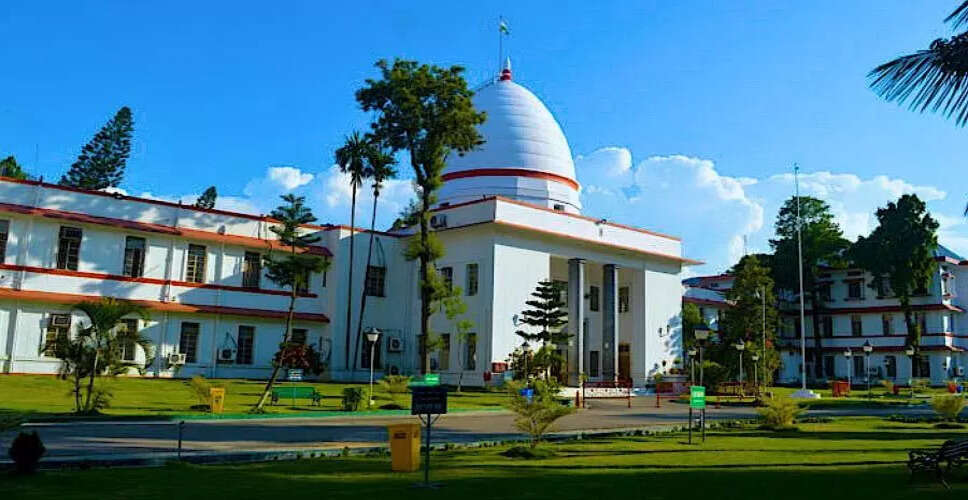
File image of Gauhati High Court (Photo: X)
Silchar, May 7: The call for establishing a permanent Bench of the Gauhati High Court in Barak Valley has gained renewed traction. This follows the submission of a detailed 112-page memorandum by the Cachar district unit of the High Court Bench Demand Implementation Committee to the Chief Justice, urging immediate reconsideration of the matter.
This memorandum builds upon a previous representation made on January 12, 2026, and was endorsed by senior advocate Dharmananda Deb on behalf of the committee.
The document outlines the geographical, infrastructural, and financial challenges that litigants from Barak Valley and Dima Hasao face when trying to access judicial services in Guwahati.
Advocate Deb explained to News Media that individuals from southern Assam often have to travel distances of 350 to 400 kilometers to attend court proceedings and coordinate with their lawyers, which imposes a significant financial burden, especially on economically disadvantaged groups and those living in rural areas.
The memorandum also points out the frequent disruptions caused by floods, landslides, and inadequate transport and communication networks in the region, which hinder travel and delay judicial processes.
Referencing Articles 14 and 21 of the Constitution, the representation emphasizes that accessible and effective justice is crucial for upholding the fundamental rights to equality and personal liberty.
It cites various Supreme Court rulings to argue that decentralizing judicial infrastructure is vital for ensuring substantive constitutional justice.
The committee noted that the Assam government has already sought the Gauhati High Court's opinion on this issue, indicating that it is currently under active administrative and judicial review.
The memorandum revisits past parliamentary discussions supporting this demand, including debates in the Lok Sabha in 2012 and a Rajya Sabha intervention in 1991 by former Union Law Minister Subramanian Swamy.
According to the representation, the combined population of Cachar, Sribhumi, Hailakandi, and Dima Hasao exceeds 4.7 million.
It also mentions that over 600 pending cases, along with more than 4,000 cases originating from Barak Valley, were unresolved between January and March this year, reinforcing the argument for decentralized judicial access in southern Assam.
Through this memorandum, the committee has urged the Chief Justice to reassess previous opinions on the matter and support the establishment of a permanent Bench in Silchar.
By drawing parallels with the permanent Bench of the Calcutta High Court in Jalpaiguri, the memorandum argues that Barak Valley presents equally compelling, if not stronger, demographic, administrative, and logistical reasons for the establishment of a permanent Bench of the Gauhati High Court in Silchar.