
Protests Erupt in Bangladesh's Garment Sector Amid Wage Demands
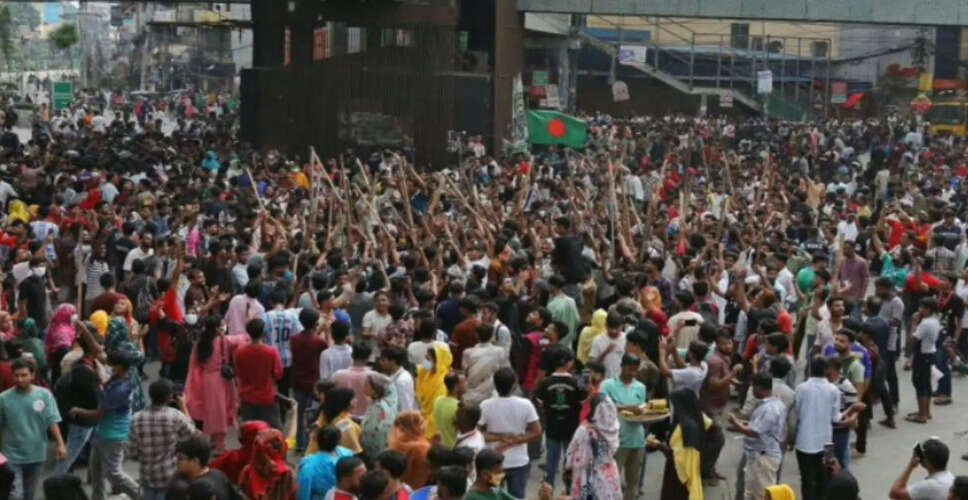

Protests in Gazipur
A file photo shows garment factory workers gathered in Dhaka, Bangladesh, protesting to demand a higher minimum wage(Photo: @Bangla_Guardian/X)
Dhaka, Nov 16: On Monday, police utilized tear gas and sound grenades to disperse workers from two garment factories who had assembled outside their workplaces in the Konabari region of Gazipur, Bangladesh, according to local reports.
To ensure safety and order in the industrial area, police and Border Guard Bangladesh (BGB) personnel have been deployed at key locations, as reported by a local daily.
Workers from ABM Fashion and Jamuna factories protested by blocking the Konabari-Kashimpur road. Upon receiving reports of the blockade, law enforcement arrived and requested the workers to clear the road. However, tensions escalated, prompting police to use tear gas and sound grenades to disperse the crowd. Eventually, the workers vacated the area, restoring normalcy.
Mohammad Amzad Hossain, the Superintendent of Police for Gazipur Industrial Police-2, confirmed that the protests involved workers from the ABM Fashion and Jamuna factories. He noted that police had to resort to tear gas and sound grenades to manage the situation, with additional personnel stationed throughout the industrial zone.
Due to ongoing labor unrest and security issues, at least 13 garment factories have been closed indefinitely since Sunday, as reported by local media.
On November 5, a prominent international human rights organization condemned the violence directed at garment workers in Bangladesh, who have been advocating for fair wages and fundamental labor rights.
This condemnation coincided with rising unrest in the garment sector, where numerous individuals, including law enforcement, sustained injuries, and over 200 factories in Savar and Ashulia were forced to declare holidays due to escalating protests. Workers are demanding a minimum monthly wage of Tk 30,000.
Human Rights Watch (HRW), a US-based advocacy group, expressed serious concern over the actions of Bangladeshi police, who reportedly used batons and tear gas against thousands of protesting garment workers seeking higher wages.
The organization also highlighted incidents of violence allegedly perpetrated by individuals connected to factory owners and political factions, including arson, factory vandalism, and assaults on police, emphasizing the growing violence surrounding these protests.
HRW stated, “In line with international standards, Bangladeshi authorities must ensure that police use force only when absolutely necessary and that those responsible for violence are held accountable.”
Reports indicate that a garment worker named Toufiq Hossain, who suffered critical injuries during clashes in Joydebpur, Gazipur district, passed away while receiving treatment in a Dhaka hospital on November 3.
A co-worker of Toufiq recounted to HRW, “We were heading back to the factory after lunch when Toufiq found himself caught between the protesting workers and men hired to suppress the protest from another factory. When I turned around, I saw Toufiq lying on the ground, brutally beaten by the hired men.”
The rights organization criticized Bangladeshi authorities for failing to address the legitimate demands for fair wages, instead blaming political opposition for inciting the protests.
Dhaka police reported the arrest of 33 supporters of the Awami League on November 3 for alleged sabotage. However, others claimed that members of the ruling Bangladesh Nationalist Party (BNP) youth wing targeted the protesting workers.