
Prime Minister Modi Visits Historic Thanthania Kalibari Temple Ahead of West Bengal Elections
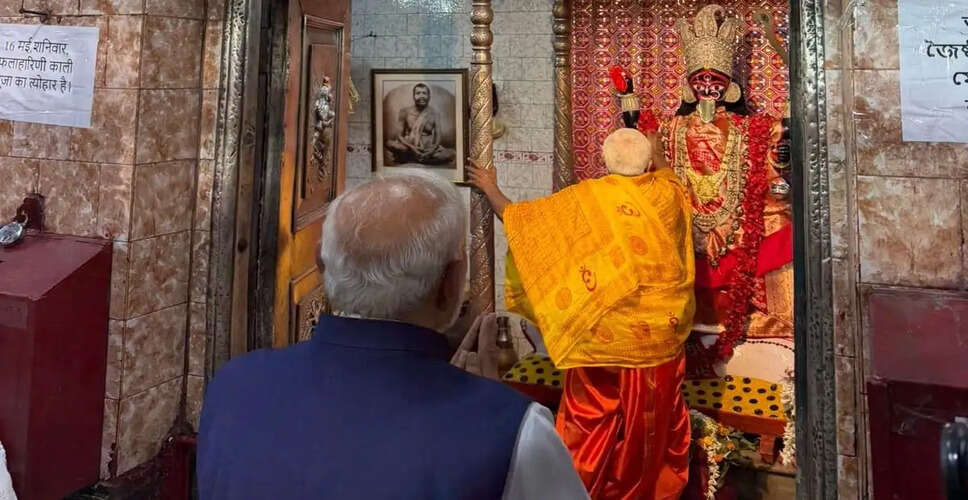

Prime Minister's Visit to a Sacred Site
Before commencing his roadshow in North Kolkata for the West Bengal Assembly elections, Prime Minister Narendra Modi visited the Thanthania Kalibari temple. During his visit, he performed special prayers to Goddess Kali and sought her blessings. This temple is renowned for its ancient heritage and spiritual significance.
A 300-Year-Old Historical Temple
Thanthania Kalibari is among the oldest and most esteemed temples in Kolkata, established in 1703. Its history, spanning 300 years, predates the formal development of the city. Here, Goddess Kali is worshipped as 'Maa Siddheshwari,' and the deity is considered 'awakened' by the local community.
A Special Connection with Ramakrishna Paramahamsa
This temple has a profound association with the revered saint Ramakrishna Paramahamsa. It is believed that he frequently visited the temple to sing devotional songs in praise of Maa Siddheshwari. The walls of the temple are inscribed with his teachings, including the phrase, 'Shankarer hridoy majhe, Kali biraje' (Goddess Kali resides in the heart of Shankar).
Unique Tradition of Offerings
Thanthania Kalibari is one of the few temples in India where the goddess is offered 'non-vegetarian prasad.' This unique practice was initiated by Ramakrishna Paramahamsa, who offered 'dab-chingri' (coconut and shrimp) while praying for the swift recovery of Brahmananda Keshav Chandra Sen. This tradition has continued ever since, and it is said that when Ramakrishna himself fell ill, his followers also offered non-vegetarian offerings to Maa Siddheshwari for his health.
Visual Highlights
#WATCH | West Bengal Assembly Elections | Prime Minister Narendra Modi took the blessings of Ma Kali at Thanthania Kalibari before embarking on his roadshow in North Kolkata. pic.twitter.com/qhIv0SmPZ5
— News Media April 26, 2026